
How to Choose Exhibition Stand Contractors for Trade Shows in UAE: A Complete Guide for Dubai Exhibitors
Dubai has become one of the UAE’s most important destinations for trade shows, exhibitions, conferences, and business events, bringing together local and international brands across a wide range of industries. The scale of this market also means that exhibitors are competing for attention in increasingly busy exhibition halls. In 2025, Dubai World Trade Centre (DWTC) hosted 401 events that attracted 2.97 million participants, while its MICE events involved more than 63,000 exhibiting companies, with international exhibitors accounting for 78% of participation.
In this environment, an exhibition stand is more than a physical space for displaying products. It acts as a branded environment where visitors form their first impression of a company, interact with products, attend demonstrations, hold business meetings, and potentially become qualified leads. This makes selecting the right Exhibition Stand Contractors for Trade Shows in UAE an important part of exhibition planning.
The right contractor should be able to connect creative stand design with practical fabrication, technical coordination, venue requirements, installation, and dismantling. At the same time, exhibitors need to look beyond attractive 3D concepts and compare factors such as relevant UAE experience, production capability, project management, quotation transparency, communication, and delivery reliability.
This guide explains how Dubai exhibitors can evaluate and compare exhibition stand contractors, what questions to ask before appointing one, common selection mistakes to avoid, and how to choose a partner that can turn an exhibition brief into a functional, professional, and brand-focused stand.
Why Choosing the Right Exhibition Stand Contractor Matters in Dubai
Dubai’s exhibition environment is highly competitive, with exhibitors from different countries and industries seeking to attract the same visitors, buyers, partners, and decision-makers. In 2025, Dubai World Trade Centre hosted 401 events with 2.97 million participants, while its MICE events involved more than 63,000 exhibiting companies. International exhibitors represented 78% of those exhibiting companies, highlighting the international nature of Dubai’s exhibition market.
In such a crowded environment, simply having a booth is not enough. Your exhibition stand needs to communicate your brand clearly, make products easy to discover, support meaningful conversations, and provide a comfortable environment for visitors and staff. The contractor you choose has a direct role in turning these objectives into a physical space.
Dubai’s Exhibition Market Is Highly International
The presence of international exhibitors means visitors are exposed to a wide variety of stand concepts, branding approaches, technologies, and product displays. A contractor therefore needs to understand how to create a stand that is visually distinctive while remaining practical for the intended audience.
For Dubai exhibitors, this makes local exhibition experience particularly valuable. A contractor familiar with UAE trade shows can better understand the practical considerations involved in preparing a stand, from coordinating production and logistics to managing installation within the event schedule.
The right approach is not simply to search for the company offering the most attractive design. Exhibitors should evaluate whether an Exhibition Stand Builder in Dubai or contractor can deliver the complete project from concept through installation.
Your Stand Represents Your Brand Before the First Conversation
An exhibition stand often becomes one of the first physical interactions a potential customer has with a company at an event. Its layout, signage, graphics, lighting, product presentation, meeting areas, and overall finish can influence how visitors perceive the brand.
A well-planned stand should therefore connect:
Brand strategy → Stand design → Visitor experience → Engagement → Business conversations
For example, a technology company may need demonstration areas and digital displays, while a B2B manufacturer may require product showcases, technical information and private meeting spaces. The contractor should be able to translate these different requirements into an appropriate exhibition environment.
This is why choosing among Exhibition Stand Companies in Dubai should involve more than comparing portfolios and prices. The strongest choice is generally the contractor that understands your exhibition objectives and has the design, fabrication, technical, and project-management capabilities needed to execute them reliably.
What Does an Exhibition Stand Contractor Actually Do?
An exhibition stand contractor is responsible for turning an exhibitor’s requirements and approved concept into a physical stand that is ready for the event. Depending on the contractor, this can include design, technical planning, fabrication, graphics, logistics, installation, on-site coordination, and dismantling. Understanding this full scope helps exhibitors distinguish between a company that only provides a design and one that can manage the complete exhibition project.
For Dubai exhibitors, working with a contractor that can coordinate multiple stages under one project can simplify communication and reduce the risk of gaps between design, production, and installation.
Exhibition Stand Design
The process normally begins with understanding the exhibitor’s objectives, brand identity, products, target visitors, stand size, and functional requirements. Exhibition Stand Designers in Dubai may then develop concepts that determine how visitors will enter, move through, and interact with the space.
A well-planned design can include:
- Brand and company messaging
- Product display areas
- Demonstration zones
- Reception counters
- Private meeting rooms
- Open visitor areas
- Storage facilities
- Lighting
- Digital screens and AV elements
- Graphic and signage placement
The objective is not simply to make the stand visually attractive. The layout should support the exhibitor’s purpose for attending the trade show, whether that involves generating leads, launching a product, meeting distributors, demonstrating equipment, or strengthening brand visibility.
Exhibition Stand Fabrication
Once a design is approved, the concept needs to be converted into a buildable structure. This is where Exhibition Stand Fabricators in Dubai play an important role.
Fabrication can involve producing and assembling elements such as:
- Walls and partitions
- Counters and reception desks
- Product display units
- Flooring
- Custom furniture
- Architectural features
- Storage areas
- Lighting structures
- Branded elements
- Printed graphics
The contractor should also have a clear quality-control process to ensure that the materials, finishes, dimensions, branding, and structural elements match the approved design before the stand reaches the exhibition venue.
Installation and Dismantling
Fabrication is only one part of the project. The finished components must reach the venue and be assembled within the permitted build-up period. Installation can involve coordinating different activities, including construction, electrical work, graphics, furniture, lighting, signage, and technology.
After installation, the stand should be checked to ensure that the completed environment reflects the approved design and is ready for the exhibition opening.
Dismantling is the final stage after the event. A professional contractor should have a defined process for removing the stand and its components according to the applicable venue schedule and requirements.
Why Full-Service Capability Matters
The complete exhibition lifecycle can be viewed as:
Brief → Design → Technical Planning → Fabrication → Graphics & Finishing → Logistics → Installation → Handover → Dismantling
This is why exhibitors should look beyond whether a company describes itself as an Exhibition Stand Builder in Dubai, Exhibition Stand Manufacturer, or Exhibition Booth Contractor. Different companies may use these terms differently, and some provide several services under one project.
The more important question is whether the contractor can take responsibility for the stages your particular exhibition requires and coordinate them effectively from the initial brief through to the final handover.
Exhibition Stand Builder vs Contractor vs Designer vs Fabricator: What’s the Difference?
Exhibitors often use terms such as Exhibition Stand Builder in Dubai, designer, fabricator, manufacturer, and contractor interchangeably. However, these roles can have different responsibilities. Understanding the distinction makes it easier to assess what a company actually provides and whether its capabilities match your exhibition requirements.
The important point is that one company may perform several of these roles. A full-service provider can potentially manage the project from the initial concept through fabrication and installation, while another supplier may specialize in only one stage.
Exhibition Stand Designer
An Exhibition Stand Designer primarily focuses on the creative and functional planning of the stand. This can include:
- Concept development
- 3D visualization
- Floor-plan development
- Branding and graphics placement
- Visitor flow
- Product presentation
- Meeting areas
- Lighting concepts
- Display and interaction zones
The designer’s job is to develop an environment that reflects the exhibitor’s brand while addressing the practical requirements of the event.
Exhibition Stand Builder
An Exhibition Stand Builder in Dubai generally focuses on turning an approved design into a physical exhibition structure. Depending on the company, its responsibilities may include construction, joinery, flooring, counters, display units, furniture integration, and finishing.
Some builders also provide design services, while others work from designs supplied by the exhibitor or an independent design agency.
Exhibition Stand Fabricator
An Exhibition Stand Fabricator in Dubai is more closely associated with the manufacturing and production side of the project. Fabrication can include creating custom structural elements, counters, display units, branded features, furniture components, and other physical parts of the stand.
Fabrication capability is particularly relevant when an exhibitor wants a custom exhibition stand rather than a standard or modular setup.
Exhibition Stand Manufacturer
An Exhibition Stand Manufacturer generally emphasizes production and manufacturing capabilities. Depending on the provider, manufacturing may cover custom components, display systems, structural elements, furniture, signage, or other exhibition-related products.
The terminology can vary between companies, so exhibitors should always confirm which manufacturing and production services are actually included.
Exhibition Stand Contractor
An Exhibition Stand Contractor typically has a broader project-delivery role. Rather than focusing exclusively on design or fabrication, the contractor may coordinate several stages, including:
Design → Technical planning → Fabrication → Graphics → Logistics → Installation → Dismantling
This broader responsibility can make a contractor particularly useful when an exhibitor wants one team coordinating multiple parts of the exhibition project.
Exhibition Booth Contractor
An Exhibition Booth Contractor focuses specifically on the construction and delivery of exhibition booths. The scope can range from straightforward booth construction to complete design-and-build services, depending on the provider.
For this reason, exhibitors should not select a contractor based solely on the terminology used in its company name or website. Instead, ask for a detailed scope of work.
Which One Should You Choose?
The right option depends on the complexity of your project.
If you already have a finalized design and only need construction, a builder or fabricator may be sufficient. If you need concept development, production, installation, and project coordination, a full-service Exhibition Stand Contractor may be more appropriate.
Before making a decision, confirm exactly who will handle each stage of the project. This prevents responsibilities from being overlooked between the designer, fabricator, builder, and installation team.
Ultimately, the objective is not to find a company with the most impressive title. It is to find a provider whose design capability, fabrication resources, technical knowledge, project management, and installation experience align with the requirements of your trade show.
10 Factors to Consider When Choosing Exhibition Stand Contractors for Trade Shows in UAE
Choosing the right contractor should involve more than comparing attractive stand designs or selecting the lowest quotation. A successful exhibition project requires coordination between creative design, fabrication, technical planning, logistics, installation, and your business objectives. Before appointing Exhibition Stand Contractors for Trade Shows in UAE, evaluate the following factors to understand whether a company can deliver the complete project effectively.
1. Relevant UAE Exhibition Experience
Start by looking at the contractor’s experience with exhibitions and trade shows similar to yours. Experience should be relevant to the type of event, venue, stand size, industry, and project complexity, rather than being measured only by the number of years a company has operated.
Ask potential contractors:
- Have you delivered stands for similar trade shows?
- Have you worked at the relevant UAE venue?
- Can you show completed projects of a similar size?
- Have you handled projects with comparable technical requirements?
- Can you provide recent project references?
Experience with UAE exhibitions can also help a contractor understand the practical coordination involved in preparing a stand for an event. However, exhibitors should still confirm the specific requirements of their event and venue rather than assuming that previous experience automatically covers every project.
2. Portfolio Quality and Design Capability
A portfolio can provide useful evidence of a contractor’s design and execution capabilities, but it should be evaluated carefully. Attractive 3D renders alone do not demonstrate that a company can successfully build the proposed stand.
When reviewing the work of Exhibition Stand Designers in Dubai, look for evidence of:
- Clear brand integration
- Practical visitor flow
- Effective product presentation
- Appropriate use of space
- Functional meeting areas
- Storage solutions
- Lighting
- Digital integration where required
- Quality finishes
- Completed project photographs
Try to find projects that resemble your own requirements. A contractor experienced in building a large custom stand may not necessarily be the right choice for a compact exhibition booth, and vice versa.
What to Look for in an Exhibition Stand Portfolio
A useful portfolio assessment should consider:
- Industry relevance – Has the contractor worked with businesses similar to yours?
- Stand size – Does its experience match your available floor area?
- Project objectives – Have previous designs supported demonstrations, meetings, product launches, or lead generation?
- Customization – Can the contractor create something specific to your brand rather than relying entirely on standard systems?
- Technical execution – Are there photographs showing the finished stand rather than only concept images?
- Consistency – Does the quality remain strong across different projects?
The strongest portfolio is not necessarily the one with the most elaborate stands. It is the one that demonstrates an ability to solve different exhibition requirements effectively.
3. In-House or Reliable Fabrication Capability
Design needs to be supported by dependable production. A contractor may present an impressive concept, but the final result depends heavily on how accurately that concept can be fabricated.
When assessing Exhibition Stand Fabricators in Dubai, ask about:
- Workshop and production capabilities
- Available materials
- Custom manufacturing
- Joinery
- Structural components
- Finishing quality
- Furniture production
- Graphic integration
- Quality-control procedures
- Production timelines
You should also establish whether fabrication is performed directly by the contractor or outsourced to another supplier. Outsourcing is not automatically a problem, but the contractor should be able to explain how production quality and deadlines will be managed.
For complex projects, having strong coordination between design and fabrication can reduce the risk of last-minute modifications, inconsistent finishes, or differences between the approved concept and the finished stand.
4. Ability to Deliver Custom Exhibition Stands
Not every exhibitor needs a completely bespoke structure. The right choice depends on the brand, event objectives, available space, budget, and required functionality.
A modular or system-based stand may be appropriate when the exhibitor needs a straightforward, efficient setup. A custom stand can be more suitable when the project requires distinctive architecture, specialized product displays, integrated meeting areas, complex branding, or other tailored elements.
When discussing custom exhibition stands, ask the contractor how much of the proposed design can actually be customized.
Customization may involve:
- Bespoke counters
- Product display structures
- Branded architectural elements
- Private meeting rooms
- Demonstration areas
- Integrated storage
- Special lighting
- Digital displays
- Custom furniture
- Unique graphic applications
The objective should not be customization for its own sake. Every custom element should have a purpose connected to the visitor experience, product presentation, brand identity, or business objective.
5. Understanding of Exhibition Venue Requirements
A good exhibition design must also work within the requirements of the specific venue and event. The contractor should understand that exhibition construction takes place within an organized environment with defined schedules, technical requirements, access arrangements, and operational procedures.
Depending on the project, considerations may include:
- Stand dimensions
- Height restrictions
- Build-up schedules
- Dismantling schedules
- Electrical requirements
- Structural considerations
- Fire and safety requirements
- Rigging requirements where applicable
- Material specifications
- Venue access
- Technical submissions and approvals
Requirements can differ between venues and individual events, so exhibitors should ask the contractor exactly what it will manage.
A useful question is:
“Will your team coordinate the technical and venue-related requirements for our specific exhibition?”
Having a clear answer before signing the contract can prevent confusion later.
6. Design-to-Fabrication Coordination
One of the most important factors is how effectively the contractor connects the creative concept with actual production.
The process should generally move through:
3D Concept → Design Approval → Technical Planning → Material Specification → Fabrication → Quality Control → Installation
Problems can arise when the design team and production team are not properly coordinated. A concept may look excellent visually but require changes when converted into a physical structure.
Poor coordination can result in:
- Design modifications
- Unexpected costs
- Production delays
- Incorrect dimensions
- Graphic alignment problems
- Material substitutions
- Installation difficulties
Ask how design approvals are documented and when the project moves from creative development into production. A clear approval process can reduce unnecessary changes later.
7. Project Management and Communication
Exhibition projects involve multiple moving parts, so communication should be treated as part of the contractor’s service rather than an afterthought.
Ideally, you should know:
- Who your project manager is
- How often project updates will be provided
- Who approves design changes
- How revisions are handled
- When production begins
- Who coordinates installation
- Who to contact during the event build-up
This is particularly important for international exhibitors coordinating their UAE trade-show participation remotely.
A contractor may have excellent designers and fabricators, but weak project management can still create delays or misunderstandings. Look for a clearly defined communication structure from the beginning.
8. Graphics, Lighting, AV and Technology Integration
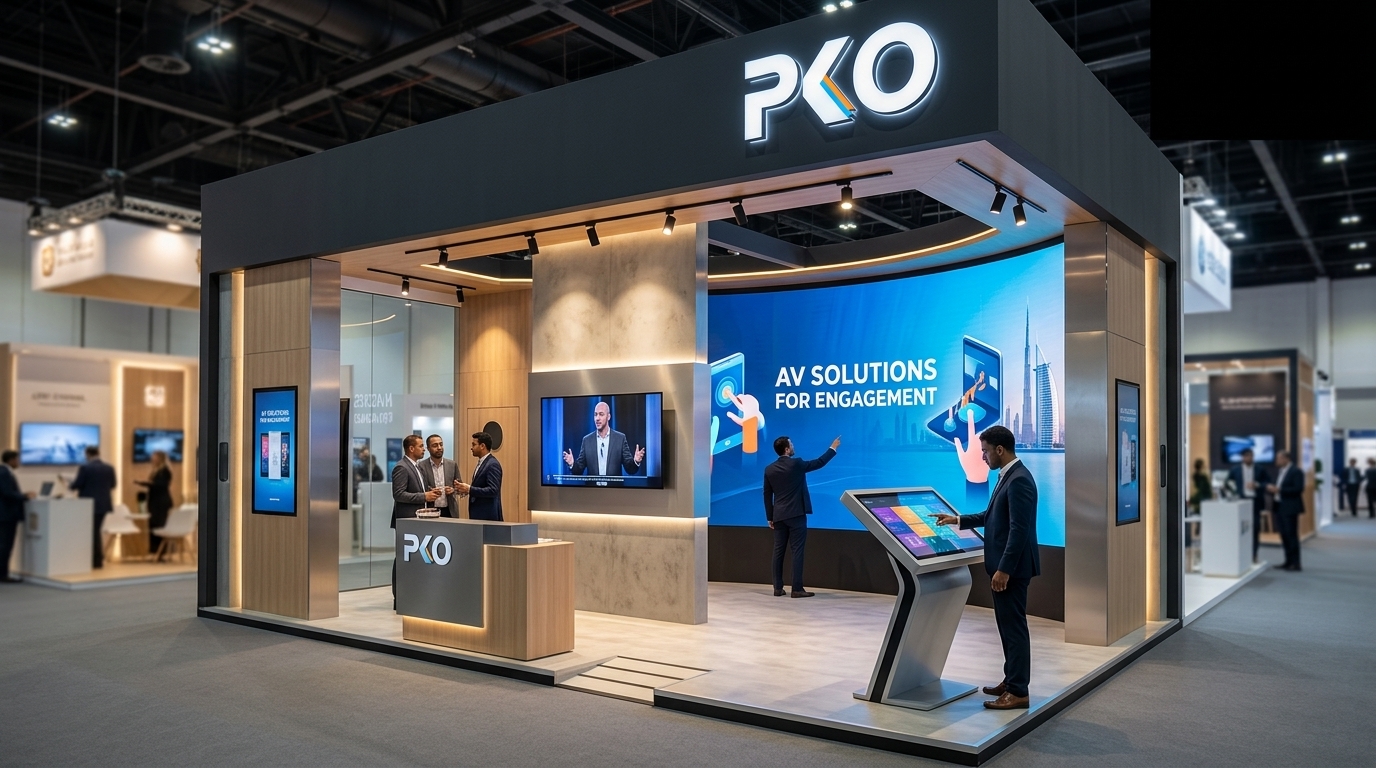
Modern exhibition stands can involve considerably more than walls, flooring, counters, and printed branding. Depending on the event, exhibitors may require digital screens, product demonstrations, LED displays, specialized lighting, or other technology.
Discuss requirements such as:
- Exhibition graphics printing
- Brand signage
- LED displays
- Digital screens
- Product demonstration equipment
- Lighting
- Audio/visual systems
- Interactive displays
- Digital content integration
Ask whether these services are provided directly by the contractor or coordinated through specialist suppliers.
Most importantly, technology should support the exhibition objective rather than simply being added for visual impact. A screen, for example, should have a clear purpose within the visitor journey.
9. Budget Transparency and Quotation Structure
Price is naturally an important consideration, but exhibitors should compare complete scopes of work rather than headline prices.
A professional quotation should make it reasonably clear what is included and what is excluded. Depending on the project, this may cover:
- Design
- Fabrication
- Materials
- Flooring
- Furniture
- Graphics
- Lighting
- AV
- Transportation
- Installation
- Dismantling
- Project management
- Applicable additional services
When comparing Exhibition Stand Companies in Dubai, request quotations based on the same project brief. Otherwise, a lower quotation may simply reflect fewer inclusions.
Don’t Choose a Contractor Based Only on the Lowest Price
The cheapest initial quotation is not necessarily the most economical option.
For example, one quotation might include design, fabrication, graphics, transportation, installation, and dismantling, while another might exclude several of these elements.
Compare:
Total scope + quality + delivery capability + exclusions + support
rather than:
Lowest quoted price
A transparent quotation also makes it easier to identify potential additional costs before production begins.
10. References, Reviews and Delivery Reliability
Finally, verify what the contractor has actually delivered.
Ask for:
- Recent completed projects
- Similar exhibition examples
- Client references where available
- Completed stand photographs
- Case studies
- Evidence of repeat work
- Details of relevant venue experience
Reviews can provide useful context, but they should not be your only source of evaluation. A contractor with strong reviews but little experience with your type of exhibition may be less suitable than a provider with directly relevant project experience.
Ultimately, the selection process should answer one central question:
Can this contractor reliably transform our exhibition brief into a professionally designed, fabricated, installed, and event-ready stand within the agreed scope and timeline?
If the answer is supported by evidence not just sales claims the contractor is more likely to be a suitable partner for your trade show.
How to Compare Exhibition Stand Companies in Dubai
Once you have identified several potential contractors, the next step is to compare them systematically rather than choosing the company with the most attractive portfolio or the lowest quotation. Exhibition Stand Companies in Dubai can differ considerably in their design capabilities, fabrication resources, project management, technical support, and scope of services.
A useful comparison should therefore focus on what each company can deliver, how it will deliver it, and whether that delivery matches your exhibition objectives.
Create an Exhibition Stand Contractor Evaluation Scorecard
A simple scorecard can help make the selection more objective. You can assess each shortlisted contractor against factors such as:
| Evaluation Area | Suggested Weight |
| Relevant exhibition experience | 15% |
| Design capability | 15% |
| Fabrication capability | 15% |
| Project management | 15% |
| Venue and logistics knowledge | 10% |
| Material and finishing quality | 10% |
| Technical capability | 10% |
| Price transparency | 5% |
| References and reputation | 5% |
These percentages are a practical evaluation framework rather than an industry-standard formula. You can adjust them according to your project’s priorities.
For example, an exhibitor launching a technically complex product may place greater importance on fabrication and technology integration. A company attending a major brand-focused trade show may give greater weight to design, visitor experience, and branding.
Compare Relevant Experience, Not Just Company Size
A large company is not automatically the best choice for every exhibition project. Similarly, a smaller contractor should not be dismissed if it has directly relevant experience.
Look for evidence that the contractor has handled:
- Similar stand sizes
- Similar industries
- Comparable budgets
- Similar design requirements
- Custom fabrication
- The same or comparable exhibition venues
- Installation and dismantling
- Projects with similar technical requirements
This makes the comparison more meaningful than simply looking at how long each company has been operating.
Compare Design Concepts Against the Same Brief
When requesting proposals from multiple Exhibition Stand Designers in Dubai, provide each company with the same basic information.
Your brief should ideally include:
- Exhibition name
- Venue
- Stand dimensions
- Open-side requirements
- Brand guidelines
- Products or services to display
- Target visitors
- Meeting requirements
- Storage requirements
- Technology requirements
- Approximate budget
- Project deadline
Using a consistent brief makes it easier to compare the proposed concepts.
Don’t judge designs purely on visual appearance. Consider whether each concept provides enough space for visitors, supports product demonstrations, creates practical meeting areas, communicates the brand clearly, and makes effective use of the available floor area.
Compare Quotations on a Like-for-Like Basis
A quotation comparison should go beyond the final amount.
Create a simple table showing whether each contractor includes:
| Requirement | Contractor A | Contractor B | Contractor C |
| Stand design | ✓ | ✓ | ✓ |
| Fabrication | ✓ | ✓ | ✓ |
| Flooring | ✓ | ✓ | ✓ |
| Furniture | ✓ | ✓ | |
| Graphics | ✓ | ✓ | |
| Lighting | ✓ | ✓ | ✓ |
| AV/technology | ✓ | ✓ | |
| Transportation | ✓ | ✓ | |
| Installation | ✓ | ✓ | ✓ |
| Dismantling | ✓ | ✓ | ✓ |
This helps identify why one quotation may be higher or lower than another.
It is also important to check exclusions, assumptions, revision limits, payment terms, cancellation conditions, and potential additional charges before making a final decision.
Assess Communication Before Signing
The proposal stage can also tell you a great deal about how a contractor manages projects.
Consider:
- How quickly does the company respond?
- Are questions answered clearly?
- Does the team understand your brief?
- Are design revisions explained properly?
- Is there a defined project manager?
- Are deadlines clearly communicated?
- Are technical requirements discussed early?
- Does the quotation clearly explain the scope?
If communication is unclear during the planning stage, it can become more difficult once fabrication and installation begin.
Look Beyond the Portfolio
A portfolio demonstrates what a contractor has produced, but it does not necessarily tell you how the company operates.
For a more complete assessment, combine:
Portfolio + References + Technical Capability + Quotation + Communication + Project Management
This broader approach helps distinguish between companies that can produce attractive concepts and those capable of delivering the entire project reliably.
Choose Based on Overall Value
The Best Exhibition Stand Contractor in Dubai for one exhibitor may not be the best choice for another. The right contractor depends on your event, objectives, stand size, design requirements, budget, timeline, and level of technical complexity.
A practical decision can be based on:
Relevant experience + design quality + fabrication capability + technical coordination + transparent pricing + reliable delivery
Once you have compared these factors, you can move from a longlist of exhibition companies to a shortlist of contractors that genuinely match your project requirements. The next step is to ask those shortlisted companies the right questions before making a commitment.
Questions to Ask an Exhibition Stand Contractor Before Hiring
Before appointing an exhibition stand contractor, ask specific questions about its experience, design process, fabrication capabilities, project management, venue coordination, pricing, and after-installation support. The answers can help you identify whether a contractor can manage your project from the initial brief through to installation and dismantling.
A professional contractor should be able to explain its process clearly rather than providing only a portfolio and a price.
1. Have You Built Stands for Similar Trade Shows?
Ask whether the contractor has experience with:
- Your industry
- Similar stand sizes
- Similar exhibition formats
- Comparable project complexity
- The relevant UAE exhibition venue
Relevant experience is more useful than a general claim of having worked on many exhibitions.
2. Can You Show Completed Projects Similar to Ours?
Ask to see photographs or case studies of completed projects rather than relying exclusively on 3D renders.
Look for similarities in:
- Floor area
- Stand configuration
- Branding requirements
- Product displays
- Meeting spaces
- Custom fabrication
- Technical integration
This helps you assess whether the contractor’s capabilities match your requirements.
3. Who Will Manage Our Project?
Find out whether you will have a dedicated project manager or another clearly identified point of contact.
The project manager may coordinate communication between:
Client → Designer → Fabricator → Suppliers → Installation Team → Venue
Having clear responsibility can reduce communication gaps as the project progresses.
4. Is Fabrication Handled In-House?
Ask whether the stand is fabricated by the contractor itself or through external production partners.
If external suppliers are involved, ask:
- Who manages them?
- How is quality controlled?
- Who is responsible for production delays?
- Where will the stand components be manufactured?
- How will design changes be communicated to production?
The purpose is not necessarily to require in-house fabrication, but to understand who is accountable for the final result.
5. What Is Included in the Quotation?
Request a detailed breakdown covering the relevant project components.
Depending on your requirements, this may include:
- Design
- Technical drawings
- Fabrication
- Flooring
- Furniture
- Graphics
- Lighting
- AV equipment
- Transportation
- Installation
- Dismantling
- Project management
Also ask specifically about exclusions. Knowing what is not included can be just as important as knowing what is included.
6. How Many Design Revisions Are Included?
Clarify the design approval process before work begins.
Ask:
- How many concept options are provided?
- How many revisions are included?
- When does design approval become final?
- What happens if changes are requested after approval?
- Will additional design or production charges apply?
A clearly defined revision process can help prevent misunderstandings and unexpected costs.
7. Who Handles Venue and Technical Coordination?
Ask whether the contractor will assist with the technical requirements applicable to your particular exhibition.
Depending on the event, this may involve coordination relating to:
- Stand drawings
- Electrical requirements
- Structural considerations
- Build-up schedules
- Dismantling schedules
- Venue access
- Technical submissions
- Other event-specific requirements
Responsibilities vary by venue and event, so they should be confirmed in writing rather than assumed.
8. What Is the Expected Production Timeline?
Ask the contractor to provide a realistic project schedule covering:
Brief → Design → Approval → Production → Quality Control → Transportation → Installation → Handover
The timeline should account for the complexity of the stand and any venue or event deadlines.
If your project includes custom structures, specialist finishes, extensive graphics, or technology integration, clarify how these elements affect production time.
9. Does the Price Include Installation and Dismantling?
Never assume that construction and installation are automatically included.
Confirm whether the quotation covers:
- Transportation to the venue
- Installation
- On-site finishing
- Electrical coordination where applicable
- Final setup
- Dismantling
- Removal of materials
A clear scope makes it easier to compare quotations between Exhibition Stand Contractors Dubai on a like-for-like basis.
10. Can You Integrate Graphics, Lighting and AV?
If your stand requires more than basic construction, ask whether the contractor can coordinate:
- Exhibition graphics
- Branding
- LED displays
- Digital screens
- Lighting
- Audio/visual equipment
- Product demonstration areas
- Interactive technology
The important consideration is how these elements will be integrated into the overall design rather than added separately at the final stage.
11. What Happens if Something Changes During Production?
Changes can occur after design approval. Ask the contractor what process will be followed if:
- Product requirements change
- Graphics need updating
- Stand dimensions change
- Materials become unavailable
- Additional features are requested
Ask for any potential cost implications to be communicated and approved before the change is implemented.
12. What Happens if There Is an On-Site Problem?
This question is often overlooked.
Ask who will be available during installation and what procedure will be followed if an issue occurs shortly before the exhibition opens.
A contractor should be able to explain its on-site escalation and support process.
13. Can You Provide Client References?
Where appropriate, ask for references from previous clients with comparable projects.
Instead of asking only whether previous clients were satisfied, try to establish:
- Was the project delivered on time?
- Was the final stand consistent with the approved design?
- Were costs clearly communicated?
- Was the installation handled effectively?
- How responsive was the project team?
14. What Happens After the Exhibition?
Clarify the contractor’s responsibilities after the event.
Depending on the project, this may include:
- Dismantling
- Removal of materials
- Collection of reusable components
- Storage arrangements
- Return of hired items
This ensures that the project scope covers the entire exhibition lifecycle rather than ending when the event opens.
15. Can You Put the Complete Scope in Writing?
Finally, make sure the agreed scope is documented.
The agreement should clearly identify:
- Deliverables
- Materials
- Design scope
- Production responsibilities
- Installation
- Dismantling
- Timeline
- Payment terms
- Exclusions
- Change procedures
- Responsibilities of both parties
For exhibitors comparing Exhibition Stand Companies in Dubai, written scope is one of the simplest ways to make proposals easier to evaluate.
Ultimately, asking the right questions helps you move beyond sales presentations and understand how a contractor will actually manage your project. Once the shortlist has been evaluated, the next stage is to follow a structured selection process from defining your objectives and preparing a brief to approving the design, production, installation, and final handover.
The Exhibition Stand Contractor Selection Process
Choosing an exhibition stand contractor should be treated as a structured project rather than a quick supplier decision. A clear selection process helps exhibitors compare capabilities, control costs, reduce last-minute issues, and ensure that the final stand supports the purpose of the trade show.
1. Define Your Exhibition Requirements
Start by preparing a clear brief before contacting Exhibition Stand Contractors for Trade Shows in UAE. The brief should explain the exhibition name, venue, stand size, event dates, brand requirements, products or services being promoted, expected visitor profile, and the main objectives for participating.
Also identify the practical requirements of the stand, such as:
- Product display areas
- Reception or welcome desk
- Open visitor-access areas
- Private meeting rooms
- Storage space
- Demonstration zones
- Digital screens or interactive technology
- Lighting requirements
- Branding and graphics
- Hospitality facilities
A detailed brief gives contractors the same starting information, making their proposals easier to compare.
2. Shortlist Suitable Contractors
Do not select a contractor simply because they appear prominently online or offer the lowest quotation. Shortlist companies based on relevant experience, portfolio quality, fabrication capability, project management, technical support, and their ability to work within UAE exhibition environments.
For example, an exhibitor requiring a complex custom stand may need a contractor with stronger fabrication and technical capabilities than a company looking for a relatively simple modular display.
At this stage, reviewing previous projects can help determine whether the contractor has delivered stands with similar sizes, layouts, branding requirements, and technical complexity.
3. Request Detailed Proposals
Once you have a shortlist, send the same project brief to each contractor. Ask them to provide a proposal covering the design approach, materials, estimated timeline, scope of work, production arrangements, installation, dismantling, and pricing.
A professional proposal should make it reasonably clear what you are paying for. If one quotation includes graphics, furniture, lighting, installation, and dismantling while another excludes several of these elements, the headline prices cannot be compared fairly.
This is why exhibitors should compare like-for-like quotations rather than choosing the lowest figure immediately.
4. Evaluate Design and Technical Capability
A strong exhibition concept needs to work both visually and practically. Review how each contractor approaches visitor movement, product visibility, branding, meeting areas, storage, lighting, and technology.
The design should also be realistic to fabricate within the available budget and exhibition schedule.
This is where the relationship between an Exhibition Stand Designer in Dubai and the production team becomes important. A creative concept has limited value if it cannot be translated accurately into a safe, functional, and well-finished stand.
5. Verify Production and Project Management
Before appointing a contractor, establish who will manage the project after the design is approved. Ask whether you will have a dedicated project manager and who will coordinate design changes, fabrication, graphics, logistics, venue requirements, installation, and dismantling.
It is also useful to understand where fabrication takes place and how quality is controlled before the stand reaches the exhibition venue.
Clear responsibility at this stage can reduce communication gaps between design, production, and installation teams.
6. Review the Final Scope and Agreement
Before signing, make sure the agreed scope is documented. The agreement should identify the stand design, dimensions, materials, included services, production schedule, installation and dismantling responsibilities, payment terms, approved graphics, and procedures for handling changes.
Pay particular attention to items that can create unexpected costs, such as additional electrical work, furniture, technology, transportation, storage, graphics revisions, or changes requested after production begins.
A clear agreement protects both the exhibitor and contractor by establishing what has been approved and who is responsible for each part of the project.
7. Approve the Design and Begin Production
After selecting the contractor, the project moves from planning into execution. The approved design should be translated into technical drawings and production specifications before fabrication begins.
At this stage, exhibitors should provide final brand assets, logos, product information, artwork, technical requirements, and any other materials requested by the contractor.
Avoid making unnecessary design changes once fabrication has started. Late changes can affect production schedules, costs, and installation.
8. Conduct Final Checks Before the Event
Before the exhibition opens, confirm that the contractor has completed the required production, transportation, installation, graphics, lighting, furniture, and technology.
Where appropriate, the contractor should coordinate final checks at the venue to identify issues before visitors enter the stand.
The objective is simple: the stand should be ready for business, not still being assembled when the exhibition begins.
A Simple Selection Flow
For Dubai exhibitors, the overall process can be summarized as:
Define objectives → Prepare a brief → Shortlist contractors → Compare proposals → Evaluate design and technical capability → Verify fabrication and project management → Confirm scope and costs → Approve design → Fabricate → Install → Inspect → Handover
Following this process allows exhibitors to evaluate Exhibition Stand Builders in UAE based on complete project capability rather than price or visual appeal alone. It also creates a logical connection between the initial exhibition objective and the final visitor experience.
Common Mistakes Dubai Exhibitors Should Avoid When Hiring a Stand Contractor
Selecting the wrong exhibition stand contractor can create problems that become difficult and expensive to correct once production has started. Dubai exhibitors can reduce these risks by evaluating contractors carefully and establishing expectations before the project begins.
1. Choosing Based Only on the Lowest Price
Price is an important consideration, but it should not be the only selection criterion. A very low quotation may exclude services, materials, technical work, furniture, graphics, transportation, installation, or dismantling.
Instead of comparing only the final price, examine the complete scope of each proposal. A slightly higher quotation may provide better materials, stronger project management, greater technical support, or more comprehensive delivery.
The objective should be value for the complete exhibition project, not simply the lowest initial cost.
2. Selecting a Contractor Without Relevant UAE Experience
Exhibition projects involve more than designing and constructing a physical booth. Contractors may need to coordinate production schedules, transportation, venue requirements, installation windows, technical services, and dismantling.
For this reason, exhibitors should look for Exhibition Stand Contractors Dubai with experience relevant to their type of event and project requirements. Previous work at comparable trade shows can also provide useful evidence of their ability to manage similar assignments.
3. Being Impressed by Design Concepts Alone
An attractive 3D rendering does not automatically mean that the contractor can deliver the same result at the exhibition venue.
Before approving a concept, ask how it will be fabricated, which materials will be used, how technical elements will be integrated, and whether the proposed structure is practical within the available budget and timeline.
The strongest Exhibition Stand Designers in Dubai should be able to connect creative thinking with practical execution.
4. Failing to Check Fabrication Capability
Some exhibitors focus heavily on design and overlook the production side of the project. This can become a problem when a custom structure requires specialist fabrication, precise finishing, or coordination between several production elements.
Ask whether fabrication is handled in-house or through external partners and who is responsible for quality control. Understanding the production process can help you assess whether the contractor is equipped to deliver the approved concept.
5. Ignoring Venue and Technical Requirements
Every exhibition project has practical constraints. These can include stand dimensions, access times, installation schedules, electrical requirements, structural considerations, venue rules, and other technical requirements.
A contractor should account for these requirements during the planning stage rather than discovering limitations after production has begun.
This is particularly important for complex custom exhibition stands where changes late in the process can affect both cost and schedule.
6. Not Defining the Scope of Work
Ambiguous agreements can lead to disagreements about what is included in the quoted price.
Before appointing an Exhibition Stand Contractor in Dubai, confirm whether the quotation includes design, fabrication, transportation, installation, dismantling, furniture, graphics, lighting, AV equipment, storage, electrical work, and other required services.
Anything that is important to the project should be clearly documented.
7. Making Too Many Changes After Production Starts
Design revisions are a normal part of exhibition planning, but repeated changes after fabrication has started can cause delays and additional costs.
Establish an approval process for drawings, artwork, materials, and technical specifications before production begins. This allows the contractor to work from a confirmed version of the project.
8. Neglecting Storage and Visitor Flow
Exhibitors sometimes concentrate on visible elements such as logos, screens, counters, and displays while giving insufficient attention to practical space.
A successful stand should provide enough room for staff movement, visitor interaction, product demonstrations, meetings, and storage. Poor planning can make an otherwise attractive stand feel crowded or difficult to use.
9. Not Asking About On-Site Support
Problems can sometimes occur during installation or throughout an exhibition. A missing graphic, technical issue, damaged component, or last-minute adjustment may require immediate attention.
Before hiring a contractor, clarify who will be available during installation and whether the project team provides on-site support if an issue arises.
10. Treating Every Exhibition as the Same
A stand designed for a large international trade show may require a different approach from a smaller industry-focused exhibition.
The contractor should understand the event objectives, target visitors, available floor space, expected traffic, products being presented, and desired visitor journey.
The best Exhibition Stand Companies in Dubai do not simply repeat the same layout for every client. They adapt the design and delivery strategy to the specific exhibition brief.
Avoiding These Mistakes Creates a Stronger Project
The selection process should ultimately connect business objectives, design, fabrication, technical planning, budget, and delivery. By assessing these elements before signing an agreement, exhibitors can make a more informed decision and reduce avoidable problems during the exhibition.
A reliable contractor should be able to explain not only what the stand will look like, but also how it will be produced, installed, managed, and handed over on time.
How Early Should You Hire an Exhibition Stand Contractor in Dubai?
The ideal time to hire an exhibition stand contractor depends on the size, complexity, and customization level of the project. However, exhibitors should avoid treating stand construction as a last-minute task. Early planning gives the contractor enough time to develop the concept, confirm technical requirements, source materials, produce graphics, fabricate the stand, and coordinate installation.
Start Planning as Soon as the Exhibition Is Confirmed
For a standard exhibition stand, beginning the planning process several months before the event is generally a sensible approach. More complex projects involving custom structures, large meeting areas, specialist finishes, extensive branding, product demonstrations, or integrated technology may require additional preparation.
The earlier the contractor becomes involved, the more opportunity there is to refine the design before production begins.
A practical planning sequence can look like this:
Exhibition confirmation → Contractor selection → Briefing → Concept design → Design approval → Technical planning → Fabrication → Graphics and finishing → Logistics → Installation → Final inspection
The exact timeline will vary according to the exhibition, venue, stand size, and contractor’s workflow.
Why Early Appointment Matters
Hiring an Exhibition Stand Builder in Dubai early provides several advantages.
More design time: The team can develop and refine the concept instead of rushing directly into production.
Better budget control: Early discussions make it easier to identify expensive design elements and adjust the specification before fabrication.
Smoother approvals: Artwork, technical drawings, branding, and other project details can be reviewed systematically.
Reduced production pressure: Fabrication can be scheduled with enough time for quality checks and finishing.
Better coordination: Lighting, AV, furniture, graphics, transportation, and installation can be planned as one project rather than handled as separate last-minute requirements.
Complex Stands Need More Preparation
The more technically demanding the stand, the earlier exhibitors should engage their contractor.
For example, a large custom stand may include structural features, multiple meeting rooms, product displays, suspended branding, interactive screens, specialist lighting, storage, hospitality areas, or custom-built furniture. Each additional component creates another planning and coordination requirement.
This is why Exhibition Stand Fabricators in Dubai should be involved early when the project includes significant custom manufacturing. The design team and production team need sufficient time to determine how the concept can be constructed and finished within the exhibition schedule.
Avoid Leaving Installation Planning Until the End
Installation is the final physical stage before the exhibition opens, but it should not be the final planning stage.
The contractor should understand the installation requirements well before the event, including transportation, access, approved working periods, technical connections, graphics, furniture, lighting, and final handover.
Last-minute planning can leave little room to correct fabrication problems, replace damaged components, adjust graphics, or resolve technical issues.
A Useful Rule for Exhibitors
Rather than asking only, “How many weeks will fabrication take?”, ask:
“How much time is needed from the first brief to final handover?”
This broader question includes design, revisions, approvals, procurement, fabrication, quality checks, logistics, installation, and final inspection.
For Dubai exhibitors, early engagement with a capable contractor can therefore make the entire project more predictable. It allows creative decisions to be balanced with technical and budget considerations before they become difficult to change.
How to Calculate Whether Your Exhibition Stand Is Worth the Investment
An exhibition stand should be evaluated as part of the overall trade show investment, not simply as a construction expense. The right question is not only “How much does the stand cost?” but also “What business outcome should the stand help us achieve?”
A well-planned stand can support brand visibility, product demonstrations, visitor engagement, meetings, lead generation, and business development. However, these outcomes depend on the exhibition objectives and how effectively the stand is designed and managed.
Start With Clear Exhibition Objectives
Before setting a stand budget, define what success means for your company. Different exhibitors may have completely different priorities.
For example:
- A new company may focus on brand awareness and market visibility.
- A manufacturer may prioritize product demonstrations and distributor meetings.
- A technology company may need interactive demonstrations and lead capture.
- A B2B service provider may focus primarily on qualified meetings.
- An established brand may use the exhibition to strengthen relationships with existing customers.
These objectives should influence the stand layout, visitor journey, meeting areas, technology, graphics, and staffing requirements.
Consider the Complete Exhibition Cost
The stand quotation is only one part of the overall exhibition investment. Your planning may also need to account for:
Stand design and construction + furniture + graphics + lighting + AV/technology + transportation + installation + dismantling + venue-related services + staff + marketing and promotional activity
Understanding the complete cost helps prevent the stand budget from being disconnected from the wider event strategy.
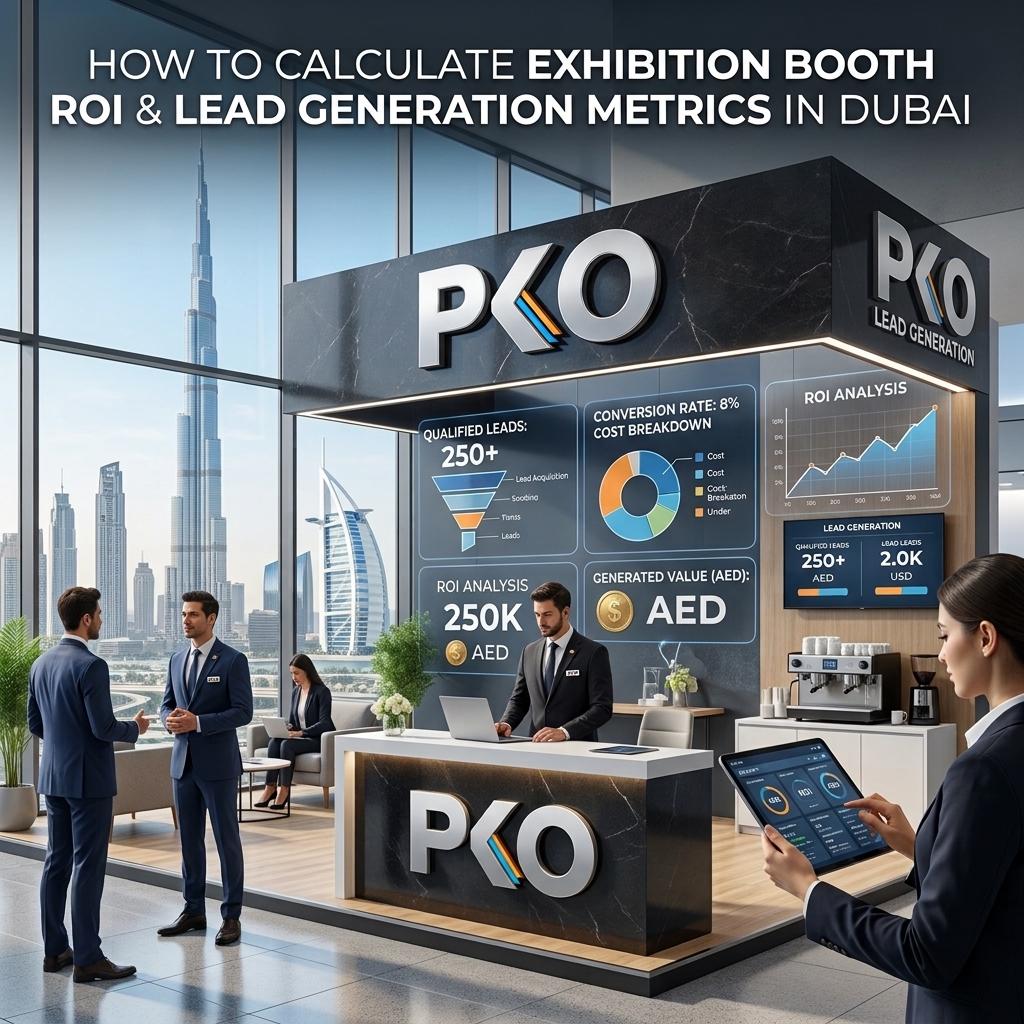
Measure Outcomes After the Exhibition
Once the event is finished, evaluate the results against the original objectives.
Useful measures can include:
- Number of visitors engaged
- Qualified leads generated
- Business meetings completed
- Product demonstrations conducted
- Sales opportunities created
- New distributor or partner discussions
- Customer interactions
- Follow-up opportunities
- Brand engagement
For lead-focused exhibitions, exhibitors can compare the stand and event investment with the value of qualified opportunities generated. This provides a more meaningful assessment than judging the stand only by its appearance.
Avoid Spending More Without a Clear Purpose
A larger or more expensive stand does not automatically produce better results. Additional features should have a clear purpose.
For example, a digital screen can be valuable if it demonstrates a complex product, while unnecessary screens may simply increase costs without improving visitor engagement. Similarly, a large meeting room can be useful for a company conducting numerous private discussions but may waste valuable space for an exhibitor whose primary objective is open visitor interaction.
The role of an experienced Exhibition Stand Contractor in Dubai is to help balance visual impact with practical business requirements.
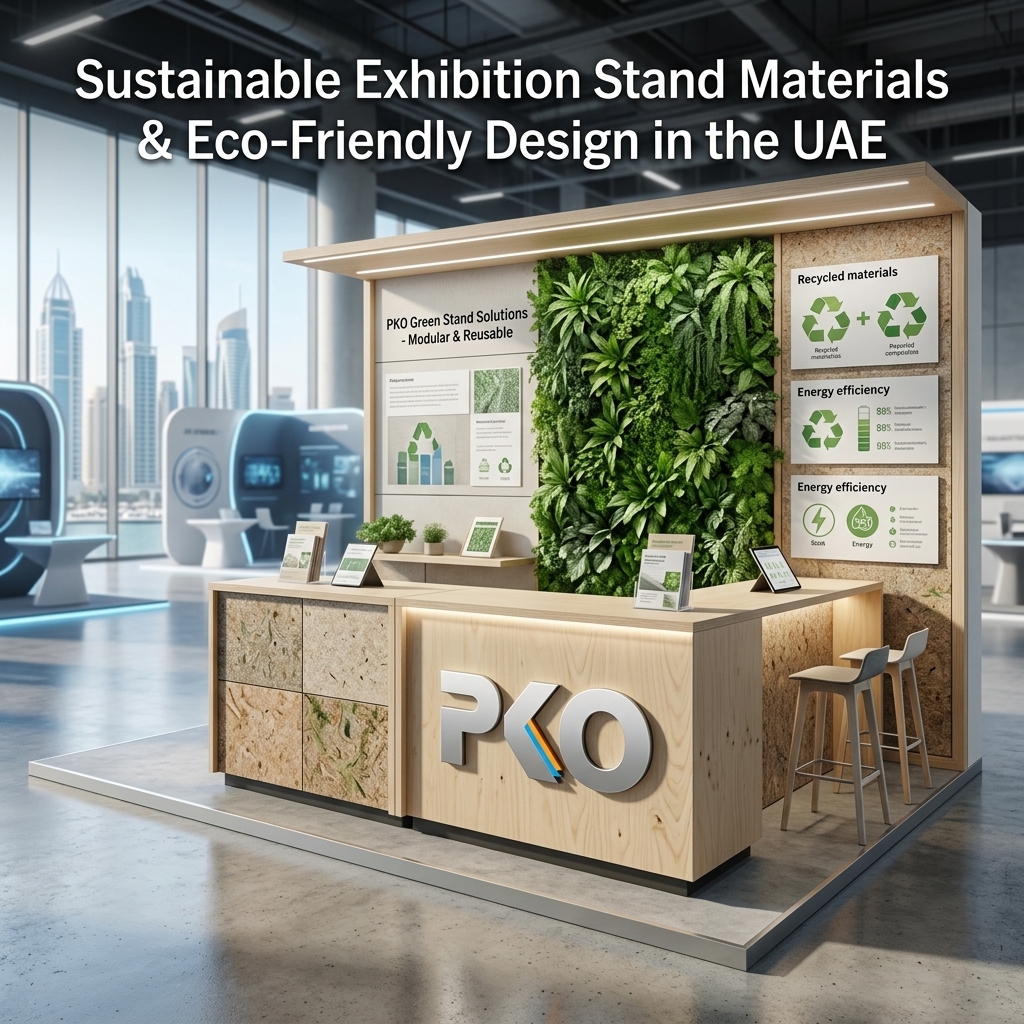
Think About Reusability Where Appropriate
Some stand elements may be designed for reuse across future exhibitions. Modular structures, selected furniture, display systems, graphics frameworks, and certain technical components may potentially be adapted for different spaces.
However, reusability should not compromise the requirements of the current exhibition. The stand should first meet the event’s objectives, available space, brand requirements, and visitor needs.
Focus on Value, Not Just Cost
The strongest exhibition investment is not necessarily the cheapest or the most expensive. It is the one where the design, construction quality, visitor experience, and business objectives are appropriately aligned.
When comparing Exhibition Stand Companies in Dubai, exhibitors should therefore consider:
Cost → Capability → Quality → Visitor Experience → Business Objective → Measurable Outcome
This approach makes it easier to determine whether the proposed stand represents appropriate value for the exhibition and whether the contractor understands the commercial purpose behind the physical structure.
Why Custom Stand Design Can Be Valuable for Competitive Trade Shows
In a busy exhibition hall, exhibitors are competing with numerous brands for the attention of the same visitors. A custom exhibition stand can help a company create a physical environment that reflects its brand, products, audience, and specific trade show objectives rather than relying on a generic layout.
Custom Design Connects the Stand With the Brand
A custom stand allows the design to be built around the company’s visual identity and communication priorities. Brand colours, logos, product displays, architectural features, graphics, lighting, and meeting areas can be planned as one coordinated environment.
This can be particularly useful for companies that need to communicate a distinctive market position or present complex products and services.
The objective should not simply be to make the stand look unusual. Every major design element should support the brand message and visitor experience.
The Layout Can Follow the Visitor Journey
One advantage of custom design is the ability to plan the stand around how visitors are expected to move through the space.
A typical visitor journey might be:
Attract → Enter → Discover → Interact → Discuss → Convert
For example, prominent branding can attract attention from the aisle, product displays can encourage visitors to explore, demonstration areas can support interaction, and meeting spaces can provide an appropriate environment for detailed business discussions.
The layout should also leave sufficient space for staff movement, visitor circulation, storage, and accessibility.
Custom Stands Can Support Specific Business Requirements
Different exhibitors have different operational needs. A company launching a product may require a demonstration zone, while a business focused on B2B negotiations may need several meeting areas.
Other requirements can include:
- Product showcases
- Interactive displays
- Hospitality areas
- Private meeting rooms
- Semi-private discussion spaces
- Storage
- Reception counters
- Digital presentations
- Integrated lighting
- Large-format graphics
A capable Exhibition Stand Designer in Dubai can incorporate these requirements into the concept before fabrication begins.
Custom Does Not Mean Unnecessarily Complicated
A custom exhibition stand does not need to be filled with expensive or complicated features. Good customization means making design decisions that are relevant to the exhibition objective.
An effective stand may use a relatively simple structure with strong branding, clear product presentation, thoughtful lighting, and an efficient visitor layout.
The priority should be purposeful differentiation, rather than adding features simply because they are visually impressive.
Balance Creativity With Practical Execution
Custom designs also require close coordination between design and fabrication. Architectural elements, specialist materials, lighting, technology, graphics, and furniture must be considered alongside budget, production time, venue requirements, and installation conditions.
This makes the role of Exhibition Stand Fabricators in Dubai important during the transition from approved concept to physical production. A design that looks impressive in a rendering must also be technically practical and achievable within the agreed scope.
When Custom Design Makes the Most Sense
Custom stand design can be particularly valuable when:
- The exhibition is strategically important to the business.
- The company has a strong need for brand differentiation.
- Products require demonstrations or specialist displays.
- The exhibitor expects substantial visitor interaction.
- Several meeting areas or functional zones are required.
- The stand has unusual dimensions or space requirements.
- The company wants the stand to support a specific campaign or product launch.
Ultimately, the value of a custom exhibition stand comes from how effectively it connects brand identity, visitor experience, functionality, and business objectives. The right Exhibition Stand Contractors for Trade Shows in UAE should be able to balance these elements while keeping the project practical, measurable, and achievable.
When Should You Choose an Exhibition Stand Builder in Dubai vs a Full-Service Contractor?
Choosing between an Exhibition Stand Builder in Dubai and a full-service exhibition contractor depends largely on the complexity of your project and how much coordination you want to manage yourself.
A stand builder may be suitable when your requirements are relatively straightforward and you already have the design, branding, technical specifications, or other project elements prepared. In this situation, the builder can focus primarily on constructing and installing the approved stand.
A full-service contractor, on the other hand, can manage a wider range of responsibilities, potentially covering:
- Initial project consultation
- Exhibition stand concept and design
- 3D visualization
- Technical drawings
- Custom fabrication
- Graphics and branding
- Furniture
- Lighting
- AV and digital technology
- Transportation and logistics
- Venue coordination
- Installation
- On-site support
- Dismantling
This broader approach can be useful for exhibitors that want a single project team coordinating the major stages of delivery.
Which Option Is Right for Your Exhibition?
Consider a dedicated builder when you already have a finalized design and need reliable construction and installation.
A full-service Exhibition Booth Contractor in Dubai may be more appropriate when you need assistance from the initial concept through final handover, particularly for a custom or technically complex stand.
The key consideration is not the title used by the supplier but the scope of responsibility they can realistically manage.
Before making a decision, ask:
Who will design it? Who will fabricate it? Who coordinates the venue requirements? Who manages installation? Who handles problems on-site?
If one experienced team can answer these questions clearly and accept responsibility for the connected stages, the project can be easier to coordinate.
For Dubai exhibitors, the best choice is therefore the provider whose capabilities match the stand’s complexity, timeline, budget, and business objectives not necessarily the company using the broadest service label.
What a Strong Exhibition Stand Project Should Look Like From Brief to Handover
A successful exhibition stand project should follow a clear sequence in which creative decisions, technical planning, fabrication, logistics, and installation remain connected. When these stages are properly coordinated, exhibitors have greater visibility over the project and fewer opportunities for costly last-minute changes.
Stage 1: Initial Brief and Objectives
The project begins with a clear understanding of the exhibitor’s goals. The contractor should establish the exhibition details, stand dimensions, target audience, products or services, branding requirements, expected visitor interactions, meeting requirements, budget, and delivery schedule.
This brief becomes the foundation for the rest of the project.
Stage 2: Concept and Design
The design team translates the brief into a practical stand concept. This may include floor planning, visitor flow, branding, product displays, meeting areas, storage, lighting, graphics, and technology.
At this point, the exhibitor should review the proposed layout and confirm that it supports the intended visitor experience.
Stage 3: Technical Development
Once the concept is approved, the design needs to be developed into technical information for production and installation.
Materials, dimensions, structural elements, electrical requirements, lighting, graphics, furniture, AV equipment, and other components should be coordinated before fabrication begins.
This stage connects the creative work of the Exhibition Stand Designers in Dubai with the practical requirements of fabrication.
Stage 4: Fabrication and Finishing
The approved specifications are then translated into physical components. Depending on the project, this can include walls, counters, displays, custom furniture, flooring, architectural features, branded panels, lighting elements, and other components.
Quality checks during production are important because correcting an issue before transportation is generally easier than discovering it during installation.
Stage 5: Logistics and Venue Coordination
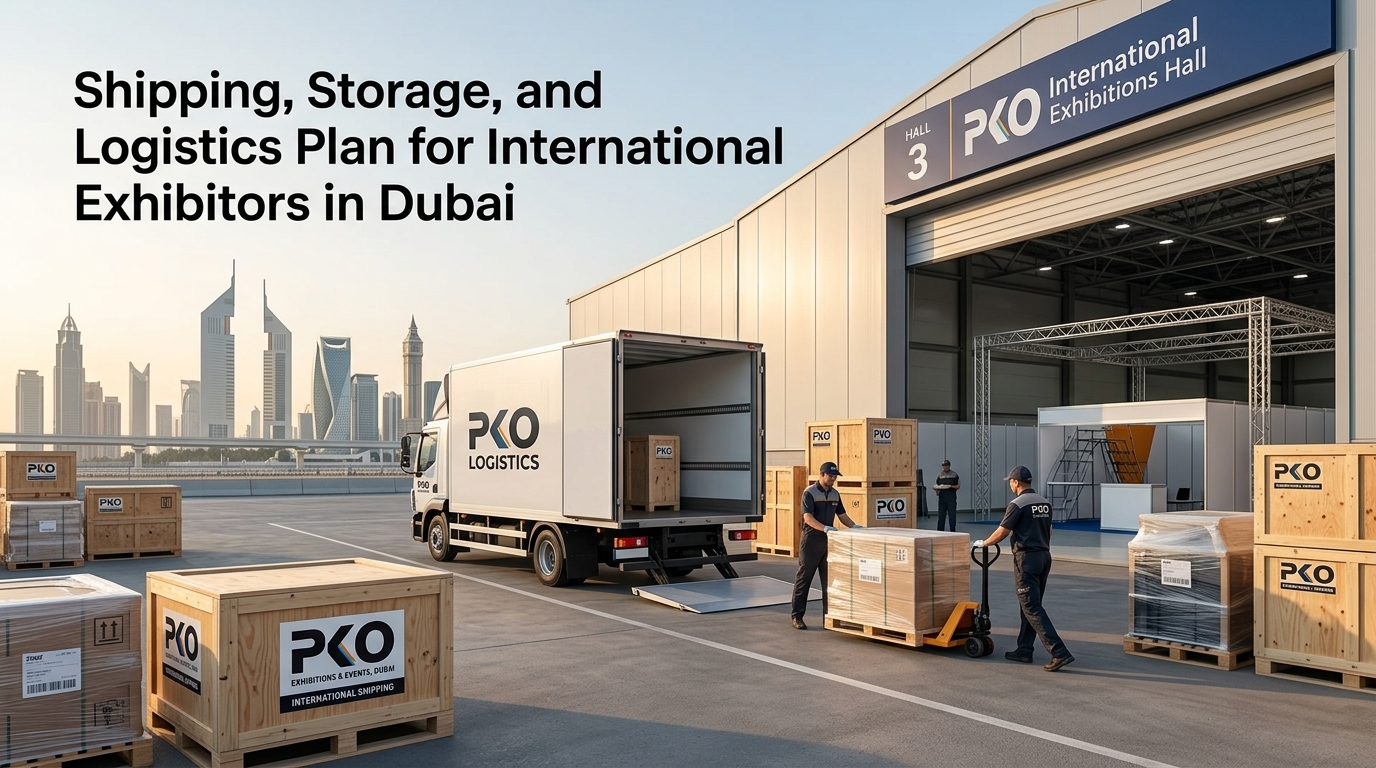
Completed components need to reach the exhibition venue according to the agreed schedule. Transportation, access arrangements, installation timing, technical services, and venue requirements should be coordinated in advance.
A project manager should maintain communication between the exhibitor, production team, logistics team, and venue-related contacts.
Stage 6: Installation and Final Inspection
The contractor assembles the stand at the exhibition venue and completes the required graphics, lighting, furniture, displays, technology, and finishing details.
Before handover, the stand should be checked against the approved design and project scope. Branding should be correctly positioned, displays should be functional, and visitor areas should be ready for use.
Stage 7: Handover and Exhibition Support
The final handover marks the point at which the exhibitor can begin using the completed stand. Where agreed, the contractor may also provide on-site support during the exhibition to address technical or physical issues.
After the event, dismantling should be managed according to the agreed schedule and scope.
The Complete Delivery Chain
A well-managed project can therefore be viewed as:
Brief → Concept → Design Approval → Technical Planning → Fabrication → Quality Check → Logistics → Installation → Inspection → Handover → Dismantling
This sequence gives exhibitors a clearer understanding of what their Exhibition Stand Contractors for Trade Shows in UAE should be managing throughout the project.
The strongest results usually come when every stage is connected rather than treated as a separate task. A creative concept should guide fabrication, fabrication should follow approved technical information, logistics should follow the production schedule, and installation should reflect the approved design.
For exhibitors, this provides a useful final test when comparing contractors: Can the company explain how it will move your project from the first brief to the completed stand, and who will be responsible at each stage?
How to Match the Contractor to Your Exhibition Requirements
Not every exhibition requires the same level of stand construction, design complexity, or project management. A suitable contractor should match its capabilities to the exhibitor’s actual requirements rather than applying the same solution to every project.
For Simple and Functional Stands
If your primary requirements are clear branding, product displays, basic furniture, lighting, and an open visitor area, a straightforward stand solution may be sufficient.
In this situation, prioritize:
- Reliable construction
- Clean finishing
- Clear branding
- Efficient use of space
- Transparent pricing
- On-time installation and dismantling
There may be little value in paying for complex architectural features or technology that does not contribute to the exhibition objective.
For Custom Brand-Focused Stands
Companies looking to create a distinctive brand environment should evaluate the contractor’s design and custom fabrication capabilities.
The contractor should be able to translate brand guidelines into the physical environment while maintaining consistency across structures, graphics, furniture, lighting, and product displays.
Reviewing previous custom projects can help determine whether the contractor has experience delivering the level of originality and finishing quality you require.
For Product Demonstration Stands
Businesses presenting physical, technical, or interactive products need to consider functionality alongside appearance.
The stand may require demonstration counters, product display structures, interactive screens, technical equipment, power access, storage, and sufficient space for visitors to observe or test the product.
In these cases, the contractor should understand how the equipment will be integrated into the stand during the design stage rather than treating technology as an afterthought.
For Meeting and Lead-Generation Focused Stands
B2B exhibitors may place greater importance on business conversations than on product displays. Their stand could therefore require reception areas, open discussion zones, private meeting rooms, hospitality facilities, and suitable storage.
The layout should make it easy for staff to identify and welcome visitors while allowing more detailed conversations to take place without disrupting general visitor movement.
For Large or Technically Complex Stands
Large custom stands require stronger coordination between design, fabrication, logistics, technology, and installation.
When evaluating Exhibition Stand Manufacturers Dubai or contractors for these projects, examine their ability to manage:
- Complex custom structures
- Multiple functional zones
- Specialist materials and finishes
- Large-format graphics
- Lighting systems
- AV and interactive technology
- Custom furniture
- Detailed installation schedules
- On-site project management
A contractor with experience handling complex projects may be better positioned to coordinate these interconnected requirements.
Match Capability to Complexity
The goal is not to find the contractor offering the most services. It is to find a provider whose capabilities correspond to the demands of your particular exhibition.
A useful way to assess the match is:
Project objective → Stand complexity → Required capabilities → Contractor experience → Delivery plan
This approach helps exhibitors avoid both extremes: choosing a contractor whose capabilities are insufficient for a complex project or paying for services that are unnecessary for a simple one.
Ultimately, the right Exhibition Stand Contractors for Trade Shows in UAE should understand what the exhibitor is trying to achieve and recommend a delivery approach that balances design quality, functionality, budget, technical requirements, and event deadlines.
Final Checklist Before Hiring an Exhibition Stand Contractor
Before appointing an exhibition stand contractor, take a final step back and review the complete proposal rather than making the decision based on one factor. A contractor may have an impressive portfolio but limited project-management capability, while another may offer competitive pricing but lack the fabrication or technical experience required for your stand.
A final checklist can help bring these considerations together.
Confirm the Contractor’s Relevant Experience
Check whether the company has completed projects comparable to yours in terms of exhibition type, stand size, design complexity, industry, and technical requirements.
Relevant experience is generally more useful than a large portfolio filled with unrelated projects.
Review the Actual Scope of Work
Make sure the proposal clearly states what is included. Confirm responsibilities for:
- Stand design
- Technical drawings
- Fabrication
- Graphics
- Furniture
- Lighting
- AV or digital equipment
- Transportation
- Installation
- On-site support
- Dismantling
If an important requirement is missing from the quotation, clarify it before signing.
Verify the Project Timeline
The contractor should provide a realistic schedule covering design approval, artwork submission, technical development, fabrication, logistics, installation, and handover.
Make sure the schedule leaves sufficient time for quality checks and unexpected issues.
Assess Communication and Project Management
You should know who your main point of contact will be and how project updates, approvals, revisions, and urgent issues will be handled.
Good communication becomes particularly important when several teams are involved in design, fabrication, logistics, technology, and installation.
Compare Quality Against Price
Do not compare quotations by price alone. Review the materials, finishes, construction approach, included services, production capability, and level of project support behind each price.
A lower quotation is only better if it provides an equivalent scope and quality.
Check What Happens After Installation
Ask what support is available once the stand has been installed. Establish who handles last-minute adjustments, technical issues, missing components, or other problems before and during the exhibition.
Also confirm how dismantling and removal will be managed after the event.
Use a Simple Final Decision Test
Before making your final selection, ask five questions:
- Can this contractor deliver the design we need?
- Can it fabricate the stand to the required quality?
- Can it manage venue, logistics, installation, and dismantling?
- Is the quotation transparent and comparable with alternatives?
- Do we have confidence in its communication and project management?
If the answer to all five is clear and supported by the contractor’s proposal, portfolio, references, and project plan, you have a stronger basis for appointment.
The final decision should therefore consider the complete relationship between capability, quality, communication, cost, and delivery reliability. This approach helps Dubai exhibitors select Exhibition Stand Contractors for Trade Shows in UAE based on the requirements of the actual project rather than relying on marketing claims or price alone.
How PKO Exhibitions & Events Can Support Your UAE Trade Show
Choosing the right exhibition stand partner is ultimately about finding a team that can connect creative ideas with reliable execution. For exhibitors preparing for trade shows in Dubai and across the UAE, PKO Exhibitions & Events can support the process by bringing together exhibition stand design, fabrication, project coordination, and on-site delivery.
The project begins with understanding the exhibitor’s objectives, brand identity, available stand space, target audience, products, and functional requirements. These details provide the foundation for developing a stand concept that is visually aligned with the brand while remaining practical for visitor movement, product presentation, meetings, storage, and staff operations.
From there, the project can progress through design development, technical planning, fabrication, graphics, furniture, lighting, and other required elements. Coordinating these components as one project helps maintain consistency between the approved concept and the finished exhibition environment.
Supporting the Project From Concept to Installation
A strong exhibition partner should remain involved beyond the initial design. Production, logistics, installation, and final inspection are important parts of delivering a complete stand.
For exhibitors, this means evaluating whether the contractor can manage the complete delivery chain:
Brief → Design → Technical Planning → Fabrication → Finishing → Logistics → Installation → Handover → Dismantling
PKO Exhibitions & Events can be considered as part of this evaluation when exhibitors are comparing Exhibition Stand Companies in Dubai and looking for a partner capable of supporting their specific trade show requirements.
The right stand solution will depend on the exhibition, available space, brand objectives, budget, and technical requirements. Rather than using a standard approach for every project, exhibitors should communicate their priorities clearly so the contractor can develop a suitable design and delivery plan.
Conclusion
Choosing the right exhibition stand contractor is an important part of preparing for a successful trade show in Dubai or anywhere in the UAE. The contractor you appoint can influence how effectively your brand is presented, how visitors move through the stand, how products are displayed, and how smoothly the project progresses from design to final installation.
Rather than choosing a supplier based only on price or an attractive portfolio, exhibitors should evaluate the complete delivery capability. Relevant UAE experience, creative and technical expertise, fabrication quality, project management, venue coordination, transparent pricing, communication, installation, and after-event support should all form part of the decision.
A structured selection process also makes it easier to compare Exhibition Stand Contractors for Trade Shows in UAE on a like-for-like basis. Start with clear objectives, prepare a detailed brief, review suitable contractors, compare proposals, confirm the scope, and establish responsibilities before production begins.
For exhibitors looking for a partner to help transform an exhibition brief into a professional and functional stand, PKO Exhibitions & Events can be considered alongside other qualified providers based on the specific requirements of the project.
Planning an upcoming trade show in Dubai or the UAE? Contact PKO Exhibitions & Events today to discuss your exhibition stand requirements and project objectives.
Frequently Asked Questions About Exhibition Stand Contractors in UAE
What does an exhibition stand contractor do?
An exhibition stand contractor manages some or all of the process required to create and deliver an exhibition stand. Depending on the company’s scope, this can include design, technical planning, fabrication, graphics, furniture, lighting, logistics, installation, on-site support, and dismantling.
How do I choose Exhibition Stand Contractors for Trade Shows in UAE?
Start by defining your exhibition objectives, stand size, budget, design requirements, and delivery timeline. Then shortlist contractors based on relevant UAE experience, portfolio quality, fabrication capability, project management, technical expertise, quotation transparency, and references. Comparing several contractors using the same brief makes the decision more objective.
How much does an exhibition stand cost in Dubai?
There is no single standard price because the cost depends on factors such as stand size, design complexity, materials, custom fabrication, graphics, furniture, lighting, technology, installation, and other services. The best approach is to request detailed quotations based on the same specification and compare the complete scope rather than headline prices.
How early should I hire an exhibition stand contractor?
It is advisable to begin planning several months before the exhibition, particularly for large or highly customized stands. Early appointment provides more time for concept development, revisions, technical planning, fabrication, logistics, and installation. The exact timeline depends on project complexity and the exhibition schedule.
What is the difference between an exhibition stand builder and contractor?
A stand builder may primarily focus on constructing and installing the physical stand, while a contractor can manage a broader project covering design, fabrication, logistics, installation, and other related services. However, terminology varies between companies, so exhibitors should evaluate the actual scope of services rather than relying only on job titles.
Should I choose a custom exhibition stand or a standard design?
The choice depends on your objectives, budget, stand space, and functional requirements. Custom designs can be useful when brand differentiation, product demonstrations, meeting areas, or unusual layouts are important. A simpler solution may be more appropriate when the requirements are straightforward.
What should an exhibition stand quotation include?
A detailed quotation should clearly identify the included design, materials, fabrication, graphics, furniture, lighting, technology, transportation, installation, dismantling, and other agreed services. It should also clarify exclusions and potential additional costs so different proposals can be compared fairly.
Why is fabrication capability important?
Fabrication capability affects whether the approved design can be produced accurately and finished to the expected quality. Exhibitors should understand whether the contractor handles fabrication directly or works with production partners and who is responsible for quality control.
What questions should I ask before hiring an Exhibition Stand Contractor in Dubai?
Ask about previous projects, similar exhibitions, design and fabrication capabilities, project management, production timelines, venue coordination, installation and dismantling, included services, change procedures, on-site support, and client references. It is also important to have the final scope documented before production begins.
Can an exhibition stand contractor handle installation and dismantling?
Many full-service contractors provide both installation and dismantling, but this should always be confirmed in the proposal. Exhibitors should establish who is responsible for transportation, venue access, installation, final handover, dismantling, and removal after the exhibition.
How can I compare Exhibition Stand Companies in Dubai?
Use the same project brief when requesting proposals and compare contractors across several categories, including relevant experience, design capability, fabrication, project management, technical support, material quality, communication, quotation transparency, and delivery reliability. This provides a more balanced comparison than choosing solely on price.
What makes a good exhibition stand design?
A good design should combine visual brand communication with practical functionality. It should make the company easy to identify, provide a logical visitor journey, present products or services clearly, accommodate staff and meetings, and use the available space efficiently.
Does a larger exhibition stand always perform better?
No. Size alone does not determine exhibition performance. A smaller, well-planned stand can provide a stronger visitor experience if its layout, branding, product presentation, and engagement areas are aligned with the company’s objectives. The appropriate size and configuration depend on the exhibition strategy.
What should I provide to the contractor before design begins?
Provide the exhibition details, stand dimensions, brand guidelines, logos, product information, preferred messaging, target audience, functional requirements, budget range, and any technical or venue information already available. The clearer the initial brief, the easier it is for the contractor to develop a relevant proposal.
How can I reduce last-minute exhibition stand problems?
Begin planning early, approve designs and artwork on schedule, document the complete scope, confirm technical requirements, maintain regular communication, and ensure the contractor has a clear installation and logistics plan. A structured workflow reduces the likelihood of avoidable changes close to the exhibition opening.
What should I look for in the best exhibition stand contractor in Dubai?
The best contractor for one exhibitor may not be the best for another. Look for a provider whose experience, design capability, fabrication resources, project management, technical support, communication, budget approach, and delivery process match your specific exhibition requirements.
Ultimately, the strongest contractor is one that can demonstrate how it will move the project from the initial brief to a finished, functional stand while maintaining clear communication and accountability throughout the process.