
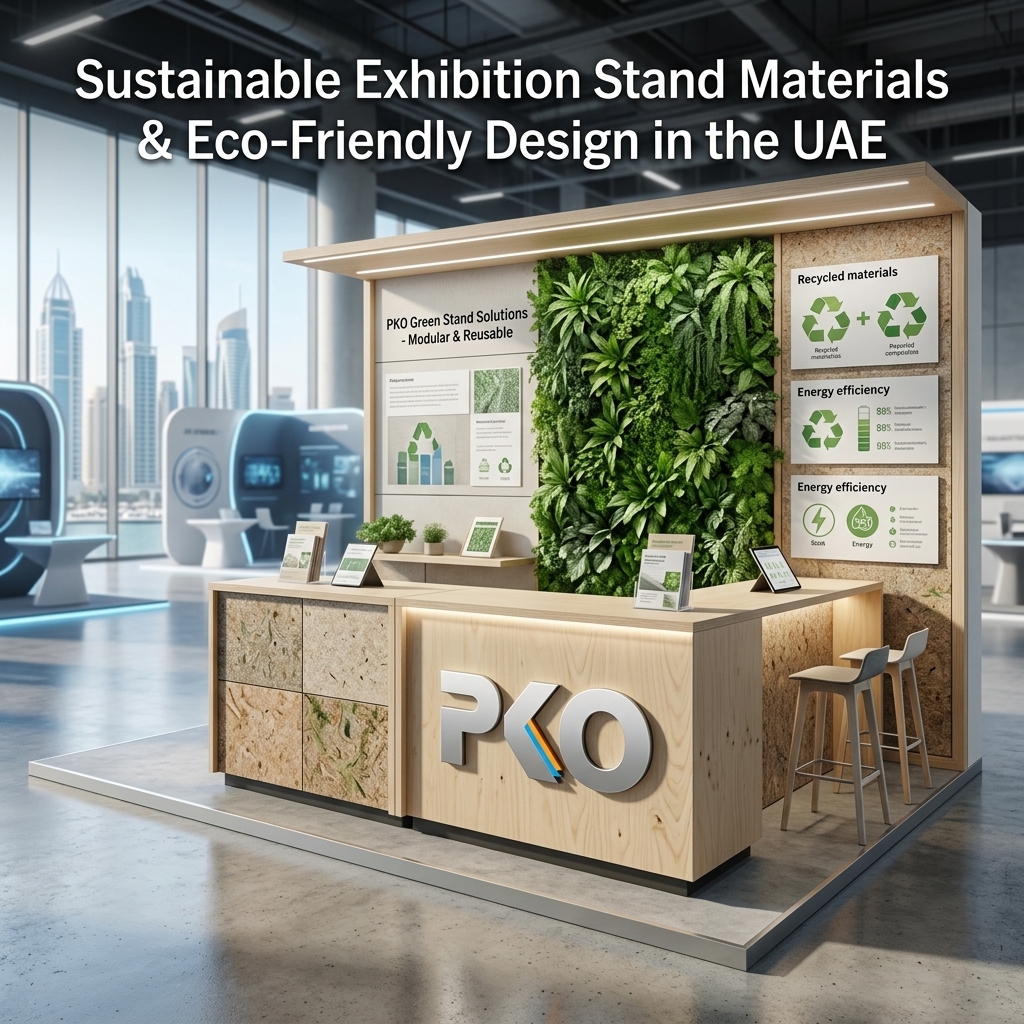
Sustainable Exhibition Stand Materials & Eco-Friendly Design in the UAE
A sustainable exhibition stand is built using materials and construction methods designed to reduce waste, extend the stand’s usable life, and lower the environmental impact of exhibiting. In practice, this means reusable frameworks, recyclable or responsibly sourced materials, modular construction, and graphics that can be updated instead of replaced.
For UAE exhibitors attending multiple trade shows a year across Dubai World Trade Centre, Expo City, and other venues, sustainable exhibition stands UAE solutions are becoming a practical way to reduce repeat construction costs, cut down on storage and transport waste, and present a more responsible brand image without compromising on design quality.
What Makes an Exhibition Stand Sustainable?
An exhibition stand qualifies as sustainable when it is designed to be used more than once, built from materials that can be recycled or responsibly sourced, and constructed in a way that minimises offcuts, single-use fittings, and disposable finishes.
Key factors that determine how sustainable a stand actually is:
- Material choice — aluminium, engineered timber, and recyclable panel systems instead of disposable MDF and single-use foam board
- Reusability — a modular frame and panel system that can be rebuilt for a different floor plan or hall size
- Graphics approach — printed panels and fabric graphics that can be swapped without rebuilding the whole structure
- Transport efficiency — components that flat-pack and reduce the number of trucks or shipments needed
- End-of-life plan — whether the stand can be stored, resold, or broken down into recyclable parts once it’s no longer needed
None of these factors work in isolation. A stand built from recyclable material but designed for one-time use, with graphics glued directly onto structural panels, is not meaningfully more sustainable than a conventional build. Sustainability comes from how the materials, design, and reuse plan work together across an exhibitor’s calendar of events.
Sustainable Exhibition Stand Materials to Consider
Material selection is the starting point for any eco-friendly exhibition stand. Some materials hold up to repeated use and travel better than others, and that directly affects how sustainable a stand is over its lifetime.
Reusable aluminium and modular framing Aluminium extrusion systems are lightweight, corrosion-resistant, and can be assembled and disassembled repeatedly without losing structural strength. This makes them one of the most practical choices for modular exhibition stand systems that get reconfigured for different floor plans across several UAE shows.
Responsibly sourced timber FSC-certified or responsibly sourced timber panels are a lower-impact alternative to standard MDF, particularly for flooring, counters, and structural cladding. Where timber is used, it should be specified with reuse in mind rather than as a one-event finish.
Recyclable and recycled panel systems Recyclable composite panels and recycled aluminium composite material (ACM) reduce the amount of new raw material required per stand and can often be recovered at end of life rather than sent to landfill.
Fabric-based and reusable graphics Tension fabric graphics are a strong option for sustainable exhibition graphics because the fabric skin can be replaced independently of the frame. This means a single frame structure can support several different campaigns over its lifespan, which fits naturally within a broader sustainable exhibition graphics and printing approach.
Low-waste printing Digital printing on demand, right-sized print runs, and reusable graphic panels all reduce offcut waste compared with printing oversized runs or laminating graphics permanently onto structural material.
Energy-efficient lighting LED lighting draws less power than older halogen or fluorescent fixtures and generates less heat, which also simplifies climate control inside a hall during long exhibition days.
Reusable flooring and display components Interlocking modular flooring tiles, demountable counters, and standardised shelving units can be stored and reused across multiple events instead of being rebuilt from scratch each time.
Where signage is part of the stand, options such as reusable acrylic or light box signage tend to hold up better across repeat use than printed vinyl banners that degrade after a few installs.
Eco-Friendly Exhibition Stand Design Principles
Material choice only goes so far. How a stand is designed determines whether those materials actually get reused, or whether they end up in a skip after one show. A few design principles guide most eco-conscious exhibition design UAE projects:
- Modularity first — designing the stand as a kit of parts rather than a single fixed structure makes it far easier to reconfigure for a different stand size or hall layout at the next event
- Lightweight construction — lighter components mean fewer vehicles and lower fuel use during transport between storage, the build-up, and the venue
- Reduced waste at the cutting stage — specifying standard panel sizes and modular dimensions reduces offcuts during fabrication
- Adaptable graphics — separating the graphic layer from the structural layer so branding can change between events without rebuilding the stand
- Energy efficiency on-site — LED lighting, lower-wattage AV equipment, and sensors that avoid running displays when no one is at the stand
- Easy dismantling — connection systems that come apart cleanly without damaging panels, so components survive multiple strike-downs
- Storage and future reuse — designing to standard crate sizes so components store efficiently between shows instead of being scrapped because they don’t fit anywhere
Good sustainable exhibition stand design also has to account for visitor flow, sightlines, and brand impact from the first sketch. A stand that reuses well but looks tired or dated works against the exhibitor’s marketing goals, so design and sustainability need to be planned together rather than treated as separate decisions made late in the process.
Why Sustainable Exhibition Stands Make Sense for UAE Exhibitors
UAE companies commonly exhibit at several events a year, sometimes across multiple venues in Dubai and other emirates. That pattern of repeat exhibiting is exactly where sustainable exhibition stands UAE approaches start to pay off, for reasons beyond the environmental angle:
- Repeat exhibitions — a modular stand built once can be reconfigured for GITEX, Arab Health, or a sector-specific show without a full rebuild each time
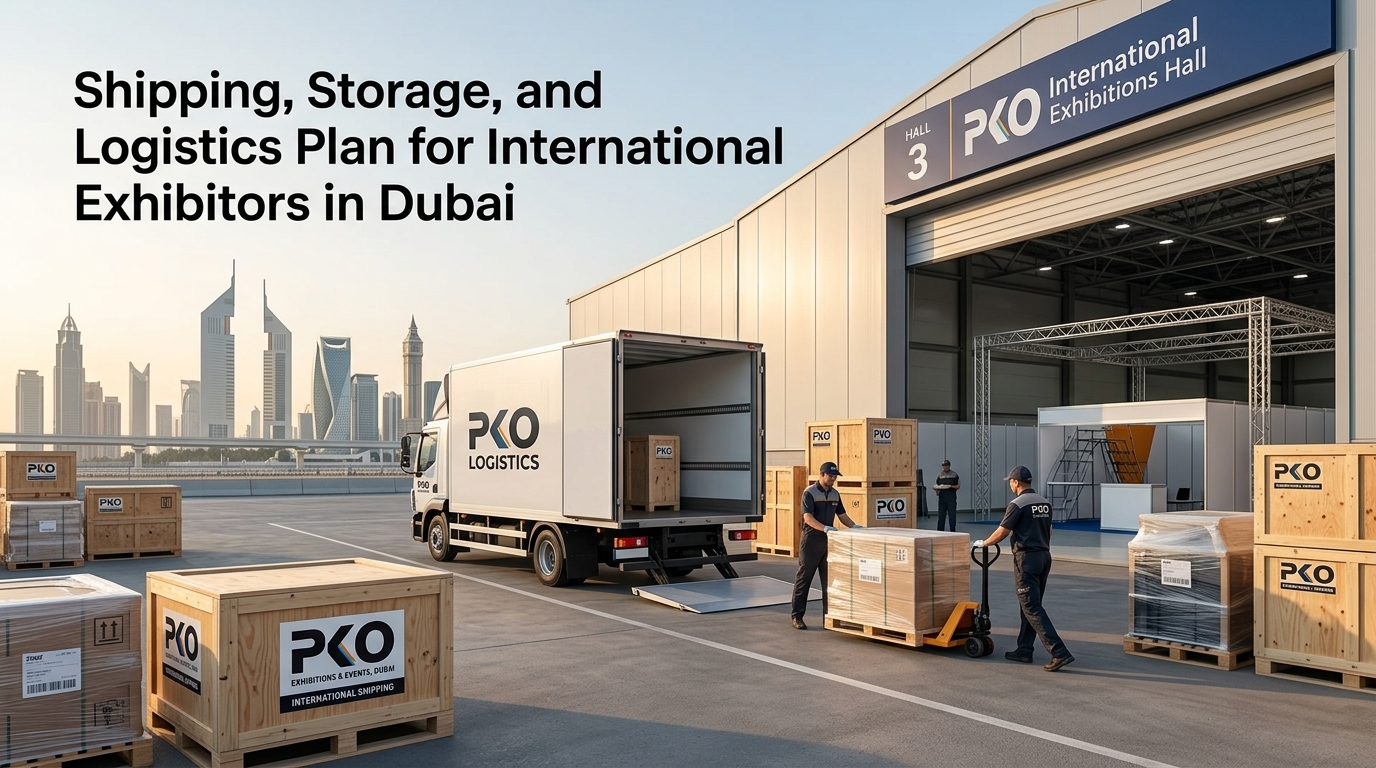
- Reduced transport load — flat-packing, lightweight framing, and standardised crate sizes cut down on the number of shipments needed between storage and the venue
- Storage efficiency — components designed for reuse need a clear storage plan between events, which also protects the investment made in the original build
- Lower waste generation — fewer single-use materials means less material sent to landfill after each show
- Brand perception — visitors and industry peers increasingly notice when a company invests in a well-built, reusable stand rather than a disposable one
- Operational efficiency — a stand system the team already understands speeds up build-up and dismantling, which matters when halls have tight move-in and move-out windows
It’s worth being direct about cost. Sustainable materials and modular systems do not automatically mean a cheaper stand. The financial outcome depends on the materials chosen, how the design is engineered, how many events the stand will be used for, transport distances, and how well components are stored between shows. A well-planned reusable stand can lower cost per event over several exhibitions, while a poorly planned one adds storage and refurbishment costs without ever delivering the reuse it was designed for.
How to Choose Sustainable Materials for a Dubai Exhibition
Before confirming materials for a Dubai or wider UAE exhibition, it helps to work through a short checklist with your stand designer or fabricator:
- Ask whether the frame system is designed to be rebuilt for a different stand size, not just the same layout
- Confirm which components are genuinely reusable versus which are single-use finishes
- Check whether graphics can be replaced independently of the structure
- Ask about crate sizes and whether components are designed for efficient storage between events
- Confirm the material’s durability across repeated transport, build-up, and strike-down cycles
- Check what happens to materials at end of life — whether they can be recycled, resold, or repurposed
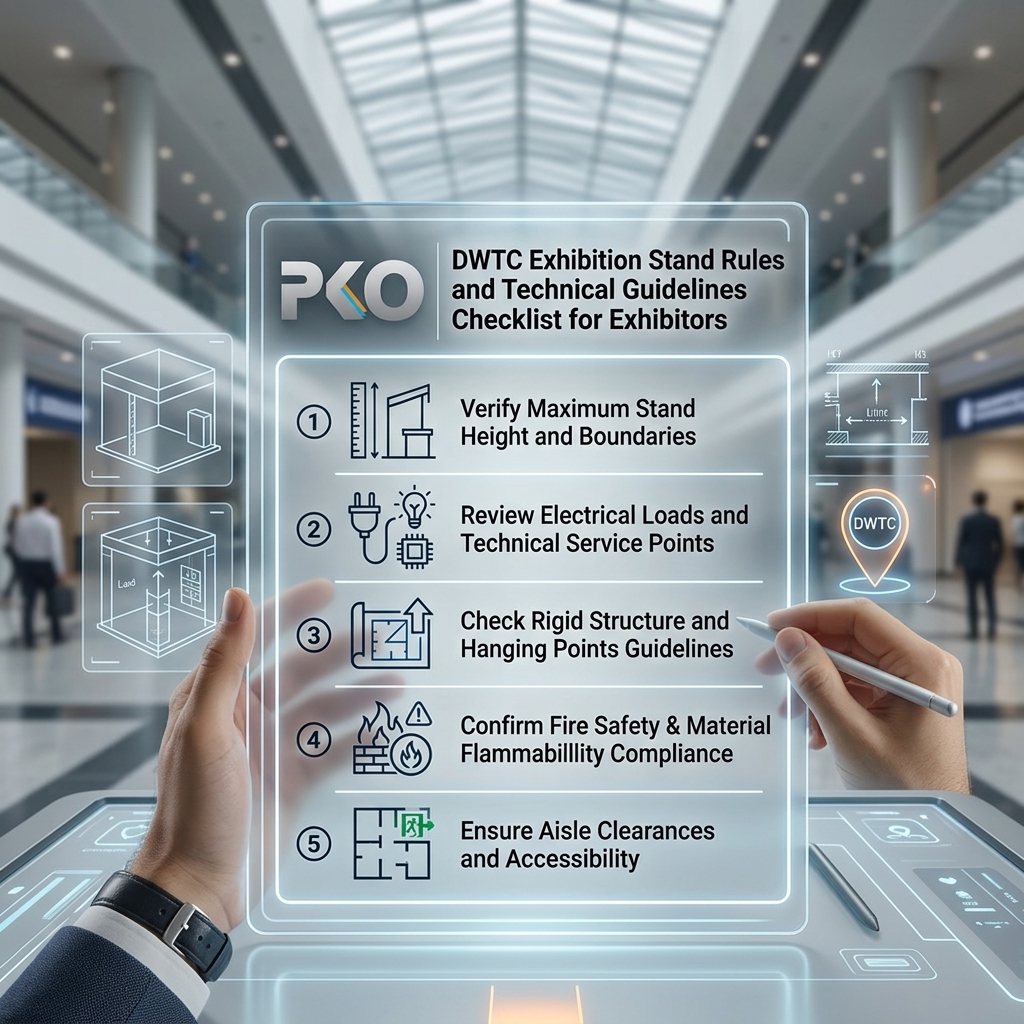
- Ask how the venue’s technical requirements affect material choice, including height restrictions, load limits, and any approval or documentation requirements for the specific hall
This checklist matters more for larger or multi-level builds, where the volume of material and the complexity of storage and reuse increase significantly. For double-decker exhibition stands, for example, structural components tend to be heavier and more specialised, so reuse planning has to happen at the design stage rather than being added afterward.
Sustainable vs Single-Use Exhibition Stand Approach
Sustainable, reusable approach
- Modular frame designed for multiple stand configurations
- Graphics layer separate from the structure, replaceable per event
- Components stored and reused across several shows
- Lower material waste per event once the stand is amortised across its lifespan
- Requires storage space and a reuse plan between events
Single-use approach
- Structure typically built for one specific layout and event
- Graphics often printed directly onto structural panels
- Materials usually disposed of or scrapped after the show
- No ongoing storage requirement, but higher material cost repeated every event
- Faster to plan for a one-off show with no repeat use expected
Neither approach is automatically the right answer for every exhibitor. A company doing a single show in the UAE with no planned repeat presence may reasonably choose a simpler, single-use build. A company with a recurring UAE exhibition calendar generally gets more value from investing in reusable exhibition stands or considering exhibition stand rental options that reduce the need for new single-use construction altogether.
How PKO Can Help With Sustainable Exhibition Stand Design
PKO Exhibitions & Events works with UAE exhibitors on both the design and physical build side of a stand project, which is where sustainability decisions actually get made. Design and planning conversations cover layout, visitor flow, and how a stand can be built to support more than one event, drawing on the same exhibition stand design thinking used across other PKO projects, applied here with reuse and material choice front of mind.
On the manufacturing side, working with an experienced exhibition stand manufacturer matters because reusable components need to be fabricated to a tolerance that allows them to be rebuilt cleanly for different layouts, not just assembled once and forgotten. Graphics and signage decisions are handled through PKO’s printing and signage services, where fabric graphics, reusable signage, and right-sized print runs are options worth discussing early rather than after the structural design is finalised.
If you’re planning a stand for an upcoming UAE exhibition and want to talk through which materials and construction approach fit your budget, event calendar, and sustainability goals, you can get in touch with the team to walk through the options.
FAQs About Sustainable Exhibition Stands in the UAE
What is a sustainable exhibition stand?
A sustainable exhibition stand is built to be reused across multiple events rather than discarded after one show. It typically uses modular framing, recyclable or responsibly sourced materials, and a graphics system that can be updated without rebuilding the whole structure.
Which materials are best for eco-friendly exhibition stands?
Reusable aluminium framing, responsibly sourced timber, recyclable panel systems, and fabric-based graphics are among the most practical choices. LED lighting and modular flooring also support a lower-waste build compared with disposable finishes and single-use fittings.
Are modular exhibition stands more sustainable?
Modular stands are generally more sustainable because their components are designed to be reconfigured for different layouts and reused across multiple events, reducing the material waste that comes from building a new fixed structure for every show.
Can exhibition stands be reused in different UAE events?
Yes, provided the stand is designed with modularity in mind from the start. A frame system built for reconfiguration can be adapted to different hall sizes and floor plans, though venue-specific rules and available space still need to be checked for each event.
How can exhibitors reduce exhibition stand waste?
Exhibitors can reduce waste by choosing modular, reusable components, separating graphics from structural material, specifying standard panel sizes to limit offcuts, and putting a clear storage plan in place so components survive to the next event instead of being scrapped.
Are sustainable exhibition stands more expensive?
Not necessarily. Cost depends on the materials chosen, how the stand is engineered, how many events it will be used for, and how well it’s stored between shows. A well-planned reusable stand can lower the cost per event over time, while a poorly managed one can add unnecessary expense.
How can I choose an eco-friendly exhibition stand company in Dubai?
Ask potential partners how they approach reuse, which materials they specify, whether graphics are replaceable independently of the structure, and how they handle storage between events. A company that can answer these clearly is more likely to deliver a stand that performs sustainably over time, not just on paper.