
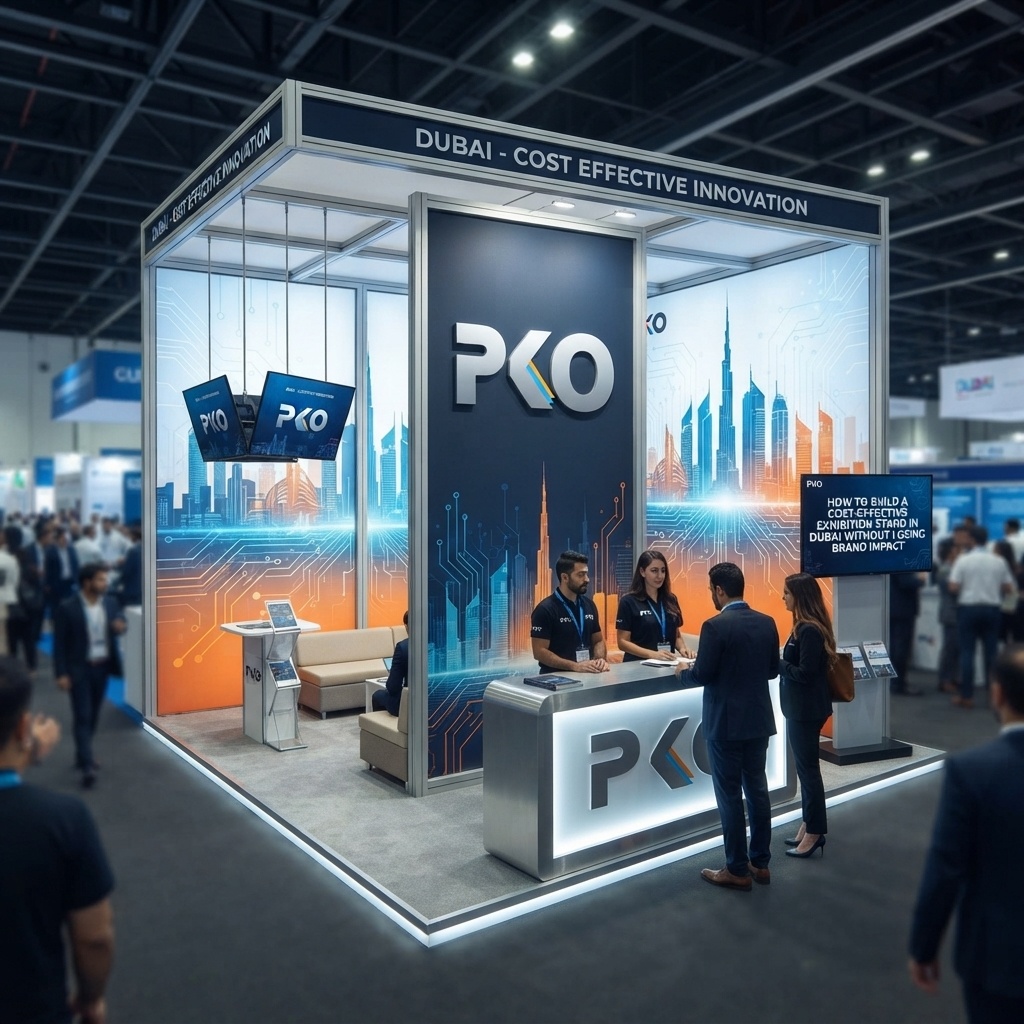
How to Build a Cost-Effective Exhibition Stand in Dubai Without Losing Brand Impact
Dubai exhibition environment is highly competitive, with businesses using trade shows to attract visitors, demonstrate products, build brand recognition, and generate valuable business opportunities. In 2024, Dubai recorded 96 exhibitions with more than 58,900 participating companies and around 1.84 million visitors, showing the scale of competition exhibitors face for visitor attention. For companies working with a limited exhibition budget, the challenge is not simply to spend less but to make every part of the stand contribute to visibility and engagement.
A cost-effective exhibition stand in Dubai should therefore balance design quality, functionality, brand presentation, visitor experience, fabrication, installation, and future reusability. Choosing affordable exhibition stand contractors Dubai does not necessarily mean selecting the lowest quotation or removing important design elements. Instead, it means identifying where costs can be controlled without weakening the features visitors notice most, such as clear branding, strong graphics, product presentation, lighting, accessibility, and an organized layout.
The right approach is to invest strategically. A simplified structure with strong visual communication can often create more impact than an expensive stand filled with unnecessary decorative features. Likewise, modular components, reusable graphics, efficient space planning, and carefully selected materials can help reduce future exhibition expenses while maintaining a professional appearance. The following guide explains how businesses can plan, design, fabricate, and evaluate a cost-effective exhibition stand in Dubai without compromising their brand impact.
What Makes an Exhibition Stand Cost-Effective in Dubai?
A cost-effective exhibition stand is not simply the cheapest booth available. It is a stand where the budget is allocated according to the elements that have the greatest influence on brand visibility, visitor engagement, functionality, and long-term value. For exhibitors comparing Exhibition Stand Contractors Dubai, the real question should be how effectively the proposed stand converts its available budget into a professional and memorable visitor experience.
Several factors influence the overall cost of an exhibition stand in Dubai, including the booth size, design complexity, construction method, materials, graphics, lighting, furniture, technology, storage, transportation, installation, and dismantling. A highly customized structure with complex architectural elements may require more fabrication time and specialized materials, while a modular or hybrid approach can provide greater flexibility and reuse potential.
The purpose of cost control is therefore to distinguish between essential investment and unnecessary expenditure. Brand identification, clear messaging, product presentation, visitor access, suitable lighting, and functional meeting or demonstration areas should remain priorities. On the other hand, excessive decorative structures, complicated finishes, oversized furniture, or features that do not support the visitor journey can increase costs without delivering equivalent brand value.
Another important consideration is the total cost of ownership. A stand that appears inexpensive initially may become less economical if it requires complete reconstruction for every exhibition. Conversely, reusable walls, counters, display systems, lighting elements, and interchangeable graphics can spread the initial investment across multiple events.
A useful way to evaluate cost-effectiveness is to consider the relationship between brand impact, usability, reusability, and total exhibition investment. This approach helps exhibitors look beyond the initial quotation and assess what they are actually receiving for their budget.
Once these cost factors are understood, the next step is to establish a realistic exhibition budget before the design process begins. A clear budget allows designers, fabricators, and contractors to prioritize the elements that matter most instead of creating a concept that later requires expensive compromises.
Set the Exhibition Stand Budget Before Designing
Setting the exhibition stand budget before starting the design process is one of the simplest ways to prevent unnecessary costs. Without a defined financial limit, design concepts can gradually become more complex as additional structures, technology, furniture, graphics, and decorative elements are added. A clear budget gives Exhibition Stand Contractors Dubai a practical framework for developing a concept that matches both the brand’s objectives and available investment.
Start by defining the total exhibition budget, rather than focusing only on the construction price. Consider the stand size, exhibition dates, venue requirements, number of staff, product-display needs, meeting areas, storage, graphics, lighting, furniture, electrical requirements, transportation, installation, and dismantling. These factors can influence the final project cost and should be considered during the initial planning stage.
It is also useful to divide the budget into three priority levels. Must-have elements should include the brand identity, key messaging, essential product or service displays, visitor access, and appropriate lighting. Useful elements may include meeting counters, product demonstration areas, integrated storage, and digital displays. Optional elements can include complex decorative structures or advanced technology that does not directly support the exhibition objective. This hierarchy makes it easier to protect the important parts of the stand when budget adjustments are necessary.
The budget should also reflect the purpose of the exhibition. A company launching a new product may need to allocate more toward product demonstrations and visual communication, while a business focused on generating meetings may benefit from a practical hospitality and discussion area. In both cases, the design should follow the objective rather than allowing decorative features to consume the available budget.
Once the financial framework is established, the next decision is choosing the right stand format. Modular, custom, and hybrid exhibition stands have different cost structures, levels of flexibility, and opportunities for reuse, making the stand type an important part of the overall cost strategy.
Choose the Right Stand Type for Your Budget
The type of exhibition stand you choose can have a direct effect on both the initial investment and the potential cost of participating in future events. Before working with an Exhibition Stand Builder in Dubai, consider whether your business needs a fully custom structure, a modular system, or a combination of both. The right option depends on the exhibition objective, available budget, stand size, brand requirements, and how frequently the stand components can be reused.
Modular Exhibition Stands
Modular exhibition stands are designed around reusable components that can often be adapted for different layouts and exhibition spaces. Walls, counters, display systems, lighting structures, and graphic panels can potentially be reconfigured rather than rebuilt from scratch for every event. This makes modular systems particularly useful for businesses that participate in multiple exhibitions and want to spread their investment across several events.
Another advantage is flexibility. Instead of committing the entire budget to a one-time structure, exhibitors can create a clean and professional environment using standardized components and then refresh the appearance with new graphics, messaging, product displays, or selected visual elements. When planned correctly, this approach can support both cost control and consistent brand presentation.
Custom Exhibition Stands
A custom exhibition stand is developed around a specific brand, product, space, or visitor experience. It can incorporate distinctive architectural features, tailored product displays, dedicated meeting areas, unusual shapes, integrated technology, and highly customized branding. This approach can provide greater design freedom when differentiation is a major priority.
However, greater customization can also introduce additional design, fabrication, material, and installation requirements. For this reason, every custom feature should have a clear purpose. If an architectural element does not improve visibility, communication, product presentation, visitor engagement, or functionality, it may be worth reconsidering.
Hybrid Exhibition Stands
A hybrid stand combines reusable modular components with selected custom-built features. This can provide a practical middle ground for exhibitors who want a distinctive appearance without making every part of the structure completely bespoke.
For example, a company could use a reusable structural system while investing selectively in a custom reception counter, branded focal wall, product display, or feature element. Graphics and messaging can then be changed for different events while the core structure remains useful.
The best Exhibition Stand Builders in UAE should therefore consider more than the appearance of a single event. They should assess how the stand will be used, transported, adapted, and potentially reused. Choosing the right format at the beginning can help control both immediate and future exhibition expenditure.
Once the stand format is selected, the next opportunity for cost control is the design itself. A stand does not need complicated architecture or excessive decoration to create a strong impression. Strategic simplification can reduce construction complexity while keeping the brand visually distinctive.
Simplify the Exhibition Stand Design Without Making It Look Cheap
An exhibition stand can look professional and distinctive without relying on complicated structures or excessive decoration. For businesses working with a controlled budget, the objective is to simplify the architecture while strengthening the elements that visitors actually notice. This is where experienced Exhibition Stand Designers in Dubai can help translate a brand identity into a practical layout without allowing unnecessary design features to increase production costs.
Start with a clear visual hierarchy. The company name or logo should be easy to recognize from a distance, followed by a concise message that tells visitors what the business offers. Product or service information should then support that primary message rather than competing with it. A simple hierarchy such as brand → message → product/service → proof → call to action helps visitors understand the stand quickly.
Open sightlines can also make a stand feel more accessible without requiring additional construction. Instead of filling the floor area with walls, furniture, and decorative features, use the available space to create a natural visitor path. A clear entrance, visible product area, reception point, and dedicated meeting or demonstration zone can make a smaller stand feel organized and purposeful.
Another effective approach is to select one or two visual focal points rather than trying to make every surface a feature. A well-designed branded wall, illuminated logo, distinctive product display, or carefully positioned graphic can attract attention more effectively than multiple competing design elements. This can also reduce the amount of fabrication and decorative material required.
The same principle applies to branding. Avoid covering every available surface with lengthy copy, multiple logos, or excessive imagery. Visitors at busy exhibitions often need to understand the core message quickly. Strong typography, consistent brand colors, quality imagery, and concise messaging can create a polished appearance without requiring an expensive architectural build.
When planning Exhibition Stand Design Dubai, every structural element should therefore have a purpose. Ask whether it improves visibility, communicates the brand, displays a product, supports visitor interaction, provides storage, or contributes to a meeting or demonstration. If it does none of these things, removing it may reduce costs without reducing brand impact.
A simplified structure also changes the role of visual communication. As unnecessary architectural elements are removed, graphics, branding, and product presentation become increasingly important in creating the stand’s identity. The next step is therefore to decide where the budget should be concentrated for maximum brand visibility.
Spend More on Brand Visibility and Less on Unnecessary Decoration
A cost-effective exhibition stand should direct the budget toward the elements that visitors can see, understand, and interact with rather than spending heavily on decoration that has little practical value. Strong brand visibility is often created through a combination of clear messaging, strategic positioning, product presentation, graphics, and lighting rather than through the number of decorative structures used in the booth.
One useful way to plan this is to divide the stand into four brand-impact zones. The first is the long-distance visibility zone, where the company name, logo, and primary message should be noticeable as visitors approach the stand. The second is the approach zone, which should communicate enough information to encourage visitors to enter. The third is the engagement zone, where products, demonstrations, samples, or conversations can take place. The fourth is the conversion or meeting zone, where qualified visitors can discuss requirements with the team in a more focused setting.
This approach helps determine where money should be spent. A strong branded header or focal wall may contribute more to recognition than an elaborate ceiling structure. Similarly, a well-designed product display can create more engagement than decorative furniture that occupies valuable floor space. The objective is not to make the stand visually empty but to make every visible element serve a purpose.
Exhibitors can also reduce unnecessary expenditure by avoiding excessive enclosed areas, oversized furniture, complicated architectural features, and decorative finishes that do not support the visitor journey. Instead, the budget can be directed toward high-quality graphics, appropriate lighting, product displays, comfortable interaction points, and a layout that makes the brand easy to understand.
This principle is particularly important when comparing Exhibition Stand Companies in Dubai. A strong proposal should explain how the design supports brand visibility and visitor engagement, not simply show an impressive 3D rendering. The most visually elaborate concept is not automatically the most effective or cost-efficient option.
Once the main visual priorities have been established, graphics become one of the most important tools for communicating the brand. Well-planned exhibition graphics can reinforce the stand’s identity while allowing businesses to avoid unnecessary structural additions.
Use Exhibition Graphics Strategically
Exhibition graphics can deliver significant brand impact without requiring a complex stand structure. When planned correctly, large-format graphics, backlit panels, product imagery, brand messaging, and directional visuals can communicate the company’s identity while keeping the physical design relatively simple. For exhibitors working with Exhibition Stand Fabricators in Dubai, the key is to make every graphic serve a clear communication purpose rather than filling available surfaces with information.
Start with the main brand message. A visitor should be able to identify the company and understand its primary offering quickly, even when approaching from a distance. Large, readable branding can be supported by a short headline, strong product imagery, or a concise value proposition. Detailed information can then be provided through product displays, brochures, digital screens, QR codes, or conversations with the exhibition team.
Graphic costs can also be controlled through better planning. Instead of producing numerous event-specific panels, consider which elements can be reused across multiple exhibitions. Permanent brand graphics can remain consistent, while interchangeable panels can carry event-specific campaigns, product launches, offers, or messaging. This allows the same underlying stand structure to receive a refreshed appearance without requiring a complete redesign.
The placement of graphics matters as much as their quality. A large logo hidden behind furniture or positioned where visitors cannot see it clearly will not deliver the same value as branding placed at an appropriate height and orientation. Similarly, graphics should not obstruct product displays or make the booth feel overcrowded.
Businesses should also avoid excessive text. An exhibition environment is fast-moving, so visitors often scan rather than read lengthy blocks of information. Strong visual hierarchy, concise messaging, appropriate white space, and high-quality imagery can make the stand easier to understand while creating a more polished appearance.
When working with Exhibition Stand Designers in Dubai, it is useful to consider graphics alongside the architecture from the beginning rather than treating printing as a final-stage addition. The size, position, lighting, material, viewing distance, and intended message all influence how the finished graphic will perform.
Relevant production requirements may include exhibition graphics printing, graphic design, backdrops, display panels, signage, and branded visual elements. Selecting only the graphics that contribute to visibility and communication can help keep the project focused on brand impact.
Graphics establish what visitors see and read, but lighting determines which elements attract attention first. The next step is therefore to use lighting strategically rather than treating it simply as a decorative feature.
Use Lighting to Increase Brand Impact Without Overbuilding
Lighting can make a relatively simple exhibition stand appear more distinctive while directing visitor attention toward the areas that matter most. However, cost-effective exhibition lighting is not about installing as many fixtures as possible. The better approach is to use lighting selectively to improve brand visibility, product presentation, graphics, and visitor comfort.
Start by identifying the areas that deserve the strongest visual emphasis. The brand wall or logo should be clearly visible, particularly from the main visitor approach. Product displays may require focused illumination so visitors can see important details, finishes, or features. A demonstration area can use targeted lighting to create a clear focal point, while the meeting area should remain comfortably illuminated without becoming visually distracting.
LED lighting can be useful for exhibition environments because it can provide focused illumination while supporting different display requirements. Backlit graphics can also combine branding and lighting into one feature, allowing a simple wall or graphic panel to become a stronger visual focal point without adding complex architectural structures.
The position of the light is equally important. Poorly positioned fixtures can create glare, unwanted shadows, or uneven illumination, reducing the quality of product displays and graphics. A well-planned lighting arrangement should support the stand’s visual hierarchy rather than compete with it.
Exhibitors should also avoid spending heavily on decorative lighting that has little connection to the brand or visitor experience. A complicated lighting installation may increase equipment, electrical, and installation requirements without producing meaningful additional impact. Instead, lighting should answer a practical question: What do we want visitors to notice first?
This is another reason to involve Exhibition Stand Contractors Dubai early in the planning process. Lighting needs can affect the stand structure, electrical requirements, graphic materials, ceiling elements, product displays, and overall installation plan. Integrating these considerations during design can help avoid costly changes later.
A simple strategy is to prioritize lighting in this order: brand visibility → product presentation → demonstration area → visitor interaction → general illumination. This keeps the available budget focused on the areas that contribute most directly to communication and engagement.
Once lighting has established visual priorities, the stand still needs to make it easy for visitors to move through the space. Efficient visitor flow is therefore the next design factor that can improve the performance of a stand without necessarily increasing its size or construction cost.
Design the Layout Around Visitor Flow
A cost-effective exhibition stand should use its available floor space intelligently. A larger or more heavily constructed booth does not automatically create a better visitor experience. By planning the layout around how people approach, enter, explore, interact, and leave the stand, exhibitors can make better use of the space while avoiding unnecessary walls, furniture, and structural elements.
The visitor journey can be organized into a simple sequence: Attract → Enter → Understand → Engage → Discuss → Convert. Each stage should have an identifiable place within the stand. The first-view area should communicate the brand clearly from the aisle, while the approach zone should provide an inviting and accessible route into the booth.
Once visitors enter, the main product or service message should be easy to understand. Product displays, demonstrations, samples, or digital presentations should be positioned where they can be seen without blocking circulation. Staff should also have enough room to interact with visitors without creating congestion around the reception or display areas.
A meeting area can be included when face-to-face discussions are important, but it does not necessarily need to occupy a large percentage of the stand. Compact counters, semi-open meeting spaces, or strategically positioned furniture can provide privacy while preserving visibility and accessibility. Storage should similarly be integrated into existing structures wherever possible rather than consuming valuable display space.
Open sightlines are particularly useful for smaller exhibition stands. Visitors should be able to see the brand, products, and key activities without navigating around unnecessary barriers. This can make a compact stand feel more welcoming and visually open while reducing the need for additional construction.
The layout should also consider staff movement. Employees need practical access to storage, displays, meeting areas, and visitor-facing positions. Poor staff circulation can create bottlenecks and make even a well-designed stand feel crowded during busy periods.
When planning an Exhibition Stand Design Dubai project, the floor plan should therefore be assessed from both the visitor’s and staff’s perspective. A useful question is whether every part of the allocated space contributes to visibility, engagement, demonstration, conversation, storage, or conversion. If a feature serves no clear function, it may be consuming budget and floor area without improving the experience.
Efficient space planning also creates an opportunity for longer-term savings. Once the most important zones have been identified, elements such as counters, display systems, lighting structures, and graphic frames can potentially be designed for reuse at future events. This makes reusability the next important consideration for controlling exhibition costs over time.
Make Reusable Components Part of the Cost Strategy
For businesses that participate in multiple exhibitions, one of the most effective ways to control long-term stand expenditure is to design with reuse in mind. Instead of treating every exhibition stand as a completely new project, exhibitors can invest in adaptable components that can be reconfigured, refreshed, and used across different events. This approach can reduce repeated fabrication while maintaining a professional brand presence.
Reusable components can include modular walls, counters, display shelving, lighting systems, storage units, frames, and graphic structures. These elements can form the foundation of a stand while event-specific graphics, product arrangements, messaging, and selected decorative features are changed according to the exhibition.
The advantage is not simply that the same stand is used repeatedly. Effective reusability means the stand can adapt to different requirements. For example, a business attending a large trade show may use a more open configuration with additional product displays, while a smaller event may require a compact arrangement with a reception counter and focused branding. The underlying components can remain useful while the layout changes.
Graphics are particularly important in this strategy. A company does not necessarily need to present identical messaging at every event. Reusable structural elements can be combined with interchangeable graphic panels that promote different products, services, campaigns, or event-specific messages. This creates visual variety without requiring complete reconstruction.
Reusability can also help reduce material waste and simplify future planning. When core components are already available, future exhibition projects can focus more on adapting the design than starting production from zero. However, reuse should not be pursued at the expense of suitability. A component that is difficult to transport, repeatedly damaged, incompatible with different stand sizes, or expensive to modify may not provide meaningful long-term savings.
This makes the choice of Exhibition Stand Manufacturers Dubai and fabricators particularly important. During the planning stage, ask whether the proposed structure can be dismantled, transported, stored, reconfigured, and reused efficiently. The contractor should understand not only how the stand will look at the current exhibition but also how its components can support future events.
A practical reuse strategy is to separate the stand into three layers: core structure, adaptable branding, and event-specific elements. The core structure can remain consistent, branding can be refreshed through graphics and messaging, and event-specific components can be added only when they provide a clear benefit.
Once reusable components have been planned, material selection becomes another important factor. The right materials need to balance appearance, durability, weight, fabrication requirements, transportation, and future reuse rather than being selected purely according to their initial price.
Select Materials Based on Impact, Durability and Reusability
The materials used in an exhibition stand influence far more than its appearance. They affect fabrication quality, transportation, installation time, durability, maintenance, and the ability to reuse components for future events. Choosing materials based only on the lowest price may reduce the initial investment, but it can also lead to higher replacement costs, increased maintenance, or a shorter lifespan.
A practical approach is to evaluate materials based on purpose, durability, visual quality, weight, and reusability. For example, structural components that will be used repeatedly should be durable enough to withstand transportation, assembly, and dismantling. Decorative finishes should enhance the overall presentation without making the stand unnecessarily difficult to modify or reuse. Likewise, lightweight materials can help simplify transportation and installation while maintaining a professional finish.
Consistency is another important consideration. Using too many different materials, finishes, or textures can increase fabrication complexity and create unnecessary production costs. A well-planned combination of high-quality materials, consistent finishes, and carefully selected feature elements often delivers a cleaner and more premium appearance than a stand that incorporates numerous competing materials.
Material selection should also support the exhibition’s objectives. Product display areas may require finishes that highlight merchandise effectively, while meeting spaces should prioritize comfort and practicality. Flooring, counters, display units, and graphic panels should all complement the brand identity while remaining functional for the exhibition environment.
Working with experienced Exhibition Stand Fabricators in Dubai and Exhibition Stand Manufacturers Dubai can make this process more efficient. Fabricators understand how different materials perform during production, transportation, installation, and repeated use. Their expertise can help identify solutions that balance appearance with practicality, ensuring the stand remains visually impressive without introducing unnecessary costs.
Another factor to consider is maintenance between exhibitions. Materials that are easy to clean, repair, or update can extend the useful life of the stand and reduce preparation costs before future events. This is especially valuable for businesses that participate in exhibitions regularly and want to maximize the return on their investment.
Ultimately, the best material is not always the most expensive or the least expensive—it is the one that supports the stand’s purpose while delivering durability, flexibility, and consistent brand presentation. Once the material strategy has been established, the next step is selecting the right exhibition stand partner to bring the design to life within budget and manage the project efficiently from concept through installation.
Work With the Right Exhibition Stand Contractor in Dubai
Choosing the right contractor can have a major influence on whether an exhibition stand remains within budget while achieving the intended brand impact. A contractor is not simply responsible for constructing the booth. Depending on the project scope, the team may coordinate design, fabrication, graphics, materials, logistics, installation, dismantling, and other production requirements. Selecting a partner based on the lowest quotation alone can therefore overlook factors that influence the final cost and quality.
When evaluating Exhibition Stand Contractors Dubai, begin by reviewing portfolios that demonstrate relevant experience with different stand sizes, layouts, industries, and design approaches. A portfolio should help you understand how the contractor translates a brand brief into a practical exhibition environment rather than simply showcasing visually complex designs.
Evaluate Design and Fabrication Capabilities
Understand which parts of the project the contractor can manage directly and which are handled through external suppliers. Coordination between Exhibition Stand Designers in Dubai, fabricators, manufacturers, graphic teams, and installation crews can affect project consistency and timelines. A well-managed workflow reduces the risk of communication gaps between design and production.
Check Material and Build Quality
Ask what materials are proposed and why they are suitable for the project. Material choices should be assessed for appearance, durability, transportation, installation, and potential reuse. A professional contractor should be able to explain how the selected materials support the budget rather than simply presenting them as design specifications.
Assess Project Management
Exhibition projects operate according to strict event schedules. Delays in design approval, production, graphics, transportation, or installation can create additional pressure and unexpected costs. Ask how the contractor manages milestones, approvals, technical requirements, production, quality checks, and on-site installation.
Compare the Complete Scope
When looking for affordable exhibition stand contractors Dubai, do not compare providers only by their headline prices. A genuinely affordable solution should be evaluated against the full scope of work. Check whether the quotation includes design, fabrication, graphics, furniture, lighting, transportation, installation, dismantling, and other agreed requirements.
Consider Reusability
If your company attends multiple exhibitions, discuss whether the stand can be reused or adapted. A contractor should be able to identify which components can remain part of the core structure and which elements can be changed for different events. This can help turn a one-time stand investment into a longer-term exhibition asset.
Ask About Venue and Installation Requirements
The contractor should understand the practical requirements associated with exhibition installation, including access, build schedules, electrical needs, safety considerations, dismantling, and coordination with the relevant venue or event organizer. Clarifying these requirements early can reduce the possibility of unexpected changes later.
Look for Transparent Communication
A strong working relationship depends on clear communication. The contractor should be able to explain the design concept, production process, timeline, costs, responsibilities, and any limitations in straightforward language. This is particularly important when changes are requested after the initial concept has been approved.
For businesses comparing Exhibition Stand Companies in Dubai, the best choice is therefore not necessarily the company offering the lowest initial figure. The more useful question is whether the contractor can deliver the required brand experience, construction quality, functionality, and project management within the agreed scope.
Once the right contractor has been shortlisted, the next step is to request a detailed quotation. A transparent quotation makes it easier to determine whether the proposed stand is genuinely cost-effective and allows different contractors to be compared on a like-for-like basis.
Ask for a Detailed Exhibition Stand Quotation
A detailed quotation is essential when comparing exhibition stand providers in Dubai because the lowest headline price does not always represent the lowest overall project cost. Two contractors may quote different amounts for what appears to be the same stand while including very different levels of design, fabrication, graphics, furniture, installation, or logistics. Comparing the complete scope helps you identify the actual value behind each proposal.
Before approving a quotation, check whether it clearly identifies the design and fabrication scope. The document should explain what is being constructed, which materials are proposed, the major structural features, and whether the stand is intended for single-use or future reuse. If the project includes custom elements, those should be clearly described rather than appearing as vague allowances.
The quotation should also clarify the treatment of graphics and branding. Check whether graphic design, printing, installation, backlit graphics, signage, and event-specific panels are included. This is important because graphic requirements can change considerably depending on the stand concept and the amount of branding required.
Other areas that should be clearly addressed include:
- Furniture and seating.
- Lighting fixtures.
- Electrical requirements.
- Product display systems.
- Storage solutions.
- Digital screens or other agreed technology.
- Transportation and logistics.
- Installation and dismantling.
- On-site support, where applicable.
- Any additional production or venue-related requirements.
A useful way to compare quotations is to follow a like-for-like comparison:
Quoted price → included scope → excluded scope → material quality → reusability → installation → logistics → total expected cost
For example, one Exhibition Stand Builder in Dubai might offer a lower construction price but exclude transportation and installation, while another quotation could include those services. Comparing only the first number could make the first option appear cheaper even when the final project cost is higher.
It is also worth asking about potential additional charges before signing off the project. Clarify how design revisions, additional graphics, material changes, last-minute modifications, transportation changes, or extra installation requirements are handled. Understanding these conditions in advance can help prevent budget surprises.
The quotation should ultimately connect back to the original exhibition objectives. If the purpose is product demonstration, the proposal should allocate sufficient resources to display and demonstration areas. If lead generation and meetings are the priority, the layout should provide practical interaction spaces. This ensures the budget is supporting the business purpose rather than simply paying for visual complexity.
For companies evaluating Exhibition Stand Contractors Dubai, transparency is therefore a key part of affordability. A detailed quotation makes it easier to understand what you are paying for, compare providers fairly, and identify areas where costs can be reduced without sacrificing important brand elements.
Even with a detailed quotation, however, unexpected expenses can arise when planning starts too late or project decisions continue to change. Preventing these last-minute costs is the next important part of building a cost-effective exhibition stand.
Avoid Hidden and Last-Minute Exhibition Stand Costs
A carefully planned exhibition stand can still exceed its budget when important decisions are delayed or project requirements change shortly before the event. Last-minute design revisions, urgent graphics, material changes, transportation adjustments, and installation requirements can increase both production pressure and overall expenditure. For this reason, cost control should continue throughout the project rather than ending once the initial quotation is approved.
One of the most effective ways to reduce unexpected costs is to establish a clear approval process. The exhibition brief should be finalized before design begins, followed by concept development, design approval, technical planning, production, graphics, quality checks, transportation, and installation. Each stage should have a defined decision point so that major changes do not continue into the production phase.
Common Sources of Last-Minute Costs
Several issues can create avoidable expenditure, including:
- Changes to the stand layout after production has started.
- Revisions to approved artwork.
- Additional or replacement graphics.
- Changes to furniture requirements.
- New electrical or lighting requirements.
- Structural modifications.
- Changes to transportation arrangements.
- Late delivery of products or display materials.
- Installation schedule changes.
- Unplanned storage or dismantling requirements.
Early communication between the exhibitor and Exhibition Stand Contractors Dubai can help identify these issues before they become expensive. For example, if a product requires a specific display structure, power supply, lighting arrangement, or demonstration area, that requirement should be communicated during the design stage rather than after fabrication has begun.
The production timeline should follow a logical sequence:
Brief → concept → design approval → technical planning → production → graphics → quality check → installation
This sequence gives the contractor a clear understanding of what needs to be produced and when. It also gives the exhibitor opportunities to review the project before costs become difficult to reverse.
Another useful approach is to maintain a small contingency within the overall exhibition budget. Even with thorough planning, event-specific requirements or minor changes may arise. A contingency can provide flexibility without forcing the business to compromise essential branding or visitor-facing elements.
However, contingency should not be treated as a substitute for planning. The strongest cost strategy is to make important decisions early, approve artwork on time, communicate product and furniture requirements clearly, and understand the full scope of the contractor’s responsibilities.
Early planning also provides an opportunity to focus the budget on what visitors actually experience. Once unnecessary last-minute expenses have been minimized, the remaining question is whether the investment is producing meaningful brand visibility and visitor engagement. This makes measuring brand impact an important part of evaluating the true effectiveness of an exhibition stand.
Measure Brand Impact, Not Just Stand Size
The success of an exhibition stand should not be judged solely by its size, construction complexity, or the amount spent on its appearance. A large stand can attract attention without generating meaningful conversations, while a smaller, strategically designed stand can create stronger engagement when its layout, messaging, products, and visitor experience are well aligned with the company’s objectives.
Before the exhibition, define what the stand is expected to achieve. The goal may be generating qualified leads, arranging business meetings, demonstrating products, introducing a new service, strengthening brand recognition, or creating opportunities for post-event follow-up. The design and budget should then support those objectives.
A practical way to evaluate stand effectiveness is:
Stand effectiveness = Visibility + Engagement + Message clarity + Lead opportunity
Visibility
Measure whether visitors can identify the brand and understand what it offers from the main approach. Strong branding, readable graphics, suitable lighting, and an unobstructed layout can contribute to visibility without requiring an unnecessarily complex structure.
Engagement
Look at how many visitors interact with the team, product displays, demonstrations, samples, digital content, or other relevant features. A stand designed around visitor flow can encourage meaningful interaction rather than simply attracting people who pass by.
Message Clarity
Visitors should be able to understand the company’s primary offering quickly. If the stand contains too much text, competing messages, or confusing product categories, the visual investment may not translate into effective communication.
Lead Opportunity
Track measurable outcomes such as qualified leads, meetings, enquiries, product demonstrations, QR-code interactions, or requests for follow-up. These indicators provide a better understanding of whether the stand contributed to the company’s exhibition objectives.
This approach also helps determine where future budgets should be allocated. If the stand attracted visitors but produced few qualified conversations, the issue may be the message, visitor journey, staff positioning, or call to action rather than the physical size of the booth. If visitors engaged well but the product display was difficult to understand, improving presentation may provide more value than increasing the overall stand footprint.
For businesses working with Exhibition Stand Companies in Dubai, these measurements can also make future stand planning more informed. Instead of repeating the same design simply because it looked impressive, exhibitors can identify which elements actually contributed to visibility and engagement and then invest accordingly.
Ultimately, the goal of a cost-effective exhibition stand is not to minimize every expense. It is to remove spending that contributes little to the visitor experience while protecting the elements that support brand recognition, communication, interaction, and business outcomes.
With this principle established, the next step is to bring the major cost-saving strategies together into a practical list that exhibitors can apply when planning their next exhibition stand in Dubai.
10 Practical Ways to Reduce Exhibition Stand Costs in Dubai
Reducing exhibition stand costs does not require sacrificing the professional appearance of your booth. The better approach is to identify unnecessary expenditure, plan earlier, reuse suitable components, and direct the budget toward features that contribute to visibility and visitor engagement. The following strategies can help businesses build a more cost-effective exhibition presence in Dubai.
1. Define the Budget Before Starting the Design
Set a realistic project budget before requesting concepts from Exhibition Stand Contractors Dubai. Include design, fabrication, graphics, furniture, lighting, transportation, installation, dismantling, and other expected requirements. A clear financial framework helps prevent the design from expanding beyond what the business can comfortably support.
2. Prioritize High-Impact Elements
Spend more on elements visitors are most likely to notice and use. Strong branding, clear graphics, product displays, focused lighting, and functional interaction areas can contribute more to brand impact than decorative features that have little practical purpose.
3. Choose Modular or Hybrid Construction Where Appropriate
If your business participates in multiple exhibitions, consider modular or hybrid construction. Reusable walls, counters, display systems, and graphic structures can potentially be adapted for different events, reducing the need to completely rebuild the stand each time.
4. Simplify the Structural Design
Complex architecture can increase fabrication time, material requirements, transportation needs, and installation effort. A simpler structure with strong visual hierarchy can still create a premium appearance when branding, graphics, lighting, and product presentation are carefully planned.
5. Use Fewer, Stronger Graphics
Avoid covering every available surface with information. Focus on a clear brand message, key product or service information, and strong visual elements. Interchangeable graphics can also allow the same core stand to be refreshed for different exhibitions without replacing the complete structure.
6. Use Lighting Selectively
Lighting should guide attention toward the logo, product displays, demonstrations, and important graphic areas. There is rarely a need to illuminate every element equally. Strategic lighting can create stronger visual hierarchy without requiring unnecessary fixtures or complex installations.
7. Optimize the Floor Plan
Use the available space according to the visitor journey. Keep entrances accessible, maintain clear sightlines, integrate storage efficiently, and avoid oversized furniture or unnecessary enclosed areas. Better space planning can improve visitor experience without increasing the stand footprint.
8. Reuse Suitable Components
If the stand will be used for multiple events, discuss reusable components with your Exhibition Stand Builders in UAE. Core structures, counters, shelving, lighting systems, and other suitable elements can potentially be stored and adapted for future events, helping spread the initial investment across several exhibitions.
9. Compare Complete Quotations
Do not select an exhibition contractor based solely on the lowest headline price. Compare what each proposal includes, including design, fabrication, graphics, furniture, lighting, transportation, installation, dismantling, and other agreed requirements. A detailed like-for-like comparison gives a more accurate picture of actual project value.
10. Finalize Decisions Early
Late design changes, artwork revisions, additional graphics, structural modifications, and urgent production requirements can increase costs. Establish the brief early, approve designs on schedule, and provide product and branding requirements before production begins. Early planning gives the contractor more opportunity to optimize materials and production.
Together, these strategies create a more effective approach to affordability. The objective is not simply to build the cheapest exhibition stand in Dubai, but to create a stand where every major expense has a clear purpose. By controlling structural complexity, improving reuse, planning graphics and lighting carefully, and comparing complete quotations, exhibitors can protect both their budget and brand presentation.
Before moving forward with an Exhibition Stand Builder in Dubai, it is useful to turn these principles into a practical checklist. This makes it easier to review the project from budget planning through final installation.
Cost-Effective Exhibition Stand Checklist
Before approving an exhibition stand design or moving into production, exhibitors can use a simple checklist to confirm that the project is aligned with both the available budget and the intended brand impact. Reviewing these points early can help identify unnecessary expenditure and reduce the possibility of last-minute changes.
Budget and Planning
- Total exhibition stand budget defined.
- Stand size and exhibition requirements confirmed.
- Business objectives clearly identified.
- Must-have, useful, and optional features separated.
- Contingency considered for unexpected requirements.
Design and Branding
- Brand name and logo clearly visible.
- Primary message can be understood quickly.
- Stand design has a clear visual hierarchy.
- Unnecessary architectural features removed.
- Visitor journey planned from approach to engagement.
- Product or service displays have sufficient visibility.
Graphics and Lighting
- High-impact graphics prioritized.
- Graphic content kept concise and readable.
- Reusable graphic elements identified where appropriate.
- Lighting focused on branding, products, and key display areas.
- Electrical and lighting requirements confirmed before production.
Materials and Reusability
- Materials selected for purpose and durability.
- Transportation and installation requirements considered.
- Reusable components identified.
- Future exhibition layouts considered.
- Storage requirements for reusable components addressed.
Contractor and Quotation
- Contractor portfolio reviewed.
- Design and fabrication capabilities assessed.
- Project timeline confirmed.
- Detailed quotation received.
- Included and excluded services clearly identified.
- Design, fabrication, graphics, furniture, lighting, transportation, installation, and dismantling checked.
- Potential additional charges discussed.
- Final approvals and production deadlines established.
Performance
- Visitor engagement goals defined.
- Lead or meeting targets established.
- Product demonstrations or interaction points planned.
- Post-event performance metrics identified.
This checklist helps ensure that affordability is considered throughout the entire project rather than only during the initial design stage. It also gives businesses a practical framework for communicating their requirements to Exhibition Stand Contractors Dubai and comparing proposals more effectively.
Once the budget, design, materials, graphics, visitor flow, and production requirements have been reviewed, the next step is to work with an experienced exhibition partner that can translate those decisions into a coordinated stand project.
How PKO Exhibitions Can Fit Into the Planning Process
Building a cost-effective exhibition stand requires coordination between the initial brief, design concept, fabrication, branding, installation, and the final visitor experience. This is where working with an experienced exhibition stand partner can make the planning process more structured. Instead of treating design, production, graphics, and installation as completely separate tasks, the project can be planned around the same budget and exhibition objectives from the beginning.
PKO Exhibitions can be considered as part of this planning process when businesses are assessing their exhibition stand requirements. The starting point should be a clear discussion about the exhibition, allocated space, brand identity, target audience, products or services being presented, visitor objectives, and available budget. These details provide the foundation for developing a stand concept that is practical as well as visually aligned with the brand.
The next stage is translating those requirements into a design that balances appearance and functionality. This can include deciding on the stand format, visitor flow, product displays, meeting areas, storage, graphics, lighting, and reusable components. For businesses looking for Exhibition Stand Contractors Dubai, discussing these elements early can make it easier to identify where the design can be simplified without weakening the overall brand presentation.
Fabrication and production should then follow the approved concept and agreed specifications. Material selection, graphic production, structural components, and installation requirements should remain connected to the original budget rather than being treated as separate decisions. A coordinated approach can also help reduce the risk of late changes that create additional costs.
For companies attending multiple exhibitions, reusability can be included in the conversation from the beginning. Components such as counters, display systems, graphic frames, and selected structural elements may be designed with future adaptation in mind, while event-specific graphics and messaging can be changed according to each exhibition.
The most effective exhibition stand planning ultimately comes from balancing brand impact, visitor experience, functionality, budget, and long-term usability. Rather than pursuing the most elaborate design or simply the lowest price, exhibitors can focus on creating a stand where every major element has a clear purpose.
For a cost-effective exhibition stand strategy tailored to your event requirements, contact PKO Exhibitions today to discuss your stand design, fabrication and exhibition requirements.
Build Smarter, Not Simply Cheaper
Creating a cost-effective exhibition stand in Dubai is ultimately about making smarter decisions rather than removing everything that adds value. A successful stand should balance the available budget with brand visibility, visitor experience, functionality, design quality, and future usability. The goal is to control unnecessary expenditure while protecting the elements that help visitors notice, understand, and engage with the brand.
Start by establishing a realistic budget and defining the purpose of the exhibition. From there, choose a stand format that matches the business’s requirements, whether modular, custom, or hybrid. Simplify the architecture where possible, prioritize strong branding and graphics, use lighting strategically, and design the floor plan around visitor movement. Reusable components and practical material selection can further improve long-term value for businesses participating in multiple exhibitions.
Choosing the right Exhibition Stand Contractors Dubai is equally important. Instead of selecting a provider solely because of the lowest quotation, compare the complete scope of design, fabrication, materials, graphics, lighting, transportation, installation, dismantling, and potential reuse. A transparent quotation and early planning can help prevent unexpected expenses while keeping the project aligned with its original objectives.
Most importantly, measure the stand by its impact rather than its size or construction complexity. Visibility, engagement, message clarity, product interaction, meetings, and qualified leads provide a more meaningful indication of performance than the amount spent on decorative features.
For businesses seeking affordable exhibition stand contractors Dubai, the best strategy is therefore simple: reduce spending where visitors are unlikely to notice, and invest where visitors form an impression. With thoughtful planning and the right exhibition partner, a controlled budget can still support a professional, distinctive, and memorable presence at exhibitions in Dubai.
For a cost-effective exhibition stand strategy tailored to your event requirements, contact PKO Exhibitions today to discuss your stand design, fabrication and exhibition requirements.
FAQs About Cost-Effective Exhibition Stands in Dubai
How much does an exhibition stand cost in Dubai?
There is no single price for an exhibition stand in Dubai because the total cost depends on factors such as stand size, design complexity, construction method, materials, graphics, lighting, furniture, technology, transportation, installation, and dismantling. A modular stand may have a different cost structure from a fully custom stand, while a reusable system can offer different long-term value for companies attending multiple exhibitions. The most reliable approach is to provide the contractor with the event requirements and request a detailed quotation covering the complete project scope.
How can I reduce exhibition stand costs in Dubai?
Start by defining the budget before designing the stand and separate essential features from optional elements. Simplifying the structure, choosing modular or hybrid construction, reusing suitable components, optimizing graphics, using lighting selectively, and planning the visitor flow efficiently can help control costs. Comparing complete quotations from Exhibition Stand Contractors Dubai is also important because the lowest initial price may not include all production, logistics, installation, or dismantling requirements.
What is the difference between a custom and modular exhibition stand?
A custom exhibition stand is designed specifically around a company’s brand, products, space, and visitor experience, giving greater freedom over architecture and presentation. A modular stand uses adaptable components that can often be reconfigured for different events. Custom stands can be useful when a highly tailored experience is required, while modular systems can be particularly practical for exhibitors seeking flexibility and reuse. A hybrid approach combines elements of both.
How do I choose affordable exhibition stand contractors Dubai?
Do not evaluate affordability based only on the lowest quotation. Review the contractor’s relevant portfolio, design and fabrication capabilities, material quality, project management, installation process, reusability options, timeline, and quotation scope. Confirm whether the price includes design, fabrication, graphics, furniture, lighting, transportation, installation, and dismantling. Comparing these factors on a like-for-like basis makes it easier to identify affordable exhibition stand contractors Dubai that offer practical value without compromising essential brand requirements.
What should I ask Exhibition Stand Contractors Dubai before hiring them?
Ask about their design process, fabrication capabilities, materials, project timeline, installation arrangements, graphics, furniture, lighting, transportation, dismantling, and potential additional charges. If the stand will be used at future exhibitions, ask which components can be reused or adapted. It is also useful to establish how design revisions are handled and when final artwork and technical approvals must be completed.
Are modular exhibition stands cheaper than custom stands?
Not necessarily in every situation. The cost depends on the size, specification, materials, graphics, features, and number of times the stand will be used. A modular system can provide an advantage when components are reused across multiple exhibitions, while a custom stand may be more appropriate when a specific architectural or product-display requirement is central to the exhibition strategy. The most suitable option should be assessed according to both immediate requirements and potential future use.
How can a small exhibition stand still look premium?
A smaller stand can create a strong impression through clear branding, a focused visual hierarchy, high-quality graphics, strategic lighting, an uncluttered layout, and carefully selected finishes. Instead of trying to fill every part of the available space, concentrate on one or two strong visual focal points and make the visitor journey easy to understand. Product presentation and message clarity can often have greater impact than simply increasing the amount of decorative construction.
How early should I start planning an exhibition stand in Dubai?
Planning should begin early enough to allow sufficient time for the brief, design development, revisions, technical planning, production, graphics, quality checks, transportation, and installation. The appropriate timeline depends on the size and complexity of the stand and the requirements of the specific exhibition. Starting earlier gives the exhibitor and contractor more opportunity to resolve design decisions before production and reduce the risk of costly last-minute changes.