
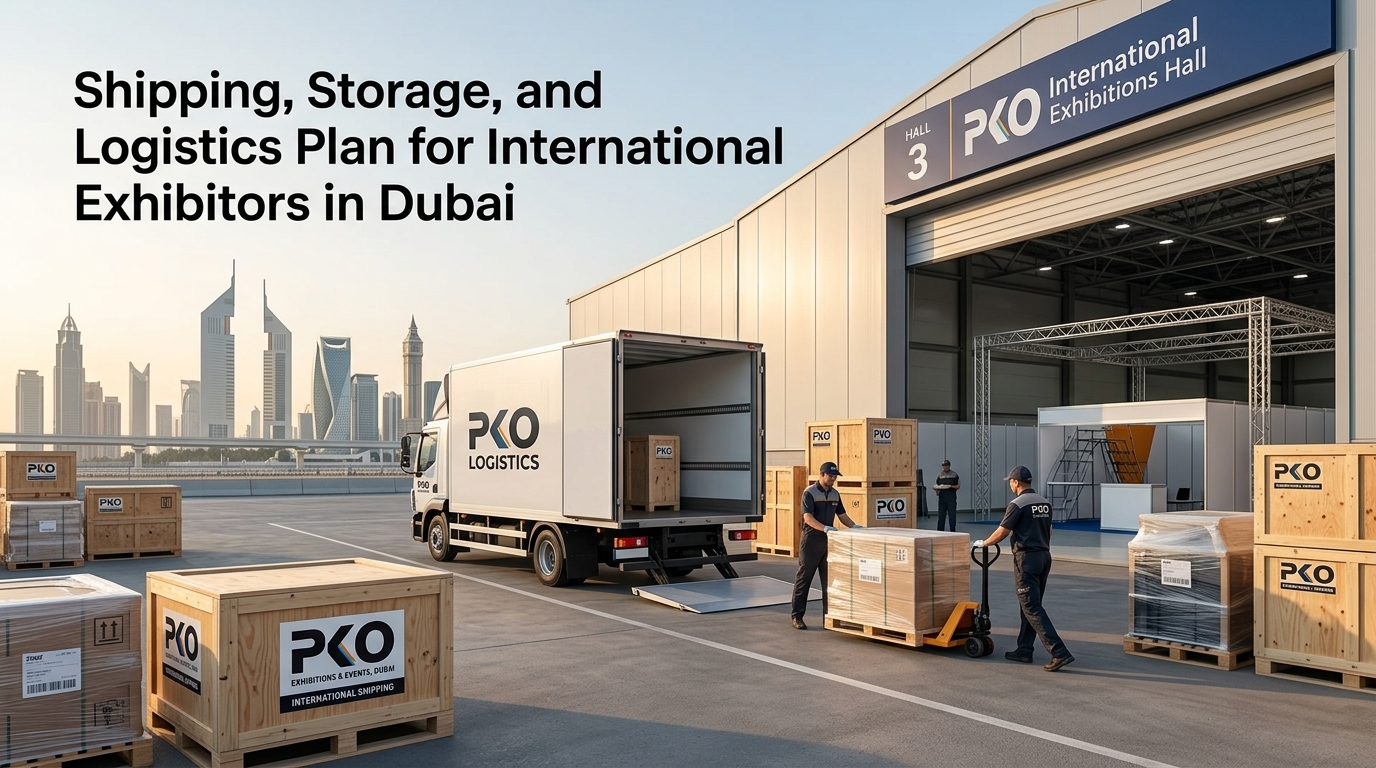
Shipping, Storage, and Logistics Plan for International Exhibitors in Dubai
International exhibitors need a logistics plan because a stand can only open on time if every crate, graphic panel, and product sample arrives in the right hall, on the right day, with the right paperwork. Missing one of these usually costs more than the freight itself.
Good exhibition logistics Dubai planning starts months before the show. It covers shipping, customs, storage, venue delivery, installation, and the return journey. This guide explains each step so you can plan with fewer surprises.
What Exhibition Logistics in Dubai Actually Covers
Exhibition logistics is the coordinated movement of everything your stand needs, from your factory or office to your stand and back again. It is different from ordinary cargo shipping because delivery is tied to fixed venue dates, not just a convenient arrival time.
The full chain usually includes:
- International shipping by air, sea, or road
- Customs clearance in the UAE
- Temporary storage before the event
- Transport to the exhibition venue
- Venue delivery coordination and time slots
- Stand installation
- On-site handling of crates, packaging, and late deliveries
- Dismantling
- Return shipping or onward storage
Each step depends on the one before it. A customs delay pushes back delivery, and a missed delivery slot delays installation.
Build a Shipping Timeline Before the Exhibition
Work backwards from the move-in date, not forward from your factory date. The timings below are a practical starting point, but the right schedule depends on your shipping method, cargo type, and the event organiser’s deadlines.
- 10 to 12 weeks before: Confirm what is being shipped, book freight, and appoint a freight forwarder or local logistics contact.
- 8 weeks before: Check customs requirements for each item category, and finalise stand dimensions so packaging can be planned.
- 6 weeks before: Prepare commercial documents and confirm venue delivery rules and deadlines with the organiser.
- 3 to 4 weeks before: Dispatch sea freight, allowing for transit and clearance time.
- 1 to 2 weeks before: Dispatch air freight or courier items, and confirm delivery slots and hall access.
- Arrival buffer: Aim for cargo to reach Dubai several days before move-in, not on the day.
- Move-in and installation: Follow the venue’s schedule for your hall and stand.
- Return planning: Book return freight or storage before the event opens.
Sea freight is usually slower and cheaper, and air freight is faster but costs more. Many exhibitors split shipments, sending bulky stand components by sea and urgent items by air.
Prepare the Right Shipping and Customs Documents
Inaccurate or incomplete paperwork is one of the most common causes of clearance delays. Your freight forwarder will advise on exact requirements, but most shipments involve documents such as:
- Commercial invoice: Shows item descriptions, quantities, and declared values.
- Packing list: Lists what is in each package, with weights and dimensions.
- Product descriptions: Clear, specific wording, since vague terms can lead to questions.
- HS codes: Where applicable, these classify goods for customs.
- Country of origin: Stated for goods where required.
- Temporary import documentation: Where applicable, for goods entering only for the exhibition and returning afterwards.
- Consignee and exhibition details: Event name, venue, hall, stand number, and a local contact.
Requirements can vary by shipment, product category, event, and current UAE rules. Restricted or regulated goods, food, electronics, and branded merchandise may need extra checks. Confirm the current requirements with your freight forwarder, the relevant customs authority, the venue, or the event organiser before you ship.
Keep digital copies of every document and share them with your logistics contact.
Plan Storage Before the Shipment Arrives
Storage is easy to overlook until crates arrive early or empty packaging fills your stand. Decide these points in advance:
- Empty packaging: Where will empty crates and cartons go once the stand is built?
- Pre-event holding: Where can materials wait if they arrive before the venue accepts deliveries?
- Storage duration: How long can items stay in storage, and at what cost?
- Transfer to venue: Who will move items from storage to the hall, and when?
- Post-event plan: What happens to items after dismantling?
Venue space is limited and event schedules are tight, so on-site storage is often restricted. Many exhibitors use off-site storage in Dubai and bring materials in during their assigned delivery window. Ask the organiser what is allowed before assuming you can leave anything at the venue.
Coordinate Delivery With the Exhibition Venue
Delivering to an exhibition is not like delivering to an office. Venues control who can enter, when, and with what equipment. A truck arriving outside its slot can be turned away.
Confirm these points before dispatch:
- Delivery slots: Times allocated to your stand or contractor
- Loading and unloading: Approved areas, procedures, and equipment
- Move-in schedule: Dates and hours for your hall
- Vehicle access: Size, type, and entry restrictions
- Material handling: Whether forklifts or handling crews are needed, and who provides them
- Stand location: Hall name and stand number on every package
- On-site contact: A named person with a working phone number
- Contractor coordination: Alignment with the stand builder and any other suppliers
Rules and deadlines differ by venue and event, so confirm them in writing. For Dubai World Trade Centre events, PKO’s guide to DWTC exhibition stand rules explains the compliance points that affect move-in and delivery. Your stand may also need approval before construction begins, which is covered in the DWTC stand approval process.
Coordinate Logistics With Stand Design and Construction
Logistics and stand design should be planned together. Design choices decide how your stand travels, how long it takes to install, and where parts are stored.
Consider how these elements affect logistics:
- Stand dimensions: Oversized panels need larger crates and vehicles.
- Large structures: Tall or multi-level builds need more installation time and handling equipment.
- Custom-built elements: Bespoke items are often built locally, which reduces international shipping.
- Graphics: Printed materials must be protected, and late changes can force a reprint.
- AV equipment: Screens and electronics need careful packing and, often, insurance.
- Furniture: Bulky pieces raise freight volume, and local rental can be cheaper.
- Lighting: Fixtures are fragile and may need specific electrical compatibility.
- Product displays: Fragile or high-value products need secure packing and handling plans.
If you are weighing what to ship and what to build locally, the exhibition stand design services team can help align design with delivery constraints. Reusable systems can also reduce shipping and storage costs, and PKO’s comparison of modular and custom exhibition stands explains the trade-offs. For very large builds, see the notes on double-decker exhibition stands, which need extra planning for structure, approvals, and installation.
Shipping Exhibits, Products, Graphics, and Promotional Materials
Different items need different handling.
- Stand components: Pack in numbered crates with an assembly list, so the installation team can find parts quickly.
- Product samples: Ship a few spares, and check whether samples need special declarations or permits.
- Printed graphics: Roll or flat-pack with protection against creasing and moisture. Printing in the UAE can avoid shipping large-format items altogether. PKO’s large-format printing service is one option.
- Promotional items: Keep quantities realistic, and describe them accurately on the invoice.
- Furniture: Consider local rental instead of shipping.
- AV equipment: Use padded cases, record serial numbers, and carry critical cables and adapters separately.
- Marketing materials: Send brochures and giveaways in separate cartons from stand components, so they are not lost in the build.
Label every package clearly. Each label should show the exhibitor name, event name, venue, hall, stand number, package number (for example, 3 of 24), and a local phone contact. Add a short contents description that matches the packing list.
Have a Contingency Plan
Most logistics problems are predictable. Plan for these:
- Shipping delays
- Customs delays
- Damaged items
- Missing packages
- Incorrect documentation
- Venue delivery restrictions
- Last-minute changes
Simple measures that help:
- Ship earlier than you think you need to.
- Keep essential items, such as product samples and key tools, accessible or hand-carried.
- Store digital copies of all documents.
- Label every package clearly.
- Name an on-site logistics contact who can act quickly.
- Confirm delivery arrangements with the venue and contractor before dispatch.
Plan Dismantling and Return Logistics Before the Event
Return shipping is often arranged too late. Decide before the exhibition opens, because everyone leaves at the same time and transport becomes scarce.
Plan for:
- Packing after dismantling: Allocate time, labour, and packing materials.
- Empty packaging: Confirm where it is stored and when it can be retrieved.
- Temporary storage: Arrange it if items are not leaving immediately.
- Return freight: Book it in advance, with documents prepared for re-export where relevant.
- Courier collection: Confirm pickup times and venue access.
- Reusing components: Decide which stand elements will return for future shows.
- Disposal: Arrange removal of unwanted materials through approved channels.
Simple Exhibition Logistics Checklist for International Exhibitors
Before shipping
- Confirm the item list and stand requirements
- Book freight and appoint a logistics contact
- Prepare invoices, packing lists, and product descriptions
- Verify customs requirements for each item category
- Label every package
Before arrival
- Confirm venue delivery slots and rules
- Share hall and stand details with all suppliers
- Arrange storage if cargo arrives early
- Track shipments and keep documents accessible
During move-in
- Have a named contact at the venue
- Check package counts against the packing list
- Report damage or missing items immediately
- Keep empty packaging organised
During the exhibition
- Keep spare samples, graphics, and cables accessible
- Confirm the return shipment schedule
- Note any items to be reused or discarded
After the exhibition
- Pack items according to the return plan
- Complete re-export or storage arrangements
- Collect empty packaging
- Remove waste through approved channels
When to Use a Dubai Exhibition Logistics Partner
Some exhibitors manage logistics themselves, particularly for small stands with a few cartons. Local support becomes valuable in situations such as:
- First-time exhibiting in Dubai
- Large or complex stands
- Multiple shipments from different suppliers
- Tight venue deadlines
- Custom-built exhibition structures
- Heavy equipment
- Events at more than one location
- Return or storage requirements
The practical benefit is a single local point of coordination. One team can align deliveries with the venue schedule, the stand build, and installation, instead of you managing several suppliers across time zones.
Frequently Asked Questions
What is exhibition logistics in Dubai?
It is the planning and movement of all exhibition materials, from international shipping and customs clearance to storage, venue delivery, installation, dismantling, and return. It is tied to fixed event dates and venue rules.
How early should international exhibitors ship materials to Dubai?
Timing depends on shipping method and venue deadlines. Sea freight often needs several weeks, while air freight is faster. Aim to arrive a few days before move-in, and confirm the allowed delivery window with the organiser.
What documents are needed to ship exhibition materials to Dubai?
Common documents include a commercial invoice, packing list, product descriptions, and country of origin details. Some shipments need HS codes or temporary import paperwork. Confirm current requirements with your freight forwarder or the relevant authority.
Can exhibition materials be stored before a Dubai trade show?
Often yes, but venue storage is usually limited. Many exhibitors use off-site storage and deliver during their assigned slot. Check the organiser’s rules and book storage before cargo arrives.
How are exhibition materials delivered to Dubai exhibition venues?
Deliveries follow venue-controlled slots, access routes, and loading procedures. Packages should show the hall and stand number, and a contact person should be available on arrival. Confirm venue rules before dispatch.
What happens to exhibition materials after the event?
They can be shipped back, stored locally, reused at another show, or disposed of. Plan this before the event, since dismantling periods are short and transport is in high demand.
Do international exhibitors need a local logistics partner in Dubai?
It is not always required, but it helps with large stands, tight deadlines, or multiple shipments. A local partner can coordinate with the venue, contractors, and freight providers from one point.
Conclusion
Strong exhibition logistics Dubai planning comes down to timing, accurate documents, venue coordination, and a clear return plan. Decide these early, keep records, and build in a buffer for delays.
If you want help coordinating the project alongside stand design and construction, PKO Exhibitions & Events supports exhibitors across Dubai and the UAE. You can also get in touch to discuss your exhibition logistics and timeline.