
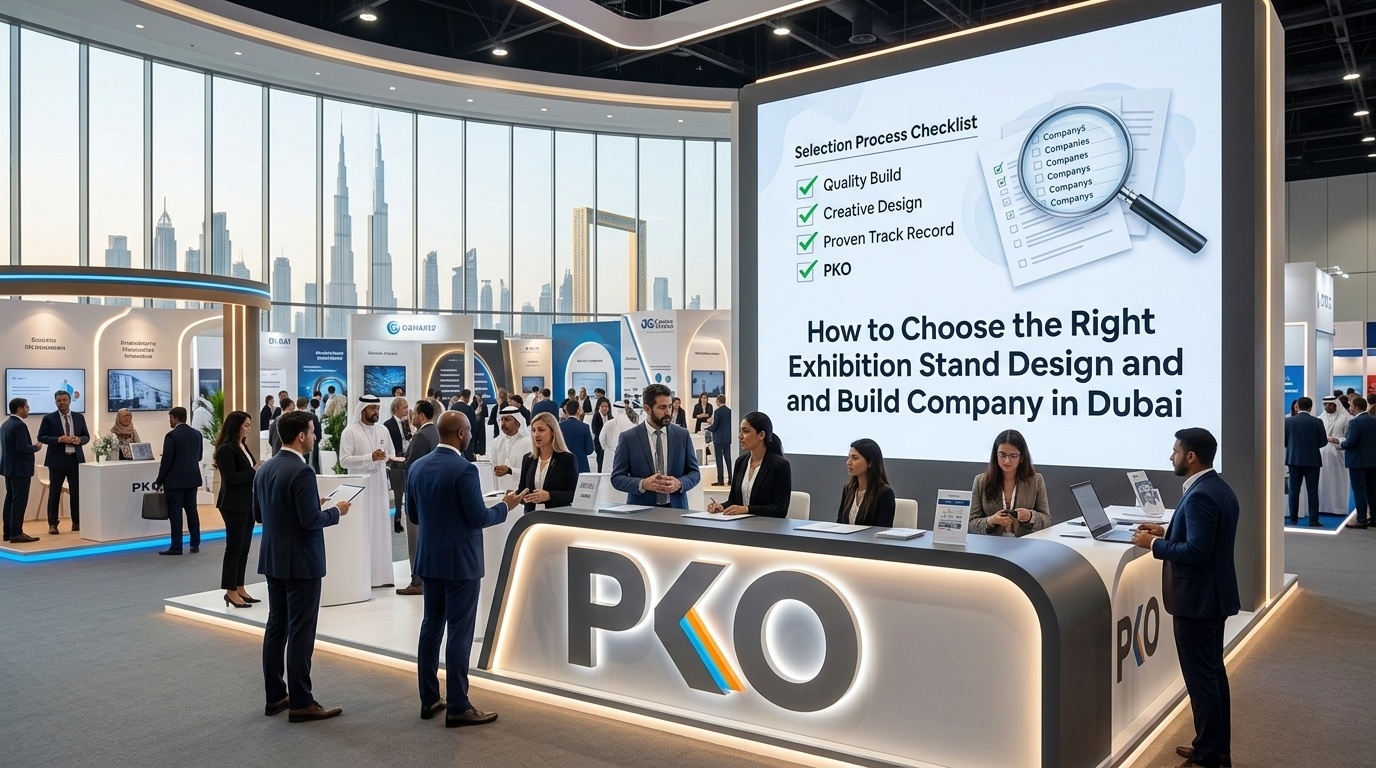
How to Choose the Right Exhibition Stand Design and Build Company in Dubai
Choosing the right Exhibition Stand Design and Build Company in Dubai can directly influence how effectively your brand attracts attention, communicates its message, and engages visitors at a trade show or business event. Dubai hosts a highly competitive exhibition environment, with Dubai World Trade Centre recording 401 events and 2.97 million attendees in 2025, including more than 63,000 exhibiting companies. With so many brands competing for visitor attention, an exhibition stand needs to be more than visually appealing it should support your marketing objectives, visitor flow, product presentation, meetings, and lead-generation activities.
The challenge is that exhibition stand providers can differ significantly in their capabilities. Some focus primarily on creative concepts, while others specialise in fabrication, installation, or event-related services. A reliable partner should be able to connect these stages, taking your requirements from the initial brief and stand concept through technical planning, fabrication, graphics, installation, and dismantling. This makes the selection process about more than finding an Exhibition Stand Builder in Dubai; it means evaluating design expertise, production capability, venue experience, project management, communication, quality, and pricing transparency.
This guide explains the key factors to consider before selecting an exhibition stand partner in Dubai. From reviewing portfolios and comparing custom stand solutions to assessing fabrication capabilities, technical execution, quotations, and onsite support, the goal is to help you make a practical and informed decision.
2. Why Dubai Requires a Different Approach to Exhibition Stand Design
Dubai’s exhibition environment requires careful planning because exhibitors are competing for attention in a market that attracts brands, buyers, investors, and professionals from around the world. Dubai World Trade Centre recorded 401 events and 2.97 million attendees in 2025, while its MICE events attracted approximately 2.19 million participants, including around 951,000 international participants. More than 63,000 exhibiting companies also participated in events during the year. These figures show why simply having a visually attractive booth is not enough; the stand needs to work effectively within a busy and highly competitive exhibition environment.
High Competition for Visitor Attention
Exhibitors may be positioned alongside numerous businesses offering similar products or services. A well-planned stand therefore needs a clear visual identity, strong messaging, accessible entrances, and an intuitive visitor journey. The design should help visitors understand who the company is and what it offers within a short interaction, while providing enough space for meaningful conversations and product demonstrations.
International Visitor Expectations
Dubai’s exhibitions attract a substantial international audience, making cultural and communication considerations important when planning a stand. Clear branding, readable graphics, well-organised product displays, and professional meeting areas can make the space easier for different types of visitors to navigate. An experienced Exhibition Stand Designer in Dubai should be able to translate a company’s brand identity into a physical environment that works for both local and international audiences.
Venue Requirements and Project Timelines
Exhibition construction also involves practical requirements beyond creative design. Stand dimensions, access arrangements, installation schedules, technical specifications, electrical requirements, and venue regulations can influence how a project is designed and delivered. A capable Exhibition Stand Contractor in Dubai should understand these requirements early in the planning process rather than discovering them during installation.
Different Objectives Require Different Stand Designs
Not every exhibitor needs the same type of stand. A technology company may require demonstration areas and integrated screens, while a manufacturer may need space for large product displays. A service company may prioritise meeting rooms and consultation areas. Understanding these differences allows Exhibition Stand Companies in Dubai to develop solutions based on the exhibitor’s objectives rather than relying on a standard layout.
For this reason, choosing the right stand partner starts with understanding what the company actually needs to achieve at the exhibition. Once those objectives are established, the next step is evaluating what a professional exhibition stand design and build company should be capable of delivering from the initial concept through fabrication and onsite installation.
3. What Does an Exhibition Stand Design and Build Company Actually Do?
An Exhibition Stand Design and Build Company in Dubai typically manages multiple stages of an exhibition project, connecting creative planning with physical production and onsite delivery. Rather than treating design, fabrication, graphics, logistics, and installation as separate activities, a full-service provider coordinates these elements around one approved stand concept. Understanding this process makes it easier to compare Exhibition Stand Companies in Dubai and identify a partner that can manage the complete project.
Exhibition Stand Design
The process normally begins with a project brief covering the exhibition objectives, available floor space, brand identity, products or services, visitor expectations, and required facilities. The design team then develops the stand layout and visual concept, considering elements such as visitor flow, reception areas, product displays, meeting spaces, storage, lighting, branding, and digital screens.
A strong design should balance appearance with practical use. Visitors should be able to enter the stand easily, understand the brand message, locate relevant products or representatives, and move through the space without unnecessary congestion. Depending on the project, Exhibition Stand Designers in Dubai may develop custom concepts for different stand configurations, sizes, industries, and exhibition requirements.
Technical Planning and Production
Once a concept is approved, it needs to be translated into a buildable structure. Technical planning determines materials, dimensions, construction methods, lighting requirements, electrical elements, finishes, graphics, and other production details. This stage connects creative design with fabrication and helps identify potential construction issues before production begins.
The role of Exhibition Stand Fabricators in Dubai is particularly important at this point. Fabrication turns the approved drawings and specifications into physical components such as walls, counters, display units, flooring, ceilings, furniture elements, and branded structures.
Graphics and Brand Implementation
Graphics are another important part of stand production. Large-format visuals, logos, product information, signage, illuminated branding, and digital displays can help communicate the company’s message throughout the space. These elements should be prepared according to the final stand dimensions so that the finished graphics appear clear and correctly positioned.
Installation and Onsite Delivery
Fabrication is only one part of the project. The finished components must reach the exhibition venue and be assembled according to the approved design and the venue’s requirements. Installation may involve coordinating access times, construction activities, lighting, graphics, furniture, finishing work, and final checks.
A professional Exhibition Stand Builder in Dubai should therefore have a defined installation process and onsite supervision rather than treating delivery as an afterthought.
Dismantling After the Exhibition
The project does not necessarily end when the exhibition closes. Depending on the stand type and agreement, the contractor may also coordinate dismantling, removal, transportation, storage, or disposal of components. For reusable structures, proper dismantling can also help preserve materials for future events.
Overall, the complete process can be viewed as:
Brief → Concept → 3D Design → Technical Planning → Fabrication → Graphics → Logistics → Installation → Handover → Dismantling
This end-to-end relationship is important when choosing a stand partner because weaknesses at any stage can affect the final result. Before comparing individual providers, however, exhibitors should first define what they actually want their stand to accomplish. That objective becomes the foundation for evaluating design, space planning, fabrication, and every other part of the project.
4. Start With Your Exhibition Objectives Before Comparing Companies
Before comparing an Exhibition Stand Design and Build Company in Dubai, define what you want the stand to achieve. A stand should be designed around a business objective rather than simply around available floor space or visual trends. When the objective is clear, it becomes easier to evaluate proposed layouts, features, materials, and the capabilities of different exhibition stand providers.
Define the Primary Objective
Start by identifying the main purpose of participating in the exhibition. Depending on your business and event, the objective may be to:
- Generate qualified leads
- Increase brand awareness
- Launch a new product or service
- Demonstrate products
- Arrange sales meetings
- Build distributor or partner relationships
- Educate visitors
- Create networking opportunities
These objectives influence the stand’s layout. For example, a company focused on product demonstrations may need open demonstration areas and integrated display technology, while a business focused on private sales discussions may require enclosed or semi-private meeting spaces.
Plan the Visitor Journey
Once the objective is established, consider how visitors should move through the stand. A useful visitor journey can follow a simple sequence:
Attract → Engage → Inform → Interact → Discuss → Convert
The exterior of the stand should make the brand easy to identify and create a reason for visitors to approach. Inside, the layout should guide visitors toward products, demonstrations, information, or representatives without creating unnecessary barriers.
An experienced Exhibition Stand Designer in Dubai can use elements such as entrances, product displays, lighting, graphics, counters, and meeting areas to create this journey within the available footprint.
Determine Your Space Requirements
Your stand requirements should also be defined before requesting proposals. Consider how much space is needed for:
- Reception and visitor registration
- Product displays
- Demonstration areas
- Open interaction zones
- Private meeting rooms
- Storage
- Staff areas
- Hospitality
- Screens or digital displays
The objective is to balance visitor accessibility with the facilities your team needs to operate effectively throughout the exhibition.
Match the Design to Your Brand
Your exhibition stand is a physical extension of your brand. The design should therefore reflect your established visual identity through appropriate colours, typography, imagery, messaging, materials, and signage.
However, branding should not overwhelm functionality. Large graphics may attract attention, but visitors also need clear pathways, readable information, accessible products, and comfortable areas for conversation.
Give the Contractor a Clear Brief
A detailed brief allows potential Exhibition Stand Companies in Dubai to provide more meaningful proposals. Include the exhibition name, venue, stand dimensions, objectives, target audience, products or services, branding requirements, meeting needs, technology requirements, budget expectations, and important deadlines.
With this information established, you can compare companies based on how effectively they translate your objectives into a practical stand concept. The next stage is to examine their actual exhibition stand design capability, including the quality, variety, functionality, and relevance of their previous work.
5. Evaluate the Company’s Exhibition Stand Design Capability
Once your exhibition objectives and space requirements are clear, the next step is to assess whether a potential Exhibition Stand Design and Build Company in Dubai can turn those requirements into a practical and distinctive environment. A strong portfolio is useful, but the important question is not simply whether the designs look impressive. You need to determine whether the company’s design approach solves real exhibition requirements while supporting your brand and visitor journey.
Review the Quality and Variety of Previous Designs
Start by examining completed projects rather than relying only on 3D renders. Look for evidence of experience with different stand sizes, layouts, industries, and exhibition formats. A capable design team should be able to adapt its approach to the available floor area and the client’s objectives instead of repeatedly applying the same visual concept.
Relevant examples may include:
- Small exhibition stands
- Medium-sized booths
- Large custom stands
- Corner stands
- Peninsula stands
- Island stands
- Conference stands
- Product-focused displays
This variety can indicate whether Exhibition Stand Designers in Dubai have experience solving different spatial and branding challenges.
Check Whether the Design Reflects the Brand
An exhibition stand should look like an extension of the company it represents. When reviewing previous work, examine how effectively the designer has incorporated:
- Brand colours
- Logos and typography
- Corporate imagery
- Product messaging
- Signage
- Product displays
- Visual hierarchy
The strongest designs generally make the company identity recognisable without relying on excessive decoration. Branding should help visitors understand the business quickly and identify the products or services being presented.
Examine Visitor Flow
A visually attractive stand can still perform poorly if visitors cannot navigate it comfortably. Look at how entrances, reception desks, displays, meeting areas, and demonstration zones are positioned.
Ask:
- Can visitors enter easily?
- Is the main brand message visible from the aisle?
- Can visitors move through the stand without obstruction?
- Are products positioned where people can interact with them?
- Are meeting areas easy to locate?
- Is there enough separation between public and private spaces?
These details show whether a designer is considering the stand as a functional visitor environment rather than simply creating an attractive structure.
Look for Industry-Relevant Experience
Experience in your industry can be useful when the stand has specialised requirements. A technology exhibitor may need interactive demonstrations and screens, while a healthcare company may require organised product displays and consultation areas. Manufacturers, service providers, retailers, and professional organisations can each require different approaches.
The objective is not necessarily to find a company that works exclusively in your industry. Instead, look for an Exhibition Stand Design Company in Dubai that demonstrates the ability to understand different business objectives and translate them into appropriate spatial solutions.
Evaluate Functionality Alongside Creativity
Good exhibition design balances visual impact with practical operation. Consider whether previous projects provide appropriate storage, staff areas, meeting spaces, product access, lighting, electrical planning, and visitor circulation.
The right provider should be able to explain why particular design decisions were made, not just present an attractive concept.
Ultimately, portfolio evaluation should answer one central question: Can this company consistently transform a business objective into a stand that is attractive, functional, technically achievable, and suitable for the exhibition environment?
If the answer is yes, the next consideration is whether the company’s fabrication capability can deliver the approved design to the same standard.
6. Check Whether Design and Fabrication Are Properly Connected
A strong exhibition concept only has value when it can be translated accurately into a finished structure. For this reason, evaluating the relationship between design and fabrication is one of the most important steps when choosing an Exhibition Stand Design and Build Company in Dubai. A company may produce impressive 3D visuals, but the final result depends on whether its production team can deliver the approved concept within the required specifications, timeline, and venue conditions.
Understand Who Handles Fabrication
Ask potential providers whether fabrication is handled through their own production facilities, dedicated fabrication partners, or a combination of both. The arrangement itself is not necessarily a measure of quality; what matters is whether responsibility is clearly defined and professionally managed.
You should know:
- Who converts the design into technical drawings?
- Who selects and prepares the construction materials?
- Who supervises fabrication?
- Who performs quality checks?
- Who manages changes during production?
- Who is responsible if the finished component differs from the approved design?
Clear answers reduce uncertainty as the project moves from concept to production.
Examine Material and Construction Specifications
The approved design should be supported by practical specifications covering the materials, finishes, dimensions, lighting, flooring, counters, display structures, graphics, and other components required for the stand.
This is particularly important when working with Exhibition Stand Fabricators in Dubai, because material selection can influence the appearance, durability, weight, installation process, and overall practicality of the stand.
Instead of simply asking whether a contractor can “build the design,” ask how the design will actually be constructed and what materials will be used.
Make Sure the Design Is Technically Feasible
Some design concepts can look excellent in a digital rendering but become difficult or costly to construct. Early technical review helps identify issues involving dimensions, structural elements, electrical requirements, lighting, suspended features, access, or installation.
A coordinated design-and-production process allows technical considerations to influence the concept before fabrication begins. This can reduce last-minute modifications and help keep the finished stand closer to the approved design.
Compare the Approved Design With the Finished Product
When reviewing a company’s portfolio, look for photographs of completed exhibition stands rather than relying entirely on computer-generated visuals. Compare the finished structure with the original concept where such examples are available.
Pay attention to:
- Overall proportions
- Material finishes
- Graphic placement
- Lighting integration
- Joinery and edges
- Display units
- Counters
- Flooring
- Signage
- Overall finishing quality
This provides a better indication of the company’s actual production capability.
Look for an Integrated Workflow
The most useful workflow is one in which designers and production teams communicate throughout the project:
Concept → Technical Review → Design Approval → Production Drawings → Fabrication → Quality Check → Delivery → Installation
This connection is particularly valuable for custom projects where the stand includes unusual structures, bespoke displays, integrated lighting, or complex branding.
When comparing Exhibition Stand Manufacturers in Dubai, therefore, don’t evaluate fabrication as a completely separate service. The important question is whether the provider can maintain the design’s intent while making the structure practical to manufacture, transport, install, and use.
Once the design and production relationship has been established, the next step is to examine the technical and venue-compliance capability behind the build. A successful exhibition stand must not only look right it must also meet the practical requirements of the exhibition environment.
7. Assess Technical and Venue-Compliance Capability
An exhibition stand must satisfy more than creative and branding requirements. Before selecting an Exhibition Stand Design and Build Company in Dubai, confirm that the provider understands the technical conditions involved in constructing and installing a stand at the chosen exhibition venue. Early technical planning can help prevent design changes, approval delays, installation problems, and unexpected costs closer to the event.
Review the Technical Planning Process
After the initial concept is approved, the design normally needs to be developed into technical information that can guide fabrication and installation. Depending on the stand, this may include dimensions, construction details, materials, electrical requirements, lighting, signage, flooring, suspended elements, and other production specifications.
Ask the contractor how technical drawings are prepared and who checks the design before production begins. A clear process should connect the creative team, technical team, fabricators, and onsite installation team.
Understand Venue Requirements
Every exhibition venue can have its own procedures and technical requirements. These may affect aspects such as:
- Stand dimensions and permitted height
- Access and build-up schedules
- Electrical connections
- Lighting and power requirements
- Structural considerations
- Suspended elements
- Material specifications
- Safety documentation
- Installation and dismantling procedures
The exact requirements depend on the venue, event, stand type, and applicable regulations, so the contractor should confirm the relevant requirements for your specific project rather than relying on assumptions.
Ask Who Handles Documentation and Approvals
Clarify whether the Exhibition Stand Contractors Dubai you are considering will assist with the technical documentation and venue coordination required for the project.
Ask:
- Who prepares the required technical drawings?
- Who submits documentation where applicable?
- Who coordinates with the venue or organiser?
- Who responds if revisions are requested?
- Who manages onsite technical issues?
- Are venue-related charges included or excluded from the quotation?
Having clearly assigned responsibilities can make the process easier to manage and reduce confusion between the exhibitor, stand contractor, event organiser, and venue.
Consider Electrical and Lighting Requirements
Lighting is both a design and technical consideration. It can highlight products, strengthen branding, improve visibility, and influence the overall atmosphere of the stand. However, lighting also requires appropriate electrical planning and installation.
The same applies to screens, LED displays, interactive technology, illuminated signs, and other powered elements. These should be incorporated into the technical plan rather than added at the last moment.
Don’t Overlook Structural and Safety Considerations
Large custom stands, suspended features, raised structures, heavy displays, and complex architectural elements may require additional technical planning. The contractor should be able to explain how these elements will be fabricated, installed, and checked according to the relevant exhibition and venue requirements.
You should also understand who is responsible for onsite supervision and final checks before the stand is handed over for use.
Confirm the Installation Schedule
A technically sound stand still needs to be completed within the venue’s permitted build-up period. Ask the contractor for a realistic production and installation schedule covering:
Design approval → Technical documentation → Fabrication → Quality checks → Transportation → Installation → Final inspection
This timeline should account for the exhibition opening date and any required venue deadlines.
A provider’s technical capability therefore becomes an important part of the selection process. When comparing Exhibition Stand Builders in UAE, look beyond the visual concept and ask how the company manages technical planning, venue coordination, installation, and compliance from the beginning of the project. Once these fundamentals are clear, you can make a more meaningful comparison of each company’s overall production process.
8. Compare Exhibition Stand Companies Based on Their Production Process
Once you have assessed design quality, fabrication capability, and technical planning, compare potential providers by looking at how they actually manage a project from approval to completion. The production process can reveal more about an Exhibition Stand Design and Build Company in Dubai than a portfolio alone because it shows how the different stages of the project are coordinated.
A reliable process should have clear responsibilities, approval points, deadlines, and quality checks. Before appointing a contractor, ask the company to explain what happens after you approve the initial stand concept.
Step 1: Project Brief
The process should begin with a clear understanding of your requirements. The contractor should confirm the exhibition, venue, stand dimensions, objectives, branding, products, visitor requirements, facilities, technology, budget, and delivery deadline.
A detailed brief gives the design and production teams a common reference point throughout the project.
Step 2: Design Concept
The design team develops the initial layout and visual concept based on the approved brief. This stage should consider visitor flow, branding, product displays, meeting areas, storage, lighting, and other functional requirements.
At this point, you should have an opportunity to provide feedback before the project moves into detailed technical planning.
Step 3: Technical Planning
After the concept is approved, the design needs to be assessed from a construction perspective. Technical drawings, dimensions, material specifications, electrical requirements, lighting, and other production details should be established before fabrication begins.
This stage helps identify potential problems while they can still be addressed efficiently.
Step 4: Production and Fabrication
The approved design is then converted into physical components. Depending on the project, this may involve joinery, metalwork, flooring, counters, display structures, ceilings, signage, lighting systems, and other custom elements.
When evaluating Exhibition Stand Fabricators in Dubai, ask how quality is monitored during production and whether the finished components are checked against the approved specifications.
Step 5: Graphics and Branding
Graphics should be produced according to the final dimensions and technical requirements of the stand. Logos, product imagery, messaging, signage, and other visual elements should be checked before installation.
This is especially important for large-format graphics, where incorrect dimensions or low-quality artwork can become highly visible once installed.
Step 6: Transportation and Logistics
After production, components need to reach the exhibition venue within the permitted access period. The contractor should have a clear plan for transportation, loading, unloading, component organisation, and onsite movement.
Good logistical planning can help prevent delays during the limited build-up period.
Step 7: Installation
The installation team assembles the stand at the venue and completes elements such as flooring, structures, lighting, graphics, furniture, displays, and finishing work.
Ask who will supervise the installation and how onsite changes or unexpected issues will be handled.
Step 8: Final Handover
Before the exhibition opens, the completed stand should be checked against the approved design and project requirements. This is an opportunity to identify issues with graphics, lighting, furniture, displays, finishes, or other elements.
Step 9: Dismantling
After the event, the contractor may also coordinate dismantling, removal, transportation, storage, or disposal depending on the project agreement and type of stand.
This complete workflow can help you distinguish between a company that simply supplies individual services and an Exhibition Stand Contractor in Dubai capable of coordinating the full project.
When comparing providers, don’t only ask “What will my stand look like?” Ask “How will you take this project from the approved concept to a completed stand on the exhibition floor?” The answer can reveal how prepared the company is to manage the practical demands of the project.
9. Review Their Portfolio With a Critical Eye
A portfolio is one of the most useful resources when comparing an Exhibition Stand Design and Build Company in Dubai, but it should be evaluated carefully. Attractive photographs and 3D renders can demonstrate creative ability, yet they do not automatically prove that a company can deliver a stand that meets your specific requirements. The objective is to look for evidence of consistent design, fabrication, finishing, and onsite execution.
Look for Completed Exhibition Stands
Prioritise photographs of completed projects rather than relying entirely on computer-generated concepts. A 3D render shows what a stand is intended to look like, while completed photographs provide evidence of how the design was actually produced and installed.
When reviewing photographs, examine:
- Overall construction quality
- Finishing and material details
- Graphics and branding
- Lighting integration
- Flooring
- Counters and furniture
- Product displays
- Signage
- Meeting areas
- Visitor access
These details can provide a better understanding of the company’s practical capabilities.
Check for Design Variety
A strong portfolio should demonstrate the ability to work with different exhibition requirements rather than presenting dozens of visually similar projects. Look for examples covering different:
- Stand sizes
- Floor plans
- Industries
- Branding styles
- Exhibition formats
- Display requirements
For example, a small inline stand requires a different spatial approach from a large island stand with multiple entrances and meeting rooms.
Look for Relevant Experience
The most useful portfolio examples are those that resemble your own project. Consider whether the company has worked with businesses that have similar:
- Products or services
- Target audiences
- Space requirements
- Branding needs
- Visitor objectives
This does not mean a contractor must have worked exclusively within your industry. Rather, relevant examples can demonstrate that the team understands the type of visitor experience your project requires.
Examine the Details, Not Just the Overall Appearance
Step back from the complete stand image and inspect the smaller details. Look at how graphics meet structural elements, how counters are finished, whether lighting is integrated neatly, and whether display areas appear practical for everyday use.
For custom projects, these details can reveal the quality of the fabrication and finishing process.
Compare Concept Designs With Completed Work
If a company can show both the original 3D concept and photographs of the completed stand, compare them carefully. The closer the final result is to the approved concept, the stronger the evidence that the design and production teams work effectively together.
Some differences may be reasonable because of venue requirements, material availability, client changes, or technical adjustments. What matters is whether the final result maintains the essential design intent.
Ask About the Company’s Role in Each Project
A portfolio may contain projects where the company handled only design, fabrication, installation, or a combination of services. Ask what role the provider actually performed.
This is particularly important when comparing Exhibition Stand Companies in Dubai, because seeing a high-quality project does not necessarily mean the company was responsible for every stage of that project.
A useful portfolio review should therefore answer three questions:
Can they design it? Can they build it? Can they deliver it onsite?
Once you have established the quality and relevance of a company’s previous work, you can move to another important decision: whether your project is better suited to a custom exhibition stand or a modular solution.
10. Understand the Difference Between Custom and Modular Exhibition Stands
After reviewing a company’s design and production capabilities, consider which type of stand best fits your exhibition objectives. Custom exhibition stands and modular stands can both be effective, but they serve different requirements. The right Exhibition Stand Design and Build Company in Dubai should be able to explain the advantages and limitations of each option instead of automatically recommending one approach.
Custom Exhibition Stands
A custom stand is designed and produced around the specific requirements of a brand, exhibition space, and visitor experience. This approach provides greater flexibility over the layout, architecture, branding, product displays, meeting areas, and other features.
Custom solutions can be particularly useful when you need:
- A distinctive brand environment
- Complex product displays
- Dedicated demonstration areas
- Private meeting rooms
- Bespoke architectural features
- Integrated lighting and digital elements
- A specific visitor journey
For brands competing for attention in a busy exhibition hall, a bespoke design can provide more opportunities to differentiate the physical experience from neighbouring stands.
However, greater customisation can also involve additional design, fabrication, logistics, and installation requirements. The final scope should therefore be established before comparing quotations.
Modular Exhibition Stands
Modular stands use adaptable components that can be configured for different spaces and events. Depending on the system, components may be reused or rearranged for future exhibitions.
A modular approach can be suitable when you:
- Participate in multiple exhibitions
- Need adaptable layouts
- Want to reuse components
- Have relatively straightforward display requirements
- Need a practical solution for different stand sizes
The design can still incorporate branding, graphics, lighting, product displays, counters, and other visitor-facing elements. Modular does not necessarily mean generic; the quality of planning and visual execution still matters.
Which Option Should You Choose?
There is no universal answer. The appropriate solution depends on the relationship between your objectives, space, budget, event schedule, and expected frequency of use.
Consider:
Exhibition objectives: Is differentiation or flexibility more important?
Stand size: Does the available space require a highly customised layout?
Number of events: Will components be reused across multiple exhibitions?
Brand requirements: Does your identity require a distinctive architectural environment?
Product presentation: Do your products need custom displays or demonstrations?
Budget: What level of design, fabrication, logistics, and installation is appropriate for the project?
A useful comparison is to ask potential Exhibition Stand Builders in UAE to propose a solution based on your actual requirements rather than requesting a generic “custom stand” or “modular stand” package.
Think Beyond Appearance
The decision should not be based solely on which option looks more impressive in a 3D render. Consider how the stand will be transported, installed, operated during the exhibition, dismantled, and potentially reused.
A well-designed custom stand can provide a highly tailored experience, while a well-planned modular system can provide flexibility across multiple events. The best choice is the one that supports your exhibition objectives while remaining practical to produce and manage.
Once the stand type has been determined, attention should turn to another important part of the visitor experience: graphics, lighting, signage, and digital elements that communicate the brand within the physical space.
11. Consider Graphics, Lighting and Digital Elements as Part of the Design
The structure of an exhibition stand creates the physical environment, but graphics, lighting, signage, and digital elements help communicate what the brand represents. These components should therefore be considered during the design stage rather than added after fabrication has been completed. When evaluating an Exhibition Stand Design and Build Company in Dubai, look for a provider that understands how these elements work together as part of the visitor experience.
Use Graphics to Communicate the Main Message
Exhibition visitors often make quick decisions about which stands to approach. Large-format graphics can help communicate the brand, product category, key services, or campaign message from a distance.
Effective exhibition graphics should have:
- Clear brand identification
- Readable messaging
- Appropriate image resolution
- Strong visual hierarchy
- Consistent typography
- Correct dimensions
- High-quality production
The goal is not to fill every available wall with information. A focused message is generally easier to understand than a stand covered with lengthy text.
Plan Graphic Placement During Design
Graphic placement should be considered alongside the physical structure. Important messaging should not be positioned where it becomes hidden behind furniture, screens, displays, lighting fixtures, or visitor activity.
The design team should determine where visitors are most likely to view each message and how the graphics contribute to the overall visitor journey.
This is where services such as exhibition stand graphic design, large-format printing, signage production, and installation need to connect with the wider stand design.
Use Lighting Strategically
Lighting can influence visibility, atmosphere, product presentation, and brand emphasis. Rather than illuminating every part of the stand equally, the lighting plan can direct attention toward important areas such as:
- Product displays
- Brand signage
- Demonstration zones
- Reception areas
- Meeting spaces
- Architectural features
The lighting design should also be coordinated with the electrical and technical requirements established during the planning stage.
Integrate Digital Displays Where They Add Value
Screens, LED displays, interactive presentations, touch interfaces, and other digital elements can support product demonstrations and visitor engagement. However, technology should have a clear purpose.
Before adding a digital feature, consider:
- What information will it communicate?
- Who will operate it?
- Is the content ready?
- Where will the screen be positioned?
- Can visitors see it easily?
- What power and technical requirements does it have?
- What happens if the technology fails?
A screen should support the visitor experience rather than become a distraction from the primary message.
Create a Clear Visual Hierarchy
The most effective combination of architecture, graphics, lighting, and digital media usually follows a clear hierarchy:
Stand structure attracts attention → branding identifies the company → graphics communicate the message → lighting highlights key areas → digital elements support interaction.
This approach prevents individual features from competing with each other.
Check Production Quality
When reviewing an Exhibition Stand Builder in Dubai, ask whether graphic production and installation are included in the project scope. Check how artwork is prepared, approved, printed, transported, and installed.
Poorly aligned graphics, incorrect colours, low-resolution images, or visible installation imperfections can reduce the professional appearance of an otherwise well-designed stand.
For this reason, graphics and technology should be treated as integrated parts of the stand rather than separate finishing touches. Once these elements are defined, you can move on to another major selection factor: understanding and comparing exhibition stand quotations accurately, including what is included, excluded, and responsible for the final project cost.
12. Consider Kiosks and Other Display Requirements When Relevant
Not every exhibition project requires a kiosk, but some brands need smaller, focused display structures alongside or instead of a traditional exhibition stand. These may be used for product demonstrations, registration, information points, retail activations, sampling, or lead collection. If your project involves these requirements, it is useful to determine whether the same Exhibition Stand Design and Build Company in Dubai can also manage the relevant display fabrication.
When an Exhibition Kiosk Makes Sense
An exhibition kiosk can provide a compact point for a specific visitor interaction. For example, a business may use one for:
- Product information
- Visitor registration
- Digital demonstrations
- Lead collection
- Product sampling
- Promotional activity
- Customer assistance
The design should still reflect the company’s branding and should be positioned where visitors can approach it comfortably without disrupting the main flow of the exhibition space.
Exhibition Stand vs. Kiosk
An exhibition stand is generally a broader branded environment that can incorporate reception areas, product displays, meeting rooms, storage, graphics, lighting, and other visitor facilities. A kiosk is usually more focused on a particular interaction or display function.
Understanding this distinction helps prevent unnecessary features from being added to a stand simply because they are available.
Evaluate Kiosk Design and Fabrication Capability
If a project requires a custom kiosk, ask the provider whether it can manage the complete process, including:
- Concept development
- Dimensions and space planning
- Material selection
- Branding and graphics
- Display integration
- Electrical requirements
- Fabrication
- Transportation
- Installation
This can be particularly relevant for brands that participate in exhibitions while also operating promotional or retail activations in other locations.
Consider Reusability
If the kiosk will be used at multiple events, ask whether the design can be transported, stored, and reconfigured where appropriate. Reusability may influence the choice of materials, construction method, graphics, and overall design.
For businesses with broader display requirements, related services such as kiosk design Dubai, custom exhibition kiosks, or kiosk manufacturers in UAE may become part of the supplier evaluation. However, these requirements should remain secondary to the main exhibition stand objective.
The key consideration is whether the provider can integrate smaller display requirements into the overall event environment without compromising visitor flow or brand consistency. Once all required stand and display elements have been defined, the next step is to compare quotations based on their actual scope and deliverables, rather than choosing a contractor simply because its initial price appears lower.
13. Compare Quotations Properly Not Just the Final Price
Price is an important part of choosing an Exhibition Stand Design and Build Company in Dubai, but the lowest quotation is not automatically the most cost-effective option. Two contractors can quote different amounts for what appears to be the same stand because their proposals may include different materials, services, production methods, installation arrangements, or project-management responsibilities. A fair comparison starts by examining what each quotation actually covers.
Ask for an Itemised Exhibition Stand Quote
Rather than comparing only the total figure, request a detailed breakdown of the project. Depending on your requirements, the quotation should clearly identify costs or inclusions for:
- Stand design and concept development
- 3D visualisation
- Technical drawings
- Fabrication and construction
- Flooring and structural elements
- Furniture
- Lighting
- Graphics and printing
- Digital or AV equipment
- Transportation
- Installation
- Dismantling
- Project management
- Applicable venue-related requirements or charges
Not every project will require every item, but each proposal should make it clear what is included and what is not.
Compare the Same Scope
A meaningful price comparison requires the shortlisted Exhibition Stand Companies in Dubai to work from the same project brief. Give each provider the same information about the stand size, exhibition venue, design requirements, branding, products, meeting facilities, technology, deadline, and expected services.
Otherwise, one contractor may quote for a basic structure while another includes graphics, furniture, installation, and dismantling.
Understand Material Differences
Materials and construction methods can significantly influence the quotation. Ask what materials and finishes are being proposed and whether they match the approved design.
For custom exhibition stands, compare details such as:
- Wall and structural construction
- Flooring
- Counters
- Display units
- Ceiling features
- Furniture
- Lighting
- Finishes
- Signage
- Graphic production
The objective is not simply to choose the cheapest material but to determine whether the proposed specification is appropriate for the intended exhibition environment.
Check What Is Excluded
An inexpensive-looking quotation can become more expensive if important services are excluded. Look for statements concerning:
- Installation
- Dismantling
- Transportation
- Graphics
- Furniture
- Electrical work
- Venue charges
- Design revisions
- Additional onsite requirements
If an item is unclear, ask the contractor to confirm it in writing before approving the proposal.
Don’t Judge Value From Price Alone
A higher quotation may include greater design complexity, better materials, additional project management, or a wider range of services. Conversely, a lower quotation may represent a simpler scope rather than better value.
A useful comparison is therefore:
Total price + scope + quality + delivery capability + support
rather than simply:
Lowest price = best choice
Ask About Changes and Additional Costs
Exhibition projects can evolve after the initial concept. Clarify how the contractor handles design revisions, material changes, additional graphics, onsite modifications, or requests that fall outside the original scope.
This can help prevent disagreements when the project moves into production.
A transparent quotation should allow you to understand exactly what you are paying for and which responsibilities belong to the contractor. Once pricing has been compared on an equal basis, the next consideration is project management and communication, because even a well-designed and correctly priced stand can face problems if the project is not coordinated properly from approval through installation.
14. Evaluate Project Management and Communication
A successful exhibition stand depends on more than design and fabrication. Because the project involves multiple stages, suppliers, deadlines, technical requirements, and onsite activities, effective project management is essential. When comparing an Exhibition Stand Design and Build Company in Dubai, evaluate how the company communicates and manages responsibilities from the first briefing through final installation.
Identify Your Main Project Contact
Ask who will be responsible for your project after the contract is confirmed. Ideally, you should have a clear point of contact who understands the brief and can coordinate communication between the design, production, logistics, and installation teams.
This makes it easier to track:
- Design progress
- Approvals
- Revisions
- Production
- Graphics
- Delivery
- Installation
- Onsite requirements
If responsibility constantly moves between different departments without clear coordination, important project details can be overlooked.
Establish Clear Approval Stages
A professional workflow should identify when you need to review and approve key deliverables. These may include:
Initial brief → Concept → 3D design → Design revisions → Final approval → Technical drawings → Production → Installation
Don’t assume that approving a 3D visual automatically means every technical detail has been finalised. Ask what exactly is included at each approval stage.
Set Realistic Deadlines
The project schedule should account for design development, revisions, technical preparation, fabrication, printing, transportation, installation, and the exhibition opening date.
Ask the contractor to provide important milestones rather than giving only a final delivery date. This allows you to identify delays earlier and provide approvals when required.
Understand How Revisions Are Managed
Design changes are common during exhibition projects. However, changes made after technical approval or production has started can affect costs and timelines.
Before the project begins, clarify:
- How many design revisions are included?
- When does the design become final?
- What happens if specifications change?
- Are additional production costs communicated before work proceeds?
- How are approvals recorded?
Clear revision procedures help both the exhibitor and the Exhibition Stand Contractors Dubai maintain control of the project.
Ask About Production Updates
For a custom stand, you may want visibility into fabrication progress before the components reach the venue. Ask whether the contractor provides production photographs, progress updates, inspection opportunities, or other forms of confirmation.
This is especially useful when the stand includes complex fabrication, custom furniture, specialised displays, or extensive graphics.
Confirm Onsite Support
Communication should continue after the stand reaches the venue. Ask who will be onsite during installation and who you should contact if a problem occurs during setup.
A responsible project-management process should cover:
- Installation coordination
- Final finishing
- Graphics placement
- Lighting and display checks
- Furniture positioning
- Last-minute practical issues
- Final handover
Look for Transparent Communication
Good communication does not mean receiving constant messages. It means receiving the right information at the right stage and knowing who is responsible for each decision.
When evaluating an Exhibition Stand Builder in Dubai, ask yourself whether the company provides clear answers, realistic timelines, documented approvals, transparent pricing, and a defined escalation process.
Once project management has been assessed, there is another Dubai-specific factor worth examining: the company’s familiarity with exhibition venues, access procedures, installation schedules, and local operational requirements.
15. Check Experience With Dubai Exhibition Venues and Timelines
Local exhibition experience can be an important advantage when selecting an Exhibition Stand Design and Build Company in Dubai. Designing and fabricating a stand is only part of the project; the completed structure must also be delivered, assembled, inspected, and handed over within the conditions and schedule established by the event organiser and venue.
Dubai’s exhibition ecosystem operates at significant scale. Dubai World Trade Centre recorded 401 events and 2.97 million attendees in 2025, while more than 63,000 exhibiting companies participated across its events. For exhibitors, this scale makes coordination and timing particularly important, especially during busy build-up and dismantling periods.
Understand Venue Access Procedures
Before appointing an Exhibition Stand Contractor in Dubai, ask whether the team has experience coordinating the practical requirements associated with your chosen venue and event.
These may include:
- Build-up and dismantling schedules
- Loading and unloading arrangements
- Contractor access
- Material movement
- Installation windows
- Venue documentation
- Technical submissions
- Onsite coordination
- Final handover procedures
Requirements can vary by venue and event, so the contractor should confirm the specific rules that apply to your project rather than making assumptions.
Check Whether the Timeline Is Realistic
Exhibition projects operate around fixed opening dates. Unlike a normal construction project, there may be limited flexibility if fabrication or installation is delayed.
Your project timeline should therefore account for:
Design approval → Technical preparation → Fabrication → Graphics production → Quality checks → Transportation → Installation → Final inspection
Ask when each stage needs to be completed and identify which milestones depend on your approvals.
Consider Build-Up Periods
The available installation window can influence the construction method and logistics of your stand. A complex custom structure may require more preparation than a simpler display, so the contractor should plan production accordingly.
Ask:
- When will fabrication be completed?
- When will components reach the venue?
- How long will installation take?
- Who will supervise the build?
- What contingency is available if an issue occurs onsite?
A realistic schedule should leave sufficient time for finishing and final checks before visitors arrive.
Ask About Onsite Coordination
An experienced Exhibition Stand Builder in UAE should understand that onsite installation involves more than assembling prefabricated components. The team may need to coordinate with venue personnel, event organisers, other contractors, delivery teams, and the exhibitor.
Having a designated onsite supervisor can help ensure that the approved design is implemented correctly and that practical issues are addressed quickly.
Plan Dismantling Before the Event Starts
Dismantling should also be included in the project plan. Ask when the stand must be removed, who coordinates the process, and what happens to reusable components after the event.
If your company participates in multiple exhibitions, discuss whether suitable components can be stored, transported, or adapted for future projects.
Why Local Operational Knowledge Matters
A company does not necessarily need to work exclusively in Dubai to deliver a successful project. However, familiarity with local exhibition operations can make it easier to anticipate access, scheduling, documentation, installation, and logistical requirements.
When comparing Exhibition Stand Companies in Dubai, therefore, ask not only whether they can design and build the stand, but also whether they understand how that stand will move from the workshop to the exhibition floor within the required timeframe.
With the venue, timeline, and operational requirements clarified, you can now move to a practical part of the selection process: the questions you should ask every potential stand provider before signing an agreement.
16. Questions to Ask Before Hiring an Exhibition Stand Company
Before appointing an Exhibition Stand Design and Build Company in Dubai, ask detailed questions about design, fabrication, technical planning, installation, pricing, and project management. The objective is to understand exactly what the company will deliver and who will be responsible at each stage. Asking the same core questions to every shortlisted provider also makes comparisons more meaningful.
1. Do You Handle Both Design and Fabrication?
Confirm whether the company provides an integrated design-and-build service or whether different parts of the project are handled by separate suppliers. If fabrication is outsourced, ask who manages quality and production coordination.
2. Can You Show Completed Projects Similar to Mine?
Ask for examples that match your approximate stand size, industry, exhibition type, or design requirements. Completed photographs are particularly useful because they show actual execution rather than only proposed concepts.
3. Who Prepares the Technical Drawings?
Find out whether technical drawings are prepared internally and who reviews them before production. This helps establish how the approved creative concept is converted into a buildable structure.
4. What Materials and Finishes Are Included?
Ask for clear specifications covering structural elements, flooring, counters, displays, furniture, lighting, graphics, and other important components. This allows you to compare quotations on an equivalent basis.
5. Are Graphics and Printing Included?
Confirm whether artwork preparation, printing, delivery, and installation are included. If they are excluded, ask who is responsible for supplying the final graphics.
6. Who Handles Installation?
Clarify whether the company has its own installation team or coordinates with external installers. Also ask who will supervise the stand onsite and manage practical issues during build-up.
7. Does the Quote Include Dismantling?
Some proposals focus only on fabrication and installation. Confirm whether dismantling, removal, transportation, and any agreed storage arrangements are included.
8. Who Coordinates With the Venue?
Ask whether the contractor assists with the relevant technical documentation, venue coordination, access arrangements, and other project requirements applicable to your event.
9. How Many Design Revisions Are Included?
Understand the design approval process before work begins. Ask when the design becomes final and how additional revisions or changes are priced.
10. What Is the Project Timeline?
Request a schedule covering design, approvals, technical preparation, fabrication, graphics, transportation, installation, and handover. The timeline should clearly identify deadlines for your approvals as well.
11. What Happens If Changes Are Required Onsite?
Exhibition projects can occasionally require practical adjustments during installation. Ask who has authority to approve changes, how additional costs are communicated, and who manages the issue onsite.
12. What Is Excluded From the Quotation?
This is one of the most important questions to ask. Request a written list of exclusions so you can identify potential additional expenses before signing.
13. Who Will Be My Main Project Contact?
A dedicated contact can make communication easier throughout the project. Confirm who will coordinate between the design, fabrication, logistics, and installation teams.
14. How Do You Check Quality Before Handover?
Ask whether the completed stand is inspected before the exhibition opens and what checks are performed on graphics, lighting, furniture, displays, finishes, and structural elements.
15. Can You Support Future Exhibitions?
If your company participates in several events, ask whether the provider can adapt reusable components, maintain consistent branding, or develop future stands based on the same design system.
These questions help move the selection process beyond claims such as “best exhibition stand company in Dubai” or “top exhibition stand builder”. Instead, you can evaluate providers according to measurable factors such as capability, scope, communication, technical planning, quality, and delivery.
After collecting these answers, the next step is to identify red flags that could indicate potential problems before you commit to an exhibition stand contractor.
17. Red Flags When Choosing an Exhibition Stand Builder in Dubai
Selecting an exhibition stand provider based only on an attractive portfolio or a low quotation can create problems later in the project. Before appointing an Exhibition Stand Design and Build Company in Dubai, look for warning signs that may indicate unclear responsibilities, weak project management, limited production capability, or unexpected costs.
An Unusually Low Quote With an Unclear Scope
A low price is not automatically a problem, but an unusually low quotation should be examined carefully if the scope is unclear. Compare what each provider includes for design, materials, graphics, furniture, installation, transportation, and dismantling.
If important details are missing, the initial price may not represent the final project cost.
Only 3D Renders With No Completed-Project Evidence
A strong visual concept can demonstrate creative ability, but it does not prove that the company can execute the design. Be cautious if a provider cannot show relevant photographs of completed exhibition stands or explain its role in previous projects.
Unclear Fabrication Responsibility
Ask who will actually fabricate the stand. If the provider relies on external production partners, find out who manages the relationship, quality checks, timelines, and any production problems.
The important issue is not necessarily whether fabrication is outsourced; it is whether responsibility is clearly defined.
Vague Technical Information
A contractor should be able to explain how the approved design becomes a technically achievable structure. Avoid proceeding without clarity about dimensions, materials, lighting, electrical requirements, structural considerations, and relevant venue requirements.
No Clear Installation Plan
A finished stand still needs to be assembled correctly at the exhibition venue. Be cautious if the contractor cannot clearly explain who will install the stand, who will supervise the work, and how onsite issues will be handled.
No Written Project Timeline
An exhibition has a fixed opening date, so delays can have serious consequences. A provider should be able to establish milestones for design approval, production, graphics, transportation, installation, and handover.
Poor Communication During the Early Stages
The initial consultation can reveal how the company may manage the rest of the project. Watch for consistently delayed responses, incomplete answers, unclear documentation, or frequent changes in project contacts.
Good communication should provide clarity rather than create additional uncertainty.
Unclear Material Specifications
Statements such as “premium finish” or “high-quality materials” are not sufficient on their own. Ask for specific information about the materials and finishes included in the proposal, particularly for custom-built elements.
Excessive Dependence on Generic Designs
A reusable design system can be practical for some projects, but your stand should still respond to your brand, exhibition objectives, available space, and visitor requirements. If every proposed concept looks almost identical, ask how the design will be adapted to your specific brief.
No Clear Process for Additional Costs
Changes can occur during exhibition projects, but the process for handling them should be transparent. Before approving the project, ask how additional work, material changes, design revisions, or onsite modifications will be quoted and approved.
How to Use These Red Flags
None of these points should automatically disqualify a provider. Instead, use them as prompts for further questions. A reputable Exhibition Stand Contractor in Dubai should be able to explain its process, responsibilities, pricing, production arrangements, and delivery schedule clearly.
Once potential concerns have been identified and the strongest providers have been shortlisted, the final comparison should focus on which company offers the best overall fit for your project not simply which company has the lowest price or the most impressive marketing claims.
18. How to Shortlist the Best Exhibition Stand Contractor in Dubai
After reviewing portfolios, production capabilities, technical processes, quotations, and project management, you should have enough information to create a practical shortlist. The goal is not simply to identify the company that describes itself as the Best Exhibition Stand Contractor in Dubai, but to determine which provider is most capable of delivering your specific exhibition requirements.
Compare Providers Using the Same Brief
Give each shortlisted company the same project information, including:
- Exhibition name and venue
- Stand dimensions
- Stand type
- Exhibition objectives
- Target audience
- Products or services
- Branding requirements
- Meeting and storage requirements
- Display or demonstration needs
- Technology requirements
- Installation deadline
- Expected project scope
Using the same brief makes it easier to compare proposals without one company working from significantly different assumptions.
Create a Simple Evaluation Scorecard
You can assess each provider against the factors that matter most to your project:
| Evaluation Factor | Importance |
| Relevant portfolio | High |
| Design capability | High |
| Fabrication capability | High |
| Technical planning | High |
| Venue experience | High |
| Project management | High |
| Installation support | High |
| Price transparency | High |
| Material quality | Medium–High |
| Graphics and branding | Medium |
| Communication | High |
| Dismantling and logistics | Medium–High |
This approach gives you a more objective way to compare Exhibition Stand Companies in Dubai rather than relying entirely on personal impressions.
Consider Capability Before Company Size
A larger company is not automatically the right choice, and a smaller provider is not necessarily less capable. Focus on whether the team has the relevant experience, production resources, technical knowledge, and project-management structure required for your stand.
The most important question is:
Can this provider reliably deliver the scope I actually need?
Evaluate Design and Build Together
If your project requires a custom structure, make sure the company can connect the creative concept with technical execution. The designer should understand fabrication limitations, while the production team should understand the purpose behind the approved design.
This is particularly important for complex projects involving custom architecture, integrated displays, lighting, large graphics, or multiple visitor zones.
Compare Value, Not Just Price
Your shortlist should consider the complete value of each proposal:
Design quality + fabrication capability + technical expertise + project management + installation + scope + price transparency
A contractor with a slightly higher quotation may provide a more complete scope or stronger execution process. Conversely, a lower quotation may be appropriate when the requirements are simpler. The comparison should therefore be based on what you receive for the agreed investment.
Verify the Final Details Before Appointment
Before signing, confirm:
- Final design scope
- Materials and finishes
- Included services
- Exclusions
- Payment terms
- Production timeline
- Installation arrangements
- Dismantling responsibilities
- Venue coordination
- Revision policy
- Main project contact
Once these details are confirmed, you can make the decision based on documented information rather than assumptions.
A good shortlist should leave you with one or two providers whose capabilities clearly match your objectives, budget, timeline, and exhibition requirements. From there, it becomes useful to understand why having one coordinated partner for design, fabrication, graphics, logistics, and installation can simplify the overall delivery process.
19. Why a Full-Service Partner Can Simplify Exhibition Stand Delivery
An exhibition stand involves several connected stages, from the initial concept and technical planning to fabrication, graphics, transportation, installation, and dismantling. Working with a provider that can coordinate these stages under one project structure can simplify communication and reduce the number of separate parties an exhibitor needs to manage.
This is particularly useful when working with a custom exhibition stand, where changes made during one stage can affect another. For example, a modification to the stand layout may influence fabrication dimensions, graphics, lighting, furniture, transportation, and installation. When these activities are properly coordinated, changes can be assessed before they create problems further along the process.
One Brief Across the Project
A full-service provider can work from one approved project brief covering the exhibition objectives, stand dimensions, brand requirements, products, visitor journey, meeting areas, technical requirements, and deadline.
This creates a common reference point for the design and production teams.
Connected Design and Fabrication
When design and fabrication are closely coordinated, technical considerations can be identified earlier. The production team can assess whether materials, structures, finishes, displays, and other elements can be manufactured according to the approved concept.
This can be particularly valuable for complex or bespoke stands.
Coordinated Graphics and Branding
Graphics should correspond with the physical structure. If the same project team coordinates graphic production with fabrication and installation, dimensions, placement, branding, and finishing can be reviewed as part of the overall stand rather than treated as unrelated services.
Simplified Logistics and Installation
After fabrication, the stand still needs to be transported and installed at the venue. Coordinating logistics and installation through the same project structure can provide a clearer chain of responsibility.
The process can follow:
Design → Technical Planning → Fabrication → Graphics → Quality Check → Logistics → Installation → Handover → Dismantling
This does not eliminate every potential issue, but it can make responsibilities easier to identify when something needs attention.
A Single Point of Communication
Instead of communicating separately with a designer, fabricator, printer, logistics provider, and installer, an integrated partner can provide a central project contact. This can make approvals and changes easier to track, particularly when the exhibition deadline is approaching.
When a Full-Service Model Makes the Most Sense
An integrated approach can be particularly useful for:
- Custom exhibition stands
- Large exhibition booths
- Multi-zone stands
- Product demonstration environments
- Stands requiring extensive graphics
- Projects with integrated lighting or digital displays
- Exhibitors with strict deadlines
- Companies participating in multiple events
However, “full service” should not be accepted as a claim by itself. Ask what services the company actually performs, which activities are managed through partners, and who remains responsible for quality and delivery.
For exhibitors considering PKO Exhibitions & Events, the same evaluation principle applies: review the company’s capabilities, project process, design approach, fabrication arrangements, technical planning, installation support, and scope before making a decision.
Once you understand the benefits and responsibilities of an integrated approach, the next step is to evaluate the specific capabilities and project fit of PKO Exhibitions & Events before moving toward a final selection.
20. PKO Exhibitions & Events: What to Evaluate Before Starting Your Project
When considering PKO Exhibitions & Events for an exhibition project, the same practical evaluation criteria should be applied as with any other potential stand provider. The objective is to ensure that the company’s capabilities, working process, and proposed scope match your exhibition objectives, stand requirements, timeline, and budget.
Start With Your Project Brief
Share the essential project information before discussing the final design. This should include the exhibition and venue, stand dimensions, objectives, target audience, products or services, brand guidelines, meeting requirements, display needs, technology requirements, and installation deadline.
A clear brief gives the design team the information needed to develop a relevant concept rather than relying on a generic stand layout.
Evaluate the Design Approach
Review how PKO Exhibitions & Events translates your requirements into the proposed stand design. Consider whether the concept provides a logical visitor journey, clear branding, practical product presentation, appropriate meeting areas, and efficient use of the available floor space.
If you require a custom exhibition environment, also assess how the proposed design can be translated into a technically achievable structure.
Understand the Build and Fabrication Scope
Before approving the project, confirm what is included in the production scope. Discuss the materials, finishes, flooring, counters, display structures, lighting, furniture, graphics, and other elements required for the completed stand.
Understanding these details helps you compare the proposal with other Exhibition Stand Builders in UAE on an equivalent basis.
Clarify Installation and Onsite Support
Ask how installation will be coordinated at the exhibition venue and who will supervise the process. Confirm the expected build-up schedule, final finishing process, handover procedure, and arrangements for dismantling after the event.
These details are particularly important when the exhibition has a limited installation window.
Confirm Communication and Project Management
A clear project-management process should identify who will coordinate design approvals, technical preparation, production, logistics, and installation.
Before starting, confirm:
- Main project contact
- Design approval stages
- Revision process
- Production timeline
- Installation schedule
- Included services
- Exclusions
- Payment requirements
- Dismantling arrangements
Match the Provider to Your Actual Requirements
The right stand company is ultimately the one that can deliver the requirements of your specific project. Whether you need a small exhibition booth, a large custom stand, a product-focused display, or a more complex branded environment, evaluate the provider according to the same criteria used throughout this guide.
For PKO Exhibitions & Events, prospective clients should therefore assess the complete journey from the initial design concept and technical planning through fabrication, graphics, installation, and final handover.
With the provider and project scope evaluated, the final stage is to review the complete checklist before signing an agreement and committing to your chosen exhibition stand partner.
21. Final Checklist: Choosing the Right Exhibition Stand Design and Build Company
Before signing an agreement with an Exhibition Stand Design and Build Company in Dubai, review the complete project from strategy through onsite delivery. The right provider should be able to demonstrate not only creative design capability but also the technical, production, logistical, and project-management resources required to turn the approved concept into a finished exhibition environment.
Use the following checklist before making your final decision:
- Exhibition objectives: Does the proposed stand support your lead-generation, branding, product demonstration, or networking goals?
- Design capability: Can the company create a layout that reflects your brand and makes effective use of the available space?
- Portfolio: Has the provider delivered completed projects comparable to your stand requirements?
- Fabrication: Can the approved design be produced using appropriate materials and construction methods?
- Technical planning: Are dimensions, structural requirements, lighting, electrical elements, and other technical details clearly addressed?
- Venue requirements: Who handles the relevant documentation, coordination, access arrangements, and installation requirements?
- Graphics: Are artwork, printing, signage, and installation clearly included in the project scope?
- Project management: Is there a defined contact responsible for coordinating the project?
- Timeline: Are design approval, fabrication, transportation, installation, and handover deadlines clearly established?
- Quotation: Is the pricing itemised, with inclusions and exclusions clearly identified?
- Installation: Who will assemble and supervise the stand onsite?
- Dismantling: Are removal, transportation, and storage arrangements clearly defined?
- Communication: Does the company provide timely and clear updates throughout the project?
The final decision should be based on the complete value of the proposal, not simply the lowest quotation or the most impressive 3D rendering. A capable Exhibition Stand Builder in Dubai should be able to connect strategy, design, fabrication, technical planning, venue coordination, installation, and project management into one coherent process.
If a provider meets these criteria and can clearly explain how it will deliver your specific requirements, you will be in a much stronger position to select the right partner for your exhibition.
22. Conclusion: Choosing the Right Exhibition Stand Partner in Dubai
Choosing the right Exhibition Stand Design and Build Company in Dubai requires looking beyond the appearance of a 3D concept or the total figure on a quotation. A successful exhibition stand is the result of several connected stages, including objective setting, space planning, creative design, technical development, fabrication, graphics, logistics, installation, and onsite management.
Start by defining what you want the stand to achieve, then evaluate potential providers against those requirements. Review completed projects, examine their design and fabrication capabilities, understand how they manage technical and venue requirements, and compare quotations based on the actual scope of work. It is equally important to assess communication, project timelines, installation support, and dismantling arrangements before making a commitment.
The right partner should be able to turn your brand objectives into a practical exhibition environment while maintaining consistency between the approved design and the finished stand. Whether you need a small booth, a custom exhibition stand, a product-focused display, or a larger branded environment, the selection process should remain focused on capability, quality, transparency, and reliable delivery.
For businesses preparing for an upcoming exhibition in Dubai, PKO Exhibitions & Events can be considered as part of the shortlist. Discuss your requirements, review the proposed scope, and evaluate how the team can support your project from design and fabrication through installation and final delivery.
Planning your next exhibition in Dubai? Contact PKO Exhibitions & Events to discuss your exhibition stand design, fabrication, and build requirements.
23. Frequently Asked Questions About Exhibition Stand Design and Build in Dubai
What should I look for in an exhibition stand company in Dubai?
Look for a company with relevant design and fabrication experience, completed-project examples, technical planning capability, transparent quotations, venue coordination knowledge, reliable installation support, and clear project management. The company should be able to explain how it will take your project from the initial brief through design, fabrication, installation, and dismantling.
How much does exhibition stand design cost in Dubai?
There is no single price because the cost depends on factors such as stand size, design complexity, materials, construction method, graphics, lighting, furniture, technology, transportation, installation, and dismantling. The most useful approach is to provide the same detailed brief to several providers and compare their itemised proposals rather than comparing headline prices alone.
What is the difference between an exhibition stand designer and a stand builder?
An exhibition stand designer primarily develops the visual and spatial concept, while a stand builder is responsible for turning that concept into a physical structure. A full-service Exhibition Stand Design and Build Company in Dubai can coordinate both stages, along with technical planning, fabrication, installation, and other project requirements.
Are custom exhibition stands better than modular stands?
Neither option is automatically better. Custom exhibition stands provide greater flexibility for unique branding, product displays, meeting areas, and architectural features, while modular solutions can be useful for businesses that need adaptable or reusable components across multiple events. The choice should be based on your objectives, budget, stand size, and future exhibition plans.
How early should I contact an exhibition stand builder in Dubai?
The appropriate lead time depends on the stand’s size and complexity, the exhibition schedule, design requirements, fabrication workload, and venue deadlines. Complex custom projects generally require more planning than simple structures. Contacting a provider early gives sufficient time for briefing, design revisions, technical preparation, fabrication, graphics, logistics, and installation.
What should an exhibition stand quotation include?
A quotation should clearly identify the services and components included in the project. Depending on your requirements, this may cover design, 3D visualisation, technical drawings, fabrication, flooring, furniture, lighting, graphics, transportation, installation, dismantling, and project management. Always ask for exclusions and potential additional charges in writing.
Why is exhibition stand fabrication important?
Fabrication determines how accurately and professionally the approved design can be converted into a physical stand. Good fabrication involves appropriate materials, accurate production, suitable finishing, quality control, and coordination between the design and installation teams. This is why evaluating an Exhibition Stand Fabricator in Dubai should involve more than looking at design renders.
What makes a good exhibition stand design?
A good design combines visual impact with practical functionality. It should make the brand easy to identify, provide a logical visitor journey, present products or services clearly, accommodate staff and meetings, and use the available space efficiently. The design should also be technically achievable and appropriate for the exhibition venue.
Should graphics and lighting be planned before fabrication?
Yes. Graphics, lighting, signage, screens, and other visual elements should be considered during the design and technical-planning stages. Their dimensions, positioning, electrical requirements, and relationship with the stand structure can affect fabrication and installation. Planning them early helps create a more cohesive final result.
How do I choose the best exhibition stand contractor in Dubai?
Rather than relying solely on labels such as “best” or “top-rated,” compare providers using consistent criteria. Review their relevant portfolio, design and fabrication capabilities, technical knowledge, venue experience, project-management process, quotation transparency, installation support, communication, and ability to meet your specific objectives.
What does an exhibition stand design and build company do?
A full-service provider can manage the exhibition stand lifecycle from initial briefing and concept development to technical planning, fabrication, graphics, logistics, installation, handover, and dismantling. The exact scope varies by company, so it is important to confirm which services are handled directly and which are provided through external partners.
Can PKO Exhibitions & Events help with exhibition stand projects in Dubai?
PKO Exhibitions & Events can be included in your shortlist when evaluating exhibition stand providers. Before starting a project, discuss your exhibition objectives, stand dimensions, design requirements, fabrication needs, branding, timeline, installation arrangements, and overall project scope so you can determine whether the proposed solution matches your requirements.