
How Exhibition Booth Contractors in Dubai Help Brands Stand Out at Trade Shows
Dubai has become a highly competitive environment for exhibitions and trade shows, where brands from different industries compete for the attention of visitors, buyers, investors, and business partners. In 2024, Dubai World Trade Centre hosted 378 exhibitions and events that attracted around 2.65 million attendees, while its exhibitions and trade events involved 58,665 exhibiting companies. With such a large and diverse exhibitor base, simply occupying a booth space is not enough to make a brand noticeable. A well-planned exhibition presence needs to communicate the brand clearly, attract visitors from the aisle, support meaningful interactions, and create a professional experience once people step inside the booth.
This is where Exhibition Booth Contractors in Dubai play an important role. They bring together exhibition stand design, fabrication, branding, display planning, booth construction, installation, and project coordination to turn an empty floor space into a purposeful brand environment. From selecting the right layout and positioning graphics to creating practical product displays and visitor-friendly meeting areas, each element can influence how people perceive and interact with a brand at a trade show.
A successful exhibition booth is therefore more than an attractive structure. It should reflect the brand identity, guide visitor movement, present products or services effectively, and provide spaces that encourage conversations and engagement. With the right combination of creative design, precise fabrication, functional planning, and professional execution, an exhibition booth can help a brand gain visibility while creating a more memorable presence in a busy trade-show environment. This article explores the key ways professional exhibition booth contractors help brands achieve that difference in Dubai.
What Do Exhibition Booth Contractors in Dubai Actually Do?
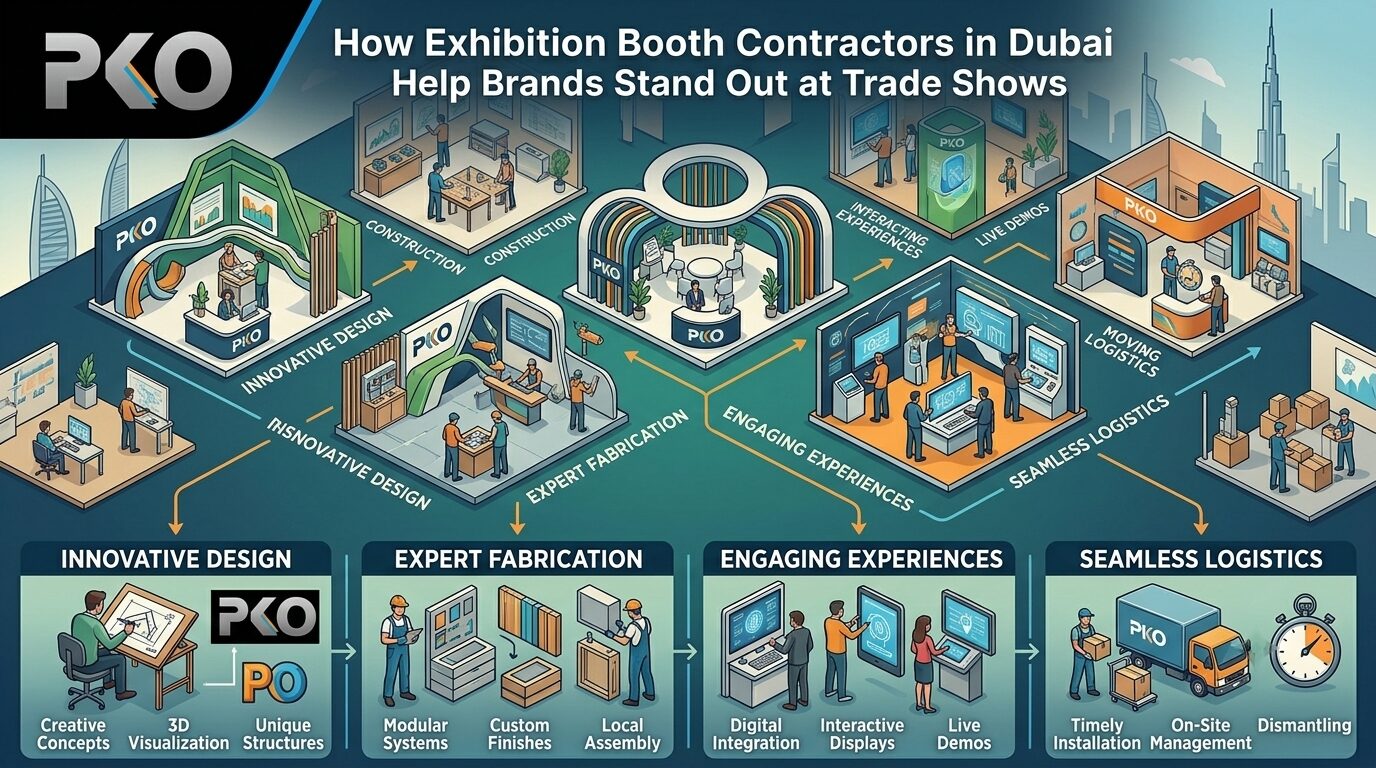
Exhibition booth contractors in Dubai are responsible for turning an exhibition concept into a complete physical space that is ready for visitors. Their role typically extends beyond construction, bringing together design, technical planning, fabrication, branding, logistics, installation, and dismantling within one coordinated process. This makes the contractor an important link between a brand’s exhibition objectives and the final booth visitors experience at the event.
The process usually begins with understanding the brand, its products or services, the exhibition venue, available booth space, target audience, and the purpose of participating in the trade show. Based on these requirements, Exhibition Stand Designers in Dubai can develop a layout and visual concept that balances brand visibility with practical visitor movement. The concept may then be developed through 3D visualization so the brand can understand the proposed structure, display areas, branding positions, lighting, reception counters, meeting spaces, and other elements before fabrication begins.
Once the design is approved, Exhibition Stand Fabricators in Dubai translate the concept into a physical structure using suitable materials, finishes, graphics, display components, and architectural features. This stage requires coordination between the design and fabrication teams because the finished booth needs to maintain the intended visual identity while also meeting practical construction requirements. Depending on the exhibition objective, the solution may involve a custom exhibition booth, modular exhibition stand, product display area, meeting zone, demonstration counter, or a combination of several functional spaces.
The contractor’s responsibilities can then continue through transportation, booth installation, on-site coordination, final checks, and dismantling after the exhibition. Managing these stages together helps reduce gaps between design intent and on-site execution. It also means that elements such as exhibition graphics, lighting, signage, furniture, displays, and branding can be coordinated as part of one overall environment rather than treated as disconnected components.
This end-to-end approach is what distinguishes an exhibition booth contractor from a provider focused on only one part of the process. An Exhibition Stand Builder in Dubai may be involved primarily in the construction and assembly of a stand, while an exhibition stand designer focuses more heavily on the creative and spatial concept. A fabricator concentrates on producing the physical components, while an exhibition stand manufacturer may handle the production of particular systems or structures. In practice, an experienced contractor can coordinate these different functions to deliver a unified exhibition solution.
For brands exhibiting in Dubai, this coordination matters because the booth has to perform several jobs at once: attract attention from the exhibition floor, communicate the brand message, present products or services clearly, accommodate conversations, and provide a professional visitor experience. PKO Exhibitions & Events approaches exhibition projects through this connected design, build, and execution process, helping ensure that the individual elements of an exhibition presence work together as one coherent environment.
With the contractor’s role established, the next question is how these design and execution decisions actually help a brand attract attention and differentiate itself from the many other exhibitors around it.
How Professional Booth Contractors Help Brands Stand Out
Standing out at a trade show is not simply about building the largest or most elaborate booth in the venue. A successful exhibition presence combines visibility, clear communication, purposeful layout, brand consistency, and visitor engagement. Exhibition Booth Contractors in Dubai help bring these elements together by designing the booth around how visitors see, approach, enter, and interact with the brand.
Create a Strong First Visual Impression
The first few seconds can influence whether a visitor notices a booth or continues walking through the exhibition hall. Professional contractors consider factors such as booth orientation, height, entrance positioning, brand visibility, lighting, graphics, and architectural features when developing the design. A clear visual hierarchy allows the most important brand elements to be recognized quickly, even from the aisle.
Large-format exhibition graphics, illuminated signage, distinctive structures, and strategically positioned logos can help establish visibility without making the booth feel overcrowded. The objective is to create a design that attracts attention while still making it immediately clear who the exhibitor is and what it offers.
Turn Brand Identity Into Physical Space
A strong exhibition booth should look and feel like an extension of the brand rather than a generic temporary structure. Custom Exhibition Stand Design Dubai services can translate elements such as brand colours, typography, imagery, messaging, product identity, and corporate style into the physical environment.
This can include branded walls, reception counters, product displays, signage, meeting areas, exhibition graphics, and other visual details. When these elements follow a consistent design language, visitors can understand the brand more easily and experience a stronger connection between the physical booth and the company’s wider identity.
Design Around Visitor Movement
Attractive visuals may encourage someone to look toward a booth, but the layout determines what happens next. A well-planned exhibition display should make it easy for visitors to understand where to enter, what to explore, and where to speak with representatives.
Exhibition Booth Designers in Dubai can plan circulation paths around reception counters, product displays, demonstration areas, seating, and meeting spaces. Open access points can make the booth feel more approachable, while clearly defined zones can prevent visitor movement from becoming congested.
The progression is straightforward: visual attraction encourages attention, accessible design encourages entry, and purposeful layout creates opportunities for interaction.
Use Exhibition Graphics to Communicate Quickly
Visitors at a busy trade show encounter numerous brands, messages, products, and visual displays within a short period. For that reason, exhibition graphics should communicate the most important information without requiring visitors to read large blocks of text.
Effective Exhibition Display Design Dubai can combine concise headlines, strong imagery, product visuals, brand messaging, directional signage, and supporting information. Graphics can also be positioned at different heights and viewing distances to maintain visibility from the aisle and within the booth.
The aim is not to fill every available surface with information. Instead, the booth should establish a clear visual hierarchy so visitors can quickly recognize the brand, understand its main offering, and identify where they can engage further.
Integrate Product Displays and Demonstration Areas
For brands exhibiting products, the way those products are presented can directly influence the visitor experience. Contractors can incorporate display shelves, product walls, demonstration counters, sample areas, interactive screens, or dedicated showcase zones according to the type of exhibition and the brand’s objectives.
A product should be visible without making the space difficult to navigate. Display heights, lighting, positioning, accessibility, and surrounding space can all be considered during the design and build process. For service-based businesses, the same principle can be applied through consultation areas, digital presentations, information displays, and branded meeting spaces.
This creates a natural progression from being noticed to understanding the offering and then engaging with the brand.
Build Creativity Around a Clear Purpose
Creative exhibition stand design can make a booth distinctive, but creativity works best when it supports a specific objective. Architectural features, lighting, graphics, product displays, and interactive elements should contribute to the overall visitor experience rather than compete with one another.
This is where professional Exhibition Stand Solutions Dubai can provide value. Instead of treating design, construction, branding, and functionality as separate tasks, the contractor can connect them into one coordinated environment. The result is a booth that does more than look different it gives visitors a clear reason to stop, explore, and start a conversation.
Once attention has been captured, the next challenge is differentiation. This is where custom booth design becomes particularly important, because a tailored exhibition environment allows a brand to express its identity in a way that a generic stand may not achieve.
Custom Booth Design Helps Brands Differentiate From Competitors
In a crowded exhibition hall, visual visibility is only the starting point. Several exhibitors may use similar displays, graphics, lighting, and furniture, making it important for a brand to create an environment that feels distinctive while remaining consistent with its identity. Custom booth design gives brands greater control over how their space looks, functions, and communicates with visitors.
A Custom Exhibition Stand Design Dubai approach starts with the brand’s specific exhibition objectives rather than a fixed template. The design can be developed around the available floor area, products or services being presented, target audience, expected visitor movement, brand guidelines, and the type of interactions the company wants to encourage. This creates a more purposeful relationship between the booth structure and the brand’s objectives.
Design Around the Brand, Not a Generic Template
A custom exhibition booth can incorporate brand-specific elements such as architectural shapes, colour schemes, display systems, reception counters, product showcases, meeting areas, signage, and exhibition graphics. These details can help visitors recognize the brand before they even enter the booth.
For example, a technology company may require dedicated demonstration stations and interactive screens, while a B2B service provider may prioritize open discussion areas and private meeting rooms. A product-focused brand may need prominent display units and demonstration counters. The physical design therefore changes according to what the brand needs visitors to see and do.
Create a Distinctive Visitor Experience
The structure of the booth can influence how visitors experience the brand from the moment they approach it. Open entrances can encourage accessibility, while strategically positioned displays can guide visitors through the space. Meeting areas can provide quieter spaces for business discussions, while demonstration zones can create opportunities for product interaction.
This is where Bespoke Exhibition Stands Dubai can provide an advantage. Rather than fitting the brand into a predetermined layout, the booth can be planned around the intended visitor journey. The design can establish different zones for attraction, exploration, demonstration, conversation, and consultation while keeping the overall environment visually connected.
Make Better Use of Available Space
Custom design is also valuable when the available exhibition area has specific dimensions or restrictions. A carefully planned layout can make better use of corners, vertical surfaces, entrances, display walls, and floor space without creating unnecessary congestion.
An experienced Custom Exhibition Stand Designer in Dubai can consider the relationship between the booth’s physical dimensions and its intended functions. Reception, product displays, storage, seating, meeting areas, and branding elements can be positioned so that each has a clear purpose without compromising visitor movement.
Combine Visual Differentiation With Functionality
A distinctive booth should not rely on unusual shapes or decorative features alone. Its design needs to support the activities taking place inside it. A visually impressive structure that makes products difficult to access or conversations difficult to conduct may not deliver the intended exhibition experience.
Professional Custom Booth Design UAE solutions therefore balance aesthetics with practical requirements. Materials, lighting, furniture, displays, graphics, and architectural features can be selected according to how the booth will actually be used. This makes differentiation more meaningful because the booth is not only recognizable it is also functional.
Create a Consistent Brand Environment
Consistency is another important part of differentiation. When the booth architecture, graphics, signage, product displays, lighting, and furniture follow a common visual direction, visitors receive a more unified impression of the brand.
This approach turns the exhibition booth into a physical extension of the company’s identity. Instead of seeing separate design elements, visitors experience one connected environment where the brand message is reflected through both visual presentation and spatial design.
Ultimately, custom design helps a brand move beyond simply being visible in an exhibition hall. It creates an environment built around the brand’s identity, audience, products, and objectives. However, a strong concept only creates value when it can be translated accurately into a finished structure. That makes the relationship between exhibition stand design and fabrication quality the next important part of the process.
How Contractors Combine Design With Fabrication Quality
A creative exhibition booth concept only has real value when it can be translated into a well-built physical environment. The transition from design to fabrication determines whether the finished booth actually reflects the approved concept, brand identity, and functional requirements. This is why professional Exhibition Stand Fabrication Dubai is an important part of creating a strong exhibition presence.
Turning a Design Concept Into a Physical Booth
Once the exhibition stand design has been finalized, the fabrication stage converts drawings and visual concepts into physical components. This can involve structural elements, counters, display units, walls, flooring, signage, lighting features, branded graphics, furniture, and other customized elements.
The fabrication process needs to follow the approved design closely. Proportions, finishes, material selection, graphic placement, and structural details can all influence the final appearance. Even a small inconsistency between the design and finished structure can affect how professionally the booth represents the brand.
Selecting Materials Based on the Booth’s Purpose
Different exhibition environments require different materials and finishes. Contractors may consider factors such as booth size, design complexity, expected usage, transportation requirements, installation conditions, and the desired visual appearance when selecting materials.
For example, a product display may require a durable surface that can support repeated demonstrations, while a branded architectural feature may place greater emphasis on finish and visual presentation. Material decisions should therefore be connected to both the aesthetic concept and the practical function of each booth element.
Maintaining Brand Consistency During Fabrication
Fabrication also plays a role in maintaining visual consistency. Brand colours, printed graphics, logos, signage, lighting, and architectural elements need to work together rather than appearing as separate additions.
Professional Exhibition Stand Fabricators in Dubai can coordinate these components during production so that the finished structure maintains the intended visual hierarchy. This is particularly important when a booth includes several suppliers or production stages, because inconsistencies in colour, dimensions, materials, or finishing can weaken the overall presentation.
Quality Finishing Supports Professional Presentation
Visitors often notice the quality of physical details even when they cannot identify exactly what is different. Uneven surfaces, poorly installed graphics, exposed construction elements, inconsistent joints, or unfinished edges can make a booth feel less polished.
By contrast, clean finishing, properly aligned graphics, well-integrated lighting, and carefully constructed display areas can contribute to a more professional brand environment. Fabrication quality therefore supports the credibility established by the original design.
Construction Must Support Functionality
The fabrication process is not only about appearance. The booth must also perform its intended functions safely and efficiently during the exhibition.
Structural components need to support display requirements, meeting areas need to accommodate visitors comfortably, counters should be positioned for practical use, and electrical or lighting features need to be integrated into the overall structure. Exhibition Booth Construction Dubai therefore requires coordination between creative design and technical execution.
Why Design and Fabrication Need to Work Together
When designers and fabricators work from a shared understanding of the project, potential problems can be identified earlier. A design element that looks effective in a concept may require modification based on material limitations, structural requirements, installation conditions, or the available timeframe.
Early coordination helps ensure that the final booth remains faithful to the creative concept while being practical to manufacture and install. This connection between design and fabrication is particularly valuable for custom exhibition projects where many components are created specifically for one brand.
For brands, the result is a more consistent transition from concept to construction. The design establishes how the booth should look and function, while fabrication determines how accurately that vision is realized in the exhibition hall.
Before fabrication begins, however, brands can gain a clearer understanding of the proposed structure through 3D visualization. This allows design details, branding positions, spatial relationships, and functional zones to be reviewed before the physical build takes place.
3D Exhibition Stand Design Helps Brands Visualize the Final Experience
Before an exhibition booth is fabricated, it can be difficult to understand exactly how the completed structure will look and function from a basic floor plan or technical drawing. 3D Exhibition Stand Design Dubai helps bridge that gap by giving brands a visual representation of the proposed exhibition environment before physical construction begins.
See the Booth Before It Is Built
A 3D design can show the proposed booth from multiple perspectives, helping brands understand the relationship between the structure, branding, displays, furniture, lighting, and visitor areas. Instead of reviewing individual components separately, stakeholders can see how those elements are expected to work together within the available exhibition space.
This can make it easier to evaluate important details such as:
- Overall booth proportions
- Entrance positioning
- Brand visibility
- Reception placement
- Product display locations
- Meeting and seating areas
- Storage requirements
- Graphics and signage
- Lighting features
- Visitor circulation
Identify Design Problems Before Fabrication
One of the practical benefits of 3D visualization is the ability to identify potential issues before materials are ordered or construction starts. A design may look strong conceptually but reveal space limitations when viewed as a complete environment.
For example, a large display feature may restrict visitor movement, a reception counter may occupy too much usable space, or branding may not be sufficiently visible from the exhibition aisle. Reviewing these relationships in advance gives the design team an opportunity to adjust the layout before fabrication.
This creates an important connection in the exhibition process:
Concept → 3D visualization → review → refinement → fabrication → installation
The earlier a design issue is identified, the easier it generally is to address it without affecting later production stages.
Improve Brand and Graphic Placement
3D visualization also allows brands to assess how logos, exhibition graphics, messaging, signage, and product visuals will appear within the overall structure. This helps prevent important brand elements from being hidden behind furniture, displays, architectural features, or other components.
For a brand competing for attention in a busy trade-show environment, this visual planning can help create a clearer hierarchy. Primary branding can be positioned where it is most visible, while supporting information can be placed within areas where visitors are more likely to stop and explore.
Review Visitor Flow and Functional Zones
A booth needs to work as a physical environment, not simply as an image. 3D exhibition stand design can help stakeholders examine how different zones relate to one another.
A proposed layout might include:
- An open entrance to encourage visitors to enter
- A reception area for initial interaction
- Product displays for exploration
- Demonstration areas for product presentations
- Seating for informal conversations
- Private meeting spaces for detailed discussions
- Storage areas that remain discreetly integrated into the design
Viewing these elements together makes it easier to identify congestion points and determine whether the available space is being used effectively.
Make Design Approvals More Precise
Exhibition projects often involve several stakeholders, including marketing teams, management, designers, contractors, and fabricators. A detailed 3D representation gives these stakeholders a common visual reference when discussing the project.
Instead of relying only on written descriptions such as “move the display slightly to the side” or “make the branding more prominent,” teams can refer to a visual representation of the proposed change. This can make revisions more specific and reduce misunderstandings before production.
Connect Visualization With Fabrication
3D design is most effective when it is connected to the subsequent fabrication process. The approved concept needs to be translated into practical construction details, including materials, dimensions, finishes, lighting, graphics, and structural components.
This means 3D visualization should not be treated simply as a presentation image. It forms part of the wider Exhibition Booth Design and Build Dubai process, helping connect creative decisions with the physical requirements of fabrication and installation.
For brands, this creates greater clarity before committing to the physical build. They can assess whether the proposed booth reflects their identity, supports their exhibition objectives, uses the available space effectively, and provides a suitable environment for visitor interaction.
Once the design has been visualized and refined, the next decision is the type of booth structure that best suits the exhibition. Depending on the brand’s objectives, event schedule, space requirements, and reuse plans, a modular exhibition stand or bespoke exhibition stand may offer different advantages.
Modular and Bespoke Booths: Choosing the Right Approach
Not every brand needs the same type of exhibition booth. The right structure depends on factors such as the exhibition objective, available floor space, brand requirements, number of events, desired level of customization, and whether the stand will be reused. Modular Exhibition Stand Designers Dubai can create flexible systems for brands that need adaptability, while bespoke exhibition stands can provide greater control over the appearance and functionality of a specific exhibition environment.
Modular Exhibition Stands
A modular exhibition stand uses adaptable components that can be configured or reconfigured according to the requirements of different exhibition spaces. This approach can be useful for brands that participate in multiple events and want a solution that can evolve between shows.
Modular systems can offer:
- Flexible configurations
- Reusable components
- Adaptability to different booth dimensions
- Consistent brand presentation
- Easier modification for future events
- Opportunities to incorporate graphics, displays, lighting, and branded elements
A modular structure does not necessarily mean a basic or generic appearance. With thoughtful planning, branding, graphics, lighting, furniture, and display elements can be incorporated to create a distinctive exhibition environment.
Bespoke Exhibition Stands
Bespoke exhibition stands are designed specifically around a particular brand, space, exhibition, and set of objectives. The structure can be developed from the ground up to accommodate unique architectural elements, product displays, meeting areas, branding requirements, and visitor experiences.
Bespoke Exhibition Stands Dubai can be particularly suitable when a brand wants a highly customized environment or needs the booth to support a specific product launch, demonstration, corporate presentation, or high-impact brand experience.
Because the structure is developed around the individual project, there is generally greater freedom in areas such as:
- Booth architecture
- Custom display units
- Branded structures
- Product demonstration zones
- Meeting spaces
- Reception areas
- Lighting integration
- Graphics and signage
- Visitor circulation
Modular vs Bespoke: Which Is Better?
Neither option is automatically better. The appropriate choice depends on what the brand needs the booth to achieve.
| Consideration | Modular Stand | Bespoke Stand |
| Reusability | Strong | Can be designed for reuse |
| Adaptability | High | More project-specific |
| Customization | Flexible | Very high |
| Brand expression | Strong with good design | Highly tailored |
| Booth architecture | Component-based | Custom-developed |
| Multiple exhibitions | Particularly suitable | Suitable with careful planning |
| Unique spatial requirements | More limited | Highly adaptable |
For example, a company attending several exhibitions throughout the year may benefit from a modular system that can be resized or reconfigured for different venues. A brand launching a major product or creating a highly specific visitor journey may prefer a bespoke design that gives greater control over the environment.
The Decision Should Start With Exhibition Objectives
The choice should not be based solely on appearance. Brands should first consider what they need visitors to do inside the booth.
If the main objective is product demonstration, the design may need accessible display and interaction areas. If the focus is business meetings, greater emphasis may be placed on seating and private consultation spaces. If the primary goal is brand visibility, architectural presence, graphics, signage, and open sightlines may become more important.
This means the booth format should follow the exhibition strategy rather than the other way around.
Professional Design Can Strengthen Either Format
Whether a brand chooses a modular or bespoke approach, the design still needs to create a clear relationship between branding, visitor movement, functionality, and visual presentation. Exhibition Stand Solutions Dubai can combine these considerations to create a booth that works within the brand’s practical requirements while maintaining a distinctive identity.
The most effective approach is therefore not simply to ask whether modular or bespoke stands are better. The more useful question is: Which format gives the brand the right balance of flexibility, customization, functionality, and visual impact for its exhibition objectives?
Once the booth structure has been selected, the focus can move from physical differentiation to what happens inside the space how the design encourages visitors to stop, explore the offering, and engage with the brand.
How Exhibition Booth Contractors Improve Brand Engagement Through Functional Design
Getting visitors to notice an exhibition booth is only the first step. Once someone enters the space, the booth needs to make it easy for them to explore products, ask questions, watch demonstrations, meet representatives, or have a business conversation. This is why functional design is just as important as visual appeal when developing an exhibition environment.
Exhibition Booth Contractors in Dubai can organize the booth around specific visitor activities, creating dedicated areas that support different stages of engagement. Instead of treating the entire stand as one open space, the design can establish purposeful zones while maintaining a consistent visual connection between them.
Create Clear Areas for Product Demonstrations
Product demonstrations give visitors an opportunity to understand how a product works rather than simply seeing it displayed. Contractors can incorporate demonstration counters, product stations, screens, sample areas, or interactive displays into the booth layout.
The location of these areas matters. A demonstration zone should be visible enough to attract interest without obstructing entrances or creating congestion. Sufficient space should also be provided for visitors to gather around the demonstration without disrupting other activities within the booth.
This creates a natural progression:
Notice the product → approach the display → experience the demonstration → ask questions → engage with the brand representative.
Make Conversations Easier With Dedicated Meeting Areas
Not every visitor interaction takes place in an open demonstration area. Business discussions may require seating, tables, consultation counters, or more private meeting spaces.
A well-planned booth can incorporate different levels of interaction, from informal conversations near the main display to more focused discussions in designated meeting areas. This allows the booth to serve both casual visitors and prospects who require more detailed conversations.
For B2B exhibitors in particular, the ability to move naturally from an initial introduction into a comfortable discussion can make the exhibition environment more useful for business development.
Design Reception Areas for Initial Interaction
The reception area often serves as the first point of direct interaction between visitors and the brand’s representatives. Its position should therefore be considered alongside the entrance and overall visitor flow.
A reception counter that is too enclosed or difficult to approach may create an unnecessary barrier. A more accessible arrangement can make it easier for visitors to ask questions, receive information, or be directed toward a relevant product, demonstration, or meeting area.
This is another reason why Trade Show Booth Design Dubai needs to consider both appearance and human movement. The booth should encourage interaction rather than simply provide a visually impressive backdrop.
Use Open Layouts to Encourage Visitor Access
A booth that feels inaccessible may discourage visitors from entering, even if its design is visually attractive. Open sightlines, approachable entrances, and carefully positioned displays can make the space feel more welcoming.
Contractors can consider how the booth appears from different directions within the exhibition hall. This is particularly important for larger or island-style stands where visitors may approach from multiple sides.
The objective is to create a clear relationship between the external exhibition environment and the internal visitor experience.
Integrate Interactive Elements Where They Add Value
Digital screens, product demonstrations, interactive displays, presentations, and other technology can increase engagement when they have a clear purpose. However, technology should support the visitor journey rather than become decoration without a meaningful function.
For example, an interactive display might explain product features, allow visitors to explore a service, show a product demonstration, or provide additional information that would be difficult to communicate through static graphics alone.
The most effective approach is to connect the technology to a specific visitor need.
Balance Visitor Engagement With Brand Presentation
Functional exhibition design should still maintain a strong visual identity. Product displays, seating, demonstration areas, graphics, lighting, and branding should work together rather than competing for attention.
This balance allows the booth to perform two jobs simultaneously: present the brand professionally and create opportunities for interaction.
A visitor may initially enter because the booth looks interesting, but the functionality of the space determines whether that attention develops into a meaningful conversation or product experience.
Design the Journey From Attention to Interaction
The strongest exhibition environments consider the visitor journey as a connected process:
Visibility → curiosity → entry → exploration → interaction → conversation → potential business opportunity
Each stage depends partly on the one before it. Strong branding may attract attention, but unclear access can prevent entry. An attractive display may encourage exploration, but poor layout can make interaction difficult. A well-designed meeting area may support a business conversation, but it needs to be connected naturally to the rest of the visitor experience.
This is where Exhibition Booth Contractors in Dubai can bring design, fabrication, branding, furniture, displays, and spatial planning together as one coordinated solution.
However, even the most carefully planned booth can lose its impact if the physical execution is poorly managed. Once the design is complete, transportation, installation, on-site coordination, and final preparation become equally important to delivering the intended brand experience.
Booth Installation and On-Site Execution Protect the Brand Experience
A booth can have an excellent concept, strong branding, and high-quality fabrication, but those elements still need to be assembled and prepared correctly at the exhibition venue. Installation is where the individual components become one finished environment, making on-site execution an important part of the overall exhibition experience.
For brands working with Exhibition Booth Contractors in Dubai, professional coordination can help ensure that the approved design is delivered as intended within the venue’s operational requirements and event schedule.
Coordinate Delivery and Installation
Exhibition projects typically involve multiple components, including structural elements, graphics, lighting, furniture, display units, signage, flooring, and technical equipment. These elements need to reach the venue at the appropriate time and be assembled in the correct sequence.
Installation teams may coordinate:
- Transportation and delivery
- Structural assembly
- Flooring and wall installation
- Graphics and signage
- Lighting fixtures
- Furniture placement
- Product displays
- Reception counters
- Storage areas
- Final visual finishing
A coordinated process helps prevent individual elements from being installed without considering how they fit into the completed booth.
Maintain the Approved Design During Installation
The final exhibition booth should closely reflect the approved design concept. This includes maintaining the intended position of branding, display areas, meeting spaces, lighting, graphics, and architectural features.
On-site adjustments may sometimes be necessary because of venue conditions or technical requirements. However, those changes should be managed carefully so that they do not compromise the booth’s visual identity or functionality.
This is where the relationship between Exhibition Booth Construction Dubai and the earlier design stages becomes important. Installation should not be viewed as an isolated task; it is the final physical stage of a process that began with the brand brief and design concept.
Manage Lighting, Graphics, and Branding Details
Small installation details can have a noticeable effect on the finished appearance. Graphics need to be positioned accurately, illuminated elements need to work correctly, and signage needs to remain visible from the intended viewing angles.
Lighting also needs to complement the booth rather than create glare, poorly lit areas, or unnecessary visual distractions. When lighting, graphics, architecture, and branding are coordinated, the completed stand can maintain the visual hierarchy established during the design stage.
Prepare the Booth Before Visitors Arrive
The booth needs to be fully prepared before the exhibition opens. Final checks can include:
- Checking structural and visual elements
- Confirming graphics and signage
- Testing lighting and technical equipment
- Positioning furniture
- Organizing product displays
- Checking reception and meeting areas
- Removing installation materials and waste
- Confirming that the space is clean and visitor-ready
This final preparation matters because the first visitor should experience the finished brand environment not an incomplete installation site.
Coordinate With the Exhibition Environment
A booth does not operate independently of its surroundings. It exists within a larger exhibition hall with neighboring exhibitors, venue requirements, access routes, operational schedules, and technical considerations.
An experienced contractor needs to account for these factors when coordinating installation and on-site execution. Local familiarity can also help contractors understand the practical demands associated with delivering exhibition projects in Dubai.
Dismantling Is Part of the Project Too
The contractor’s role does not necessarily end when the exhibition closes. After the event, the booth needs to be dismantled and the relevant materials, displays, and equipment handled appropriately.
For reusable modular systems, components may need to be packed and stored for future events. For custom structures, the dismantling process needs to be organized so that the venue is cleared efficiently and the project is properly concluded.
Why Execution Matters to Brand Perception
Visitors may never know how much work went into the booth’s design and fabrication, but they experience the outcome immediately. Misaligned graphics, incomplete finishing, poorly arranged displays, or malfunctioning lighting can undermine an otherwise strong concept.
Professional installation therefore protects the work completed during the earlier stages. It ensures that design → fabrication → delivery → installation remains a connected process rather than a series of disconnected tasks.
Once on-site execution is properly coordinated, another layer becomes important: managing all the people, suppliers, deadlines, and technical requirements involved in delivering the booth. This is where exhibition project management helps keep the entire process aligned.
Exhibition Project Management Keeps Multiple Booth Elements Connected
An exhibition booth involves more than the physical structure visible to visitors. Behind the finished display is a coordinated process involving designers, fabricators, graphic teams, logistics providers, installation crews, technical specialists, and the brand’s own representatives. Without effective coordination, even a strong booth concept can face delays, inconsistencies, or last-minute complications.
This makes exhibition project management an important part of working with professional Exhibition Booth Contractors in Dubai. The contractor can act as a central point of coordination, helping keep the different stages of the project aligned with the approved design, schedule, venue requirements, and brand objectives.
Coordinate Designers and Fabricators
The design and fabrication stages need to remain connected throughout the project. Designers establish the visual and functional concept, while fabricators determine how that concept can be produced and assembled in practice.
Project management helps ensure that important details are communicated between both sides. If a particular architectural feature requires a specific material, finish, dimension, or construction method, that information needs to reach the production team accurately.
This reduces the possibility of a finished component differing significantly from what was approved during the design stage.
Manage Graphics, Branding, and Display Components
An exhibition booth often contains several separate branding elements, including:
- Exhibition graphics
- Logos and signage
- Product displays
- Printed panels
- Digital screens
- Reception branding
- Directional elements
- Promotional messaging
These components need to follow a consistent visual direction. Project coordination helps ensure that the right graphics are produced for the right locations and that they are ready when the installation team needs them.
The same principle applies to furniture, lighting, product displays, and other booth components. Each element contributes to the final environment and needs to arrive at the right stage of the installation process.
Keep the Project Aligned With the Exhibition Timeline
Trade shows operate according to fixed schedules. Booth installation, venue access, event opening, and dismantling are generally tied to specific time windows. A delay at one stage can therefore affect several later stages.
Project management helps organize the sequence of activities from initial planning through final installation:
Brief → design → approval → fabrication → graphics → logistics → installation → inspection → event opening
Keeping this sequence organized is particularly important when a project contains custom-built components that cannot simply be replaced with standard alternatives at short notice.
Coordinate With Venue Requirements
The exhibition venue is another important part of the project. Contractors may need to account for access procedures, installation schedules, technical requirements, space limitations, and other operational conditions established by the event or venue.
For projects in Dubai, local experience can help contractors plan the practical side of delivery while keeping the booth design and construction aligned with the event environment.
This is one reason why choosing experienced Exhibition Stand Companies in Dubai involves more than reviewing photographs of completed stands. Brands should also consider whether the contractor has the organizational capability to manage the project from initial concept through on-site completion.
Reduce Communication Gaps
Exhibition projects can involve many different parties. If communication is fragmented, important details may be misunderstood or overlooked.
A central project-management process can provide a clearer communication path between the brand and the various teams responsible for design, production, installation, and technical execution. Changes can be documented, responsibilities can be assigned, and decisions can be communicated to the relevant people.
This can help reduce avoidable issues such as incorrect graphics, missing components, layout misunderstandings, or late design changes.
Manage Quality at Different Stages
Quality control should not be limited to the final inspection at the venue. It can be considered throughout the project.
During design, teams can check whether the proposed layout meets the brand’s requirements. During fabrication, components can be reviewed for dimensions, materials, finishing, and branding accuracy. During installation, the completed booth can be checked against the approved design before visitors arrive.
This creates a continuous quality process rather than relying on one final check to identify every issue.
Keep the Brand Objective at the Center
Project management should ultimately serve the purpose of the exhibition booth. Every decision from the layout and fabrication materials to the installation sequence should remain connected to what the brand wants visitors to experience and accomplish.
For example, if lead generation is the primary objective, project planning should protect the reception, interaction, and meeting areas required for visitor conversations. If the objective is product demonstration, display and demonstration zones need to receive appropriate attention throughout fabrication and installation.
This keeps the project focused on outcomes rather than simply completing construction tasks.
Why Coordination Strengthens the Final Booth
A well-managed exhibition project connects many individual activities into one consistent process. Exhibition Stand Fabrication Dubai, graphic production, transportation, installation, lighting, furniture, branding, and venue coordination all contribute to the final visitor experience.
When these elements are managed together, the booth is more likely to maintain the original design intent from the first concept through to the completed exhibition environment.
With the operational side of booth delivery established, the next consideration is how the design itself should change according to the brand’s specific objective. A product launch, lead-generation campaign, corporate meeting program, and brand-awareness exhibition may all require very different booth experiences.
How Exhibition Booth Contractors Adapt Designs to Different Brand Objectives
A successful exhibition booth should be designed around what the brand wants to accomplish at the event. A company launching a new product may need a highly visible demonstration area, while a B2B organization focused on meetings may need more space for conversations and consultations. Treating every exhibition booth the same can therefore limit how effectively the space supports the brand’s goals.
Professional Exhibition Booth Contractors in Dubai can adapt the design, layout, displays, branding, and visitor zones according to the purpose of the exhibition. The physical environment should support the desired visitor journey rather than simply provide an attractive backdrop.
Product Launches
A product launch requires visitors to notice, understand, and experience the new offering. The booth can therefore be structured around product visibility and demonstration.
Important elements may include:
- Prominent product displays
- Demonstration counters
- Interactive screens
- Product information graphics
- Clear visitor circulation
- Space for presentations
- Areas for direct interaction with representatives
The product should remain visually accessible without allowing displays or architectural features to obstruct the visitor’s view.
The sequence becomes:
Visibility → product discovery → demonstration → questions → deeper engagement
This makes the booth part of the product presentation rather than simply a branded environment around it.
Lead Generation
When generating qualified leads is the main objective, the booth needs to make initial interaction straightforward. A clear entrance, accessible reception point, visible messaging, and comfortable conversation areas can help representatives engage visitors more naturally.
The layout can also include designated areas for:
- Initial enquiries
- Product or service discussions
- Lead qualification
- Consultations
- Follow-up scheduling
The design should avoid making the visitor experience feel overly complicated. A clear path from first interaction to meaningful conversation can make the booth more useful for sales and marketing teams.
Brand Awareness
For brands focused primarily on awareness, visibility and consistency become particularly important. The booth may use prominent architectural features, large-scale graphics, strong signage, lighting, and open sightlines to establish a recognizable presence within the exhibition hall.
The aim is to make the brand easy to identify from a distance while ensuring that the booth still provides a coherent experience once visitors enter.
Creative Exhibition Stand Design can contribute to this objective when distinctive elements are directly connected to the brand’s visual identity rather than being used simply for decoration.
B2B Meetings and Networking
A company attending an exhibition primarily to meet potential partners, clients, distributors, or investors may have different spatial requirements.
In this situation, the booth can prioritize:
- Meeting tables
- Comfortable seating
- Semi-private discussion areas
- Enclosed meeting rooms where appropriate
- Reception and waiting areas
- Product or presentation displays
The layout should provide a balance between openness and privacy. Visitors should be able to approach the booth easily, while important business conversations can take place without unnecessary distractions.
Technology Demonstrations
Technology-focused brands may need a booth that supports interactive experiences. Digital screens, product interfaces, demonstrations, touchpoints, and audiovisual presentations can become part of the visitor journey.
However, technology should be integrated with the physical environment rather than added as an afterthought. Screen positioning, viewing distances, power requirements, visitor circulation, and surrounding space all need to be considered during Exhibition Booth Design and Build Dubai planning.
The objective should always be to use technology to explain, demonstrate, or simplify the product experience.
Educational and Information-Based Exhibitions
Some brands participate in exhibitions where the primary goal is to educate visitors about a product, service, industry, or organization. These booths may require a combination of information graphics, presentation areas, digital content, product displays, and consultation spaces.
The challenge is to provide enough information without overwhelming visitors. A structured layout can separate introductory information from deeper content, allowing visitors to explore according to their level of interest.
The Booth Should Follow the Visitor Journey
Regardless of the objective, the strongest designs consider what the visitor should experience from the moment they notice the booth until they leave.
A simplified journey might look like:
Attract → Enter → Understand → Explore → Interact → Discuss → Take Action
The exact design changes according to the brand’s objective, but the principle remains consistent: every part of the booth should have a reason for being there.
This is why Custom Exhibition Stand Design Dubai is more than selecting colours, materials, and decorative features. It involves translating a business objective into a physical visitor experience.
Matching Design With the Right Exhibition Goal
The same booth structure may not be suitable for every event a brand attends. A company might require a product-focused design for one trade show, a meeting-oriented layout for another, and a highly visible brand-awareness environment for a major industry event.
Experienced Exhibition Stand Designers in Dubai can adapt the booth concept to these changing requirements while maintaining the core identity of the brand.
This objective-led approach also highlights why Dubai-specific exhibition experience matters. The city’s major trade shows bring together local and international brands, meaning exhibitors often need a booth that communicates effectively to a diverse professional audience while meeting the practical demands of the local exhibition environment.
Why Dubai-Specific Exhibition Expertise Matters
Dubai’s exhibition environment brings together brands, buyers, investors, and professionals from different markets, creating a setting where an exhibition booth may need to communicate a brand’s value quickly to a highly diverse audience. This makes local exhibition experience relevant not only to construction and installation but also to how the booth is planned, presented, and delivered.
Dubai World Trade Centre’s 2024 figures demonstrate the scale of this environment. Its exhibitions and events attracted around 2.65 million attendees across 378 exhibitions and events, while exhibitions and trade events involved 58,665 exhibiting companies. The international nature of this activity is also significant, with 77% of exhibiting companies coming from outside the UAE.
Design for a Diverse Exhibition Audience
An exhibition booth in Dubai may be visited by people from different countries, industries, professional backgrounds, and levels of familiarity with a particular brand. The booth therefore needs to communicate its core message clearly without depending entirely on lengthy explanations.
Visual hierarchy, recognizable branding, concise messaging, product presentation, and intuitive visitor flow can help make the booth easier to understand at a glance.
This is particularly relevant for brands participating in major international trade shows, where visitors may encounter numerous exhibitors within the same event.
Understand the Practical Demands of Dubai Exhibitions
Exhibition projects involve more than creative design. The contractor needs to coordinate fabrication, transportation, installation, technical requirements, and venue schedules within the conditions of the specific event.
Local experience can help teams plan these operational details more effectively. Understanding how exhibition projects are delivered in Dubai can support better coordination between the design concept, fabrication schedule, logistics, installation process, and event opening deadline.
For an exhibitor, this means the contractor needs to understand both sides of the project: what the booth should achieve visually and how it needs to be delivered physically.
Build for Visibility in a Competitive Environment
The large number of exhibiting companies means brands may be positioned alongside businesses with sophisticated exhibition presentations of their own. A booth therefore needs to establish a recognizable identity without relying solely on size.
Exhibition Stand Builders in UAE can approach this challenge through a combination of architecture, graphics, lighting, branding, product displays, and spatial planning. The objective is to make the booth identifiable from the exhibition floor and useful once visitors enter it.
Balance International Appeal With Brand Identity
An international audience does not mean that every booth needs to look the same. A strong exhibition presence should retain the company’s own identity while presenting its message in a way that is accessible to a broad professional audience.
Clear signage, consistent branding, simple messaging, and logical product or service presentation can help reduce communication barriers. The booth becomes a physical environment where the brand can explain what it offers without relying exclusively on verbal interaction.
Plan for Different Exhibition Venues and Booth Spaces
Dubai hosts exhibitions across different venues and event formats, meaning the available booth space and surrounding environment can vary significantly. A design developed for one event may not automatically work for another.
Brands may need:
- Inline booth layouts
- Corner stands
- Peninsula configurations
- Island stands
- Different floor areas
- Reconfigurable display systems
This is where adaptable Exhibition Stand Solutions Dubai can be useful. The design needs to respond to the physical characteristics of the assigned space while preserving the brand’s visual identity and functional requirements.
Local Coordination Supports Better Execution
A strong booth design can lose its impact if installation is not coordinated properly. Local exhibition experience can help contractors anticipate practical requirements related to delivery, installation, venue access, technical coordination, and event deadlines.
This reinforces the broader role of an Exhibition Booth Contractor in Dubai: the contractor is not simply responsible for constructing a physical stand but for connecting design, fabrication, logistics, installation, and project management into one delivery process.
Why Dubai Experience Should Be Part of Contractor Evaluation
For brands choosing between different Exhibition Stand Companies in Dubai, local experience can therefore be one useful consideration alongside design quality, fabrication capabilities, portfolio relevance, project management, installation support, and the ability to understand the brand’s objectives.
Dubai’s international exhibition environment makes the booth a meeting point between brand identity and audience experience. A contractor familiar with that environment can help ensure that the design is not only visually distinctive but also practical to deliver and effective for the audience the brand expects to meet.
With the importance of local expertise established, the next step is to look at the specific capabilities that distinguish the best Exhibition Booth Contractors in Dubai and what brands should assess before selecting one for an upcoming event.
What Makes the Best Exhibition Booth Contractors in Dubai Different?
The term “best” can mean different things to different exhibitors. For one brand, the priority may be creative design and visual impact. Another may place greater importance on fabrication quality, project management, reusable structures, or reliable installation. Rather than judging an Exhibition Booth Contractor in Dubai only by how impressive a portfolio looks, brands should assess the capabilities that directly affect the delivery and performance of their exhibition booth.
1. Relevant Exhibition Experience
Experience should be relevant to the type of exhibition, booth, industry, and audience involved. A contractor familiar with large trade shows may understand the practical demands of working within busy exhibition environments, while experience with particular booth formats can be useful for projects requiring custom structures or complex displays.
Brands should look for examples that demonstrate the contractor’s ability to deliver projects comparable to their own requirements.
2. Strong Design Capability
A contractor should be able to translate the brand’s objectives into a practical booth concept. This involves more than choosing attractive colours or architectural features.
The design team should consider:
- Brand identity
- Booth dimensions
- Visitor flow
- Product visibility
- Meeting requirements
- Display areas
- Storage
- Lighting
- Graphics
- Overall visitor experience
Professional Exhibition Stand Designers in Dubai can use these factors to create a design that supports the purpose of the exhibition rather than simply filling the allocated floor space.
3. 3D Visualization Before Fabrication
A clear 3D design process gives the brand an opportunity to review the proposed booth before production begins. It can help stakeholders assess the structure, branding, displays, furniture, lighting, and visitor areas in relation to one another.
This also creates an opportunity to identify potential design issues before they become fabrication or installation problems.
4. Custom and Modular Capabilities
A contractor offering both custom and modular solutions can provide greater flexibility when the brand’s exhibition requirements vary.
Custom fabrication may be appropriate when a brand wants a highly specific architectural environment, while modular systems can be useful when the booth needs to be adapted or reused across multiple exhibitions.
The important consideration is whether the contractor can recommend a format based on the brand’s objectives rather than simply offering one standard approach.
5. Fabrication and Construction Capability
Design and fabrication need to work together. A contractor with strong Exhibition Stand Fabricators in Dubai capabilities can help translate approved concepts into physical structures while maintaining appropriate materials, dimensions, finishing, graphics, and display requirements.
Brands should consider how the contractor manages:
- Structural components
- Surface finishes
- Custom display units
- Branded elements
- Graphics
- Lighting integration
- Furniture
- Product displays
The quality of these details can influence the final impression visitors receive.
6. Branding and Graphics Integration
A booth is a physical representation of the brand, so graphics and branding should not be treated as separate additions at the end of the project.
The contractor should understand how logos, messaging, colours, product visuals, signage, and architectural features work together. This helps maintain visual consistency from the main booth structure through to smaller presentation details.
7. Installation and On-Site Support
A contractor’s responsibility should extend beyond the workshop. Installation is where the individual booth components are assembled into the finished environment, and this stage can significantly affect the final result.
Brands should assess whether the contractor provides:
- Professional installation
- On-site coordination
- Final checks
- Technical coordination
- Dismantling
- Post-event support where required
A strong installation process helps ensure that the approved design is accurately represented at the venue.
8. Exhibition Project Management
A complete exhibition project may involve designers, fabricators, printers, logistics teams, installers, technical specialists, and the brand’s internal stakeholders.
A dedicated project-management process helps coordinate these different activities and keeps the project aligned with its schedule and approved requirements.
This becomes particularly important when the exhibition opening date is fixed and there is limited time available for corrections or last-minute changes.
9. Portfolio and Relevant Case Experience
A portfolio can provide useful evidence of what a contractor is capable of producing, but brands should look beyond visually attractive photographs.
Look for projects that demonstrate:
- Similar booth sizes
- Comparable industries
- Custom fabrication
- Different booth configurations
- Product display experience
- Meeting environments
- Strong branding execution
- Successful installation
The goal is to determine whether the contractor’s previous work is relevant to the brand’s actual requirements.
10. Ability to Work Within Event Deadlines
Exhibition projects operate according to fixed schedules. Design approvals, fabrication, transportation, installation, and final preparation all need to happen before visitors arrive.
A reliable contractor should therefore have a clear workflow for managing deadlines and communicating progress. The ability to identify potential delays early can be just as important as creative design capability.
11. Understanding of the Brand’s Objective
Perhaps the most important criterion is whether the contractor understands why the brand is exhibiting.
The booth may be intended to generate leads, launch a product, build awareness, demonstrate technology, conduct meetings, or establish new business relationships. The design and execution should reflect that objective.
For example, a meeting-driven booth may need a different spatial arrangement from a product demonstration stand. A brand-awareness campaign may prioritize visibility and architectural presence, while a lead-generation campaign may require accessible interaction and consultation areas.
12. End-to-End Capability
An experienced Exhibition Stand Contractor in Dubai can potentially coordinate the complete journey from concept to event floor:
Brief → design → 3D visualization → fabrication → branding → logistics → installation → final inspection → dismantling
Having these stages connected can reduce communication gaps and help preserve the original design intent throughout the project.
Ultimately, the best contractor is not necessarily the company offering the biggest booth or the most elaborate design. It is the one that can combine creative thinking, practical planning, fabrication quality, project coordination, and reliable execution around the brand’s specific exhibition objectives.
Once these criteria are understood, brands can make a more informed decision about whether they need a fully custom build, a modular solution, or a broader end-to-end exhibition service.
Why End-to-End Exhibition Stand Solutions Can Simplify Execution
An exhibition booth involves a series of connected stages, and each stage can influence the quality of the next. When design, fabrication, branding, logistics, installation, and dismantling are handled without coordination, communication gaps can create unnecessary delays or inconsistencies. An end-to-end approach brings these activities together under one coordinated workflow.
For brands planning exhibitions in Dubai, Exhibition Stand Solutions Dubai can provide a structured route from the initial brief to the completed booth. Instead of managing separate providers for every element, the brand can work with a contractor that coordinates the major stages of the project.
From Initial Brief to Exhibition Concept
The process begins with understanding what the brand wants to achieve at the exhibition. This can include the target audience, event type, booth size, products or services being presented, visitor expectations, brand guidelines, and desired interactions.
The contractor can then translate these requirements into an initial concept that considers both visual identity and practical use of the space.
The workflow begins with:
Brand objective → exhibition requirements → booth concept
This initial stage provides the foundation for the decisions that follow.
3D Design and Spatial Planning
Once the concept has been established, 3D Exhibition Stand Design Dubai can provide a clearer representation of the proposed booth.
The design can show:
- Booth architecture
- Branding positions
- Product displays
- Reception areas
- Meeting spaces
- Graphics
- Lighting
- Furniture
- Visitor pathways
Reviewing these elements together allows the brand to refine the concept before production starts.
Technical Planning and Fabrication
After approval, the creative concept needs to be converted into a buildable structure. Technical planning helps determine dimensions, materials, finishes, structural components, display requirements, lighting integration, and other production details.
Exhibition Stand Fabrication Dubai then brings these components into physical form.
Keeping design and fabrication connected can help preserve important details such as brand proportions, graphic placement, architectural features, and intended visitor flow.
Branding and Exhibition Graphics
Branding is integrated into the booth throughout the build rather than treated as an unrelated finishing task.
This can include:
- Logos
- Printed graphics
- Signage
- Product visuals
- Brand messaging
- Digital displays
- Reception branding
- Directional information
The objective is to ensure that these elements complement the architecture and create one consistent visual identity.
Logistics and Booth Installation
Once fabrication and branding are complete, the booth components need to reach the exhibition venue and be assembled within the permitted schedule.
A coordinated contractor can manage the relationship between fabrication, transportation, venue access, and installation. This is particularly important for custom booths where individual components may need to be assembled in a specific sequence.
The installation stage brings the process together:
Design → fabrication → delivery → installation → finished booth
Final Inspection Before Event Opening
Before the booth is handed over for the exhibition, a final inspection can identify issues with:
- Graphics
- Lighting
- Furniture
- Displays
- Branding
- Finishing
- Structural elements
- Visitor areas
- General cleanliness and presentation
This provides an opportunity to correct visible or functional issues before visitors arrive.
Dismantling and Post-Event Handling
The project continues after the exhibition closes. Custom structures may need to be dismantled and cleared from the venue, while reusable modular components may need to be packed for storage or future exhibitions.
Having the same contractor coordinate this stage can simplify the transition from event completion to project closeout.
Why an Integrated Workflow Matters
The main advantage of an end-to-end approach is continuity. The brand’s requirements established at the beginning of the project can remain visible throughout design, fabrication, installation, and final delivery.
The complete process can be viewed as:
Strategy/brief
↓
Concept development
↓
3D visualization
↓
Technical planning
↓
Fabrication
↓
Graphics and branding
↓
Logistics
↓
Booth installation
↓
Final inspection
↓
Exhibition
↓
Dismantling
When these stages are properly coordinated, the booth is more likely to deliver a consistent experience from the first design discussion to the final exhibition day.
For brands, the value of end-to-end execution is therefore not simply convenience. It is the ability to keep design, brand identity, functionality, fabrication, and on-site delivery connected throughout the entire project.
The next consideration is whether the finished booth actually achieved its purpose. A visually impressive structure can attract attention, but measuring visitor engagement and business interactions provides a more meaningful way to evaluate exhibition performance.
How to Measure Whether a Booth Actually Stood Out
A visually distinctive exhibition booth can attract attention, but appearance alone does not determine whether the exhibition investment was effective. A booth may look impressive yet generate limited interaction, while a simpler design may create more meaningful conversations with the right audience. For this reason, brands should evaluate exhibition performance through both visual impact and measurable visitor engagement.
The right indicators depend on the purpose of the exhibition, but several practical measures can help determine whether the booth achieved its intended objective.
Track Visitor Footfall
The number of people who enter or interact with the booth can provide an initial indication of its ability to attract attention. Comparing visitor activity with the size of the exhibition, event traffic, and the brand’s previous participation can make this measurement more useful.
High footfall does not automatically mean success, but consistently low visitor activity may indicate that the booth’s visibility, messaging, location, or visitor access needs to be reconsidered.
Measure Qualified Conversations
Not every visitor has the same value to the business. A booth may receive a large number of visitors but generate relatively few relevant business discussions.
Brands can therefore track the number of conversations involving:
- Potential customers
- Business partners
- Distributors
- Investors
- Industry professionals
- Existing clients
This helps distinguish general footfall from meaningful engagement.
Monitor Product Demonstrations
For product-focused exhibitors, the number of demonstrations can indicate whether the booth successfully moved visitors from initial curiosity to deeper interaction.
Useful measures may include:
- Demonstration requests
- Product trials
- Product enquiries
- Questions asked by visitors
- Time spent exploring the product
A well-designed demonstration area should make it easy for interested visitors to move naturally from viewing a product to experiencing it.
Track Meetings and Consultations
If the exhibition objective is B2B networking or business development, scheduled and completed meetings can be more valuable than general visitor numbers.
Brands can track:
- Meetings scheduled before the event
- Walk-in meetings
- Consultations completed
- Follow-up meetings requested
- Business discussions progressing after the event
This makes it easier to understand whether the booth’s meeting spaces and visitor flow supported its commercial purpose.
Measure Leads Captured
Lead volume is another useful indicator, particularly for companies attending exhibitions as part of a wider sales and marketing strategy.
However, the number of leads alone may not provide a complete picture. It can be more useful to assess the quality of those leads and whether they match the brand’s target audience.
For example:
Total visitors → interactions → qualified conversations → leads → follow-ups → opportunities
This creates a clearer picture of how visitor attention moves toward potential business outcomes.
Evaluate Brand Recognition and Message Clarity
Some exhibitions are focused more heavily on brand awareness than direct lead generation. In these cases, brands can assess whether visitors understood who the company was, what it offered, and what differentiated it from competitors.
Feedback from visitors and sales teams can help identify whether the booth communicated its core message clearly.
Questions worth considering include:
- Could visitors identify the brand easily?
- Was the main offering clear?
- Did the booth communicate the intended message?
- Were product or service displays easy to understand?
- Did the visual identity remain consistent throughout the booth?
These observations can help inform future Exhibition Display Design Dubai decisions.
Assess Engagement With Interactive Elements
If the booth uses digital screens, interactive displays, demonstrations, presentations, or other engagement tools, brands can track how visitors interact with them.
Depending on the technology used, useful indicators may include:
- Number of interactions
- Demonstration participation
- Content views
- Presentation attendance
- Product information requests
The goal is not to use technology simply because it looks modern. Its effectiveness should be judged by whether it helps visitors understand, explore, or engage with the brand.
Compare Results With Previous Exhibitions
One of the most useful ways to evaluate a booth is to compare its performance against previous events.
A brand can examine changes in:
- Visitor numbers
- Qualified conversations
- Leads
- Meetings
- Demonstrations
- Follow-up requests
- Business opportunities
This comparison can reveal whether changes in booth layout, branding, display design, visitor flow, or engagement areas produced a meaningful difference.
Visual Impact Is Only the First Stage
The ability to attract attention remains important because visitors need to notice the booth before they can engage with it. However, the complete visitor journey is broader:
Visibility → curiosity → entry → exploration → interaction → conversation → business opportunity
This means a successful booth should not be judged only by how it looks from the exhibition aisle. Its effectiveness also depends on what happens after visitors enter.
For Exhibition Booth Contractors in Dubai, this reinforces the importance of designing around both visual impact and functionality. A booth that attracts attention but makes interaction difficult may not achieve its full potential, while a booth that combines strong visibility with purposeful visitor zones can support a more complete exhibition experience.
Ultimately, the most useful measure of a successful booth is whether its design and execution helped the brand achieve the specific objective it established before the event.
Before selecting a contractor or finalizing a design, brands should also understand the common booth design mistakes that can prevent an otherwise well-planned exhibition presence from performing effectively.
Common Booth Design Mistakes That Prevent Brands From Standing Out
Even a professionally constructed exhibition booth can lose its impact when the design does not account for how visitors actually see and use the space. A booth can be visually attractive but difficult to understand, or highly informative but too crowded to encourage interaction. Avoiding these common mistakes helps brands create an exhibition environment that is both noticeable and functional.
Overcrowding the Booth With Information
One of the most common mistakes is trying to communicate everything at once. Too much text, too many graphics, multiple competing messages, and excessive product information can make the booth difficult to understand from the exhibition aisle.
Instead, the design should establish a clear information hierarchy. The primary brand message should be easy to recognize, while supporting information can be presented through displays, demonstrations, digital content, or conversations with representatives.
The objective is to help visitors understand the core offering quickly rather than requiring them to read the entire booth.
Making Branding Difficult to See
A booth may contain excellent branding but still have poor visibility if logos, signage, or key messages are positioned where visitors cannot easily see them.
Branding should be considered from different viewing distances and angles. Important elements should remain visible from the aisle while supporting graphics can be positioned inside the booth for visitors who choose to explore further.
This is particularly relevant when several exhibitors compete for attention within the same exhibition environment.
Prioritizing Appearance Over Visitor Flow
An unusual architectural structure may attract attention, but if it creates narrow pathways or makes key areas difficult to access, it can negatively affect the visitor experience.
A good Trade Show Booth Design Dubai approach considers how visitors move from the aisle into the booth and between different zones.
Entrances, reception areas, product displays, meeting spaces, demonstrations, and seating should have logical relationships with one another.
Creating a Booth That Feels Closed Off
A booth can unintentionally discourage visitors when its layout creates too many physical or visual barriers.
High walls, blocked entrances, poorly positioned furniture, or enclosed areas without a clear purpose can make the booth appear less accessible.
Open sightlines and approachable entry points can make it easier for visitors to understand what the booth offers and decide whether they want to enter.
Failing to Provide Enough Space for Interaction
A booth designed primarily around displays may leave little room for conversations. This can become a problem when the brand’s exhibition objective involves lead generation, consultations, or business meetings.
The design should reserve enough space for:
- Visitor conversations
- Product demonstrations
- Seating
- Consultations
- Meeting areas
- Staff movement
The amount of space required will vary according to the exhibition objective, but functionality should be considered from the beginning rather than added after the main structure has been designed.
Using Technology Without a Clear Purpose
Screens, interactive displays, and digital features can attract attention, but adding technology simply because it looks impressive does not automatically improve the visitor experience.
Every interactive element should answer a practical question: What does this help the visitor understand or do?
If a screen explains a complex product, demonstrates a service, supports a presentation, or provides useful information, it can add value. If it merely occupies wall space without contributing to the visitor journey, it may become a distraction.
Ignoring the Relationship Between Design and Fabrication
A booth concept may look impressive in a presentation but become difficult to construct if fabrication requirements are not considered early.
Material limitations, structural requirements, dimensions, installation conditions, and finishing details should be considered during the transition from design to production.
Close coordination between Exhibition Stand Designers in Dubai and fabricators can help ensure that creative ideas remain practical to manufacture and install.
Leaving Installation Planning Until the Last Stage
Late installation planning can create unnecessary pressure. Graphics, furniture, lighting, displays, structural components, and technical elements all need to arrive and be installed within the venue’s available schedule.
If one component is delayed, it can affect other parts of the installation.
Professional project management helps create a structured sequence from fabrication and logistics through to final installation and inspection.
Inconsistent Branding Across Booth Elements
Another mistake is treating the booth structure, graphics, furniture, signage, and digital displays as unrelated elements.
When colours, typography, messaging, imagery, and visual style vary significantly between different parts of the booth, the brand experience can feel disconnected.
A coordinated Creative Exhibition Stand Design approach keeps the visual identity consistent across the entire environment.
Designing Without a Clear Exhibition Objective
Perhaps the most fundamental mistake is starting with the question, “How should the booth look?” instead of asking, “What should the booth help us achieve?”
The answer might be:
- Generate qualified leads
- Launch a product
- Demonstrate technology
- Build brand awareness
- Meet existing clients
- Develop partnerships
- Conduct consultations
Once the objective is clear, design decisions become easier to evaluate. A meeting-focused booth will need different spaces from a product demonstration stand, while a brand-awareness booth may require greater emphasis on visibility and architectural presence.
The Best Booth Design Balances Impact With Purpose
The common thread behind these mistakes is a lack of balance. A successful exhibition booth needs to be visually noticeable without becoming overwhelming, accessible without becoming disorganized, and creative without sacrificing practical functionality.
The strongest approach connects:
Brand identity + visual impact + visitor flow + functionality + fabrication + execution
When these elements support one another, the booth has a better opportunity to attract attention and turn that attention into meaningful engagement.
With the main design, construction, execution, and performance considerations established, the next section can look at how PKO Exhibitions & Events applies these principles through its exhibition stand capabilities.
How PKO Exhibitions & Events Approaches Exhibition Booth Design
Creating an effective exhibition booth requires more than developing an attractive concept. The design needs to be translated into a practical structure, branded accurately, fabricated with attention to detail, and installed at the venue according to the event schedule. PKO Exhibitions & Events approaches exhibition projects through this connected design-and-build process, helping brands bring their exhibition concepts from initial planning to the event floor.
According to PKO Exhibitions & Events, the company has designed and built more than 1,000 custom exhibition display stands, providing experience across different exhibition requirements and booth formats.
Concept Development Around Brand Requirements
The process begins by understanding what the brand wants to achieve at the exhibition. Rather than approaching every booth with the same template, the design can be developed around factors such as booth size, brand identity, product presentation, visitor movement, meeting requirements, and the purpose of participation.
This creates a foundation for a booth that is not only visually distinctive but also connected to the way the brand wants visitors to interact with its space.
Exhibition Stand Design and 3D Visualization
PKO Exhibitions & Events provides exhibition stand design and visualization as part of its approach to developing exhibition environments. A 3D representation allows the brand to review important elements such as architecture, branding, product displays, furniture, lighting, reception areas, and visitor zones before fabrication.
This stage can help identify adjustments early, when design changes are easier to make than after physical production has begun.
Custom Exhibition Stand Fabrication
Once the concept is approved, the design needs to be transformed into a physical structure. Custom fabrication allows booth components to be developed around the requirements of the individual project.
This can include branded architectural elements, display units, reception counters, meeting spaces, graphics, signage, and other components required to create a cohesive exhibition environment.
The connection between design and fabrication helps maintain consistency between the approved concept and the completed booth.
Branding and Exhibition Display Elements
A booth’s physical structure is only one part of the visitor experience. Branding, graphics, signage, product displays, and visual communication all contribute to how visitors understand the company.
PKO Exhibitions & Events can integrate these elements into the wider booth design so that the brand identity remains consistent throughout the exhibition space.
Installation and Turnkey Execution
The final exhibition experience depends on more than what is produced in the workshop. The booth needs to be transported, assembled, finished, and prepared at the exhibition venue.
PKO Exhibitions & Events offers a turnkey approach covering stages such as conceptualization, design, build, and installation, allowing these activities to remain connected throughout the project.
This type of workflow can help brands avoid managing multiple disconnected suppliers for the main exhibition stand requirements.
Solutions for Different Exhibition Requirements
Different brands require different exhibition environments. Some may need a highly customized structure for a major product presentation, while others may benefit from a modular or adaptable approach for repeated events.
The appropriate solution can depend on booth size, exhibition objectives, brand requirements, visitor activities, and future reuse plans.
By combining design, fabrication, branding, and installation capabilities, PKO Exhibitions & Events can approach the booth as one complete environment rather than treating each component as a separate task.
Ultimately, the purpose of an exhibition booth is to help a brand become more visible, communicate its offering clearly, and create opportunities for meaningful visitor interaction. The design and build process should therefore remain connected to those objectives from the initial concept through to the final installation.
For brands evaluating potential Exhibition Booth Contractors in Dubai, understanding a contractor’s design, fabrication, visualization, installation, and project-management capabilities can make the selection process more practical. A clear checklist can help compare these capabilities before committing to an exhibition project.
Choosing an Exhibition Booth Contractor: Practical Checklist
Selecting an exhibition booth contractor is an important decision because the contractor can influence almost every stage of the exhibition project, from the initial concept to the final installation. Instead of comparing providers based only on price or booth appearance, brands should assess whether the contractor has the design, fabrication, project-management, and execution capabilities required for the specific event.
Before hiring an Exhibition Booth Contractor in Dubai, consider the following checklist.
1. Relevant Dubai Exhibition Experience
Check whether the contractor has experience delivering booths for exhibitions similar to the event you are attending. Experience with Dubai’s exhibition environment can be useful when the project involves fixed installation schedules, venue coordination, and complex logistics.
2. A Relevant Portfolio
Review completed projects rather than relying only on general claims. Look for examples that demonstrate experience with:
- Similar booth sizes
- Custom exhibition booths
- Modular exhibition stands
- Product displays
- Meeting areas
- Large-scale branding
- Different booth configurations
The most useful portfolio is one that shows the contractor can deliver something relevant to your actual requirements.
3. In-House or Coordinated Design Capability
Ask whether the contractor has access to professional Exhibition Stand Designers in Dubai who can develop a concept around your brand objectives.
The design process should consider more than appearance. It should address visitor flow, product visibility, meeting areas, branding, functionality, and the available exhibition space.
4. 3D Visualization
Confirm whether the proposed booth can be visualized in 3D before fabrication begins.
A 3D design can help you review:
- Booth structure
- Branding placement
- Graphics
- Product displays
- Reception areas
- Meeting spaces
- Lighting
- Visitor movement
This gives stakeholders an opportunity to identify design changes before production.
5. Custom and Modular Options
Consider whether the contractor can provide both custom and modular solutions when appropriate.
A modular approach may suit brands attending multiple exhibitions and looking for adaptability, while a bespoke build may be more appropriate for a project requiring highly specific architecture, displays, or visitor experiences.
The contractor should be able to explain why a particular solution fits your objectives rather than simply recommending one standard format.
6. Fabrication Capability
Ask about the contractor’s Exhibition Stand Fabrication Dubai capabilities and how the approved design will be translated into a physical structure.
Important considerations include:
- Materials
- Structural elements
- Finishing quality
- Custom displays
- Graphics
- Lighting integration
- Furniture
- Branding elements
Good fabrication should preserve the visual and functional intent established during the design stage.
7. Branding and Graphics Integration
Check whether the contractor can coordinate exhibition graphics, signage, logos, product visuals, and other brand elements with the booth architecture.
The branding should feel integrated into the environment rather than appearing as separate items added at the final stage.
8. Installation and On-Site Support
Confirm who will install the booth at the exhibition venue and whether the contractor provides on-site coordination.
Ask about:
- Installation teams
- Delivery coordination
- Final inspection
- Technical support
- Dismantling
- Post-event handling
A strong installation process helps ensure that the finished booth reflects the approved design.
9. Project Management
Find out whether a dedicated project manager or coordinated team will oversee the different stages of the project.
The project should have a clear workflow covering:
Brief → design → approval → fabrication → branding → logistics → installation → inspection → dismantling
This can reduce communication gaps and help keep different suppliers and teams aligned.
10. Clear Timeline and Milestones
Exhibition dates are fixed, so the contractor should be able to provide a clear timeline for design approvals, production, graphics, delivery, installation, and final preparation.
Ask when important milestones need to be completed and how changes will be handled if the project requirements evolve.
11. Understanding of Your Exhibition Objective
The contractor should understand what the brand wants to accomplish at the event.
Whether the objective is:
- Lead generation
- Product launch
- Brand awareness
- Product demonstration
- B2B meetings
- Networking
- Customer engagement
the booth design should be built around that objective.
12. End-to-End Responsibility
Finally, determine exactly which services the contractor will manage. A comprehensive solution can simplify communication when the same team coordinates design, fabrication, graphics, logistics, installation, and dismantling.
This does not mean every project requires every service. Instead, the important consideration is whether responsibilities are clearly defined before work begins.
A Simple Contractor Evaluation Checklist
Before making a decision, brands can use the following checklist:
- Relevant Dubai exhibition experience
- Portfolio of comparable projects
- Professional exhibition stand design
- 3D visualization
- Custom booth capabilities
- Modular stand options
- Exhibition stand fabrication
- Graphics and branding integration
- Professional installation
- Project management
- Clear production timeline
- Venue and logistics coordination
- Dismantling support
- Understanding of the brand’s exhibition objective
- Clearly defined scope of work
The goal is not simply to find a company that can build a booth. It is to find a contractor capable of connecting design, fabrication, branding, functionality, installation, and project management into one coherent exhibition experience.
Once these factors have been reviewed, brands can approach the selection process with a clearer understanding of what they need and what an experienced Exhibition Stand Builder in Dubai should be able to deliver.
Conclusion: Make the Booth Work as Hard as the Brand
Dubai’s exhibition environment gives brands significant opportunities to connect with customers, partners, investors, and industry professionals, but it also creates strong competition for visitor attention. With millions of attendees and tens of thousands of exhibiting companies participating across major exhibition events, brands need more than a physical presence to make their space memorable.
A successful exhibition booth combines brand identity, visual impact, visitor flow, functionality, fabrication quality, and professional execution. From the first concept and 3D visualization to custom fabrication, exhibition graphics, product displays, installation, and project management, each stage contributes to how visitors experience the brand.
This is where Exhibition Booth Contractors in Dubai can make a meaningful difference. By connecting design with fabrication and on-site execution, they can help transform an allocated exhibition space into an environment that attracts attention, communicates the brand clearly, supports visitor interaction, and aligns with the company’s objectives for the event.
Ultimately, standing out at a trade show is not necessarily about having the biggest or most elaborate booth. It is about creating a purposeful space where architecture, branding, products, messaging, and visitor experience work together. When every element has a clear role, the booth can become more than a display it can become a physical extension of the brand.
Planning your next exhibition in Dubai? Contact PKO Exhibitions & Events today to discuss your exhibition booth design, fabrication, and installation requirements in Dubai and across the UAE.
Frequently Asked Questions About Exhibition Booth Contractors in Dubai
1. What do exhibition booth contractors in Dubai do?
Exhibition booth contractors in Dubai coordinate the development and delivery of exhibition spaces, which can include booth design, 3D visualization, fabrication, branding, logistics, installation, and dismantling. Their role is to turn a brand’s exhibition requirements into a functional and visually consistent booth.
2. How can exhibition booth contractors help a brand stand out?
They can help brands stand out through strategic booth architecture, strong branding, clear exhibition graphics, effective lighting, purposeful visitor flow, product displays, and functional interaction areas. The goal is to combine visual impact with an environment that encourages visitors to explore and engage.
3. What is the difference between an exhibition booth contractor and a stand designer?
An exhibition stand designer primarily focuses on the creative and spatial concept, including layout, visual identity, visitor flow, and presentation. A contractor typically coordinates a broader process that can include design, fabrication, construction, installation, and project management.
4. How long does it take to design and build an exhibition booth in Dubai?
The timeframe depends on factors such as booth size, design complexity, customization, fabrication requirements, graphics, venue schedule, and installation conditions. A custom booth generally requires more planning than a straightforward modular configuration, so the timeline should be established early with clear design and production milestones.
5. Are custom exhibition booths better than modular stands?
Neither is universally better. Custom booths offer greater freedom to develop a specific architectural and visitor experience, while modular stands can provide flexibility and adaptability for brands participating in multiple exhibitions. The best option depends on the brand’s objectives, booth requirements, event schedule, and potential for reuse.
6. What should I look for in exhibition stand contractors in Dubai?
Consider relevant exhibition experience, portfolio quality, design capabilities, 3D visualization, fabrication expertise, custom and modular options, branding integration, installation support, project management, timeline control, and understanding of the exhibition objective.
7. Can exhibition booth contractors handle design, fabrication, and installation?
Many full-service contractors can coordinate these stages as part of an end-to-end exhibition solution. Keeping design, fabrication, logistics, and installation connected can help maintain consistency between the approved concept and the completed booth.
8. How does 3D exhibition stand design help before fabrication?
3D visualization allows brands to review the proposed booth before physical production begins. It can help stakeholders assess the layout, branding, displays, meeting spaces, lighting, visitor movement, and overall appearance, making it easier to identify and refine potential issues before fabrication.
9. How can booth design improve visitor engagement?
Effective booth design can create a natural visitor journey from initial attention to interaction. Open entrances, accessible displays, product demonstration areas, reception points, meeting spaces, clear graphics, and purposeful circulation can make it easier for visitors to explore the brand and begin conversations.
10. What makes a good trade show booth design in Dubai?
A strong trade show booth design should combine brand visibility, clear messaging, functional space planning, visitor accessibility, product or service presentation, quality fabrication, and reliable installation. It should also be designed around the specific objective of the exhibition rather than focusing on appearance alone.