
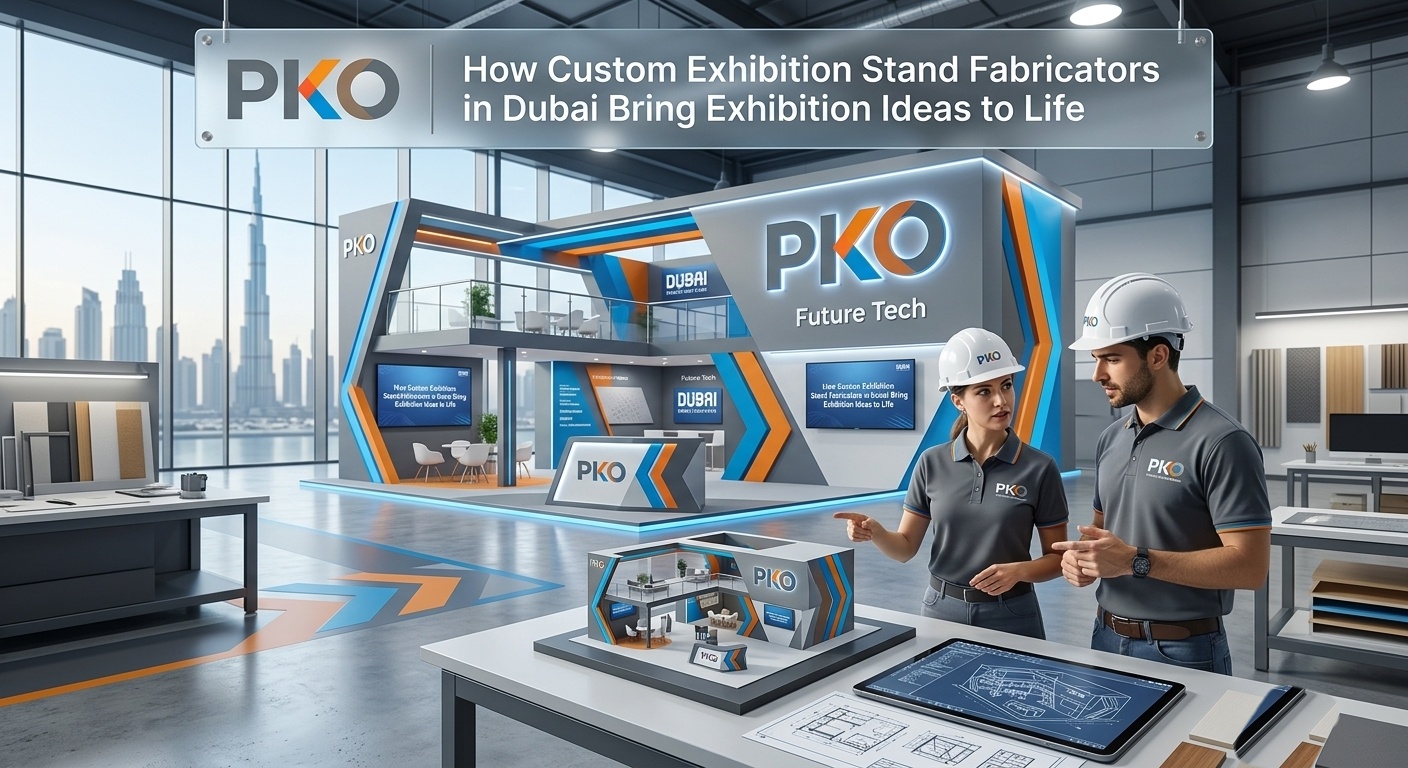
How Custom Exhibition Stand Fabricators in Dubai Bring Exhibition Ideas to Life
Dubai has become a major destination for international exhibitions, trade shows, conferences, and business events, creating a highly competitive environment for exhibitors. In 2025, Dubai World Trade Centre hosted 401 events and welcomed 2.97 million participants, while more than 63,000 exhibiting companies took part across its MICE events. In such an environment, simply placing products inside a standard booth may not be enough to communicate a brand effectively. A well-planned exhibition stand needs to attract attention, present products clearly, support meaningful conversations, and create a consistent brand experience within a limited physical space. This is where custom exhibition stand fabricators in Dubai play an important role. They transform an initial business idea or creative concept into a practical exhibition environment by connecting design, technical planning, material selection, fabrication, branding, lighting, technology, and on-site installation. The process involves much more than building walls and counters; every component must work together to support the exhibitor’s objectives and the movement of visitors through the stand. Understanding how this process works can help businesses make better decisions when planning an exhibition presence in Dubai.
Why Custom Exhibition Stands Matter in Dubai’s Exhibition Market
Dubai’s exhibition market brings together local businesses, multinational companies, industry professionals, buyers, investors, and international visitors. The scale of this environment makes the exhibition stand an important physical touchpoint between a brand and its target audience. DWTC reported 2.97 million participants across 401 events in 2025, including more than 63,000 exhibiting companies, highlighting the level of activity and competition within Dubai’s business-events ecosystem.
Dubai’s Exhibition Environment Is Highly Competitive
An exhibitor may be positioned alongside numerous businesses offering similar products or services. Visitors can therefore encounter several competing brands within a short walk through an exhibition hall. A custom stand gives businesses greater control over how their brand is presented in this environment. Instead of relying on a generic layout, the space can be planned around the company’s products, audience, messaging, demonstrations, meetings, and visitor movement.
This is particularly important for businesses participating in international exhibitions, where visitors may have different expectations, languages, professional backgrounds, and purchasing priorities. The stand needs to communicate its purpose quickly while providing enough information and space for deeper interaction.
Customisation Connects the Stand With the Brand
A custom exhibition stand can be developed around a company’s visual identity and specific exhibition objectives. Its architecture, graphics, lighting, product displays, reception area, meeting spaces, and technology can be coordinated as parts of one environment.
For example, a technology company may need demonstration counters and large digital displays, while a B2B service provider may prioritise private meeting rooms and consultation areas. A consumer brand might require open product displays, sampling counters, and prominent visual branding. The fabrication approach changes according to these functional requirements.
The Stand Must Balance Appearance and Function
A visually impressive stand is not necessarily an effective one. The design must also account for practical considerations such as storage, accessibility, electrical requirements, product placement, staff movement, visitor flow, installation requirements, and the available floor area.
This is why the relationship between Exhibition Stand Designers in Dubai, engineers, fabricators, and installation teams matters. The creative concept needs to be converted into a structure that can actually be manufactured, transported, assembled, and used during the event.
Ultimately, customisation is valuable because it connects the physical exhibition space with the exhibitor’s business purpose. Once that objective is established, the next stage is turning the initial concept into a detailed, buildable stand design.
What Do Custom Exhibition Stand Fabricators in Dubai Actually Do?
A custom exhibition stand fabricator bridges the gap between an exhibition concept and the finished structure visitors see at the event. While an exhibition stand designer may develop the visual concept and visitor experience, the fabricator focuses on turning that concept into physical components that can be produced, transported, assembled, and finished within the requirements of the exhibition venue. For this reason, Custom exhibition stand fabricators in Dubai are involved in much more than workshop production.
From Creative Concept to a Buildable Solution
The process usually begins with an exhibition brief that defines the stand size, location, brand requirements, products, meeting areas, displays, storage, technology, and other functional needs. The creative concept is then assessed from a production perspective.
A design may look straightforward in a 3D render but involve complex structural or manufacturing requirements when converted into a real stand. Fabricators therefore consider dimensions, materials, construction methods, fixing points, electrical integration, finishes, transportation, assembly, and venue restrictions before production begins.
This connection between creativity and practical construction helps prevent a situation where the final structure differs significantly from the approved concept.
Converting Design Components Into Physical Elements
Once the design has been technically developed, the stand is divided into individual components that can be manufactured and assembled. Depending on the project, these may include:
- Wall and partition systems
- Reception counters
- Product display units
- Shelving and cabinets
- Meeting rooms
- Storage areas
- Raised flooring
- Ceiling features
- Branded signage
- Graphic panels
- Lighting structures
- Digital display mounts
- Decorative architectural elements
Each component has to fit within the overall design while also meeting practical requirements for manufacturing and installation.
Design, Fabrication and Installation Work Together
A successful exhibition project usually requires coordination between several roles. Exhibition Stand Designers in Dubai focus on the visual and spatial concept, while Exhibition Stand Fabricators in Dubai translate that concept into manufactured components. Exhibition Stand Contractors Dubai may coordinate construction-related activities, venue requirements, logistics, and installation.
When these functions are properly coordinated, the transition from drawing to physical stand becomes more predictable. Measurements, material specifications, graphics, lighting, and structural elements can be planned together rather than treated as separate tasks.
Fabrication Also Involves Quality and Practical Checks
Before the completed stand reaches the exhibition floor, its components may require inspection for dimensions, surface finishes, graphics, connections, lighting, and overall fit. Pre-production checks are especially useful for complex custom structures because modifications are generally easier to make before transportation to the venue.
The objective is therefore not simply to manufacture an attractive structure. It is to create a stand that accurately reflects the approved design while remaining practical to assemble, operate, and use throughout the exhibition.
With the responsibilities of a fabricator established, the next step is understanding how an initial exhibition idea moves through briefing, concept development, 3D design, engineering, fabrication, and installation to become the finished stand.
How an Exhibition Idea Becomes a Physical Stand
Creating a custom exhibition stand is a process of translating an abstract business idea into a physical environment. A company may begin with a simple objective launch a product, demonstrate technology, meet potential buyers, or strengthen brand visibility but the finished stand requires detailed decisions about space, structure, materials, graphics, lighting, and visitor movement. The following stages show how the concept progresses from an initial brief to a completed exhibition stand.
Step 1: Understanding the Exhibition Brief
Before design or fabrication begins, the project requirements need to be clearly defined. The brief typically establishes the exhibition venue, allocated floor area, stand dimensions, number of open sides, brand guidelines, products or services to be displayed, target visitors, and the activities expected to take place within the space.
Other requirements may include reception facilities, private meeting rooms, product demonstrations, storage, hospitality areas, digital screens, lighting, and specific installation deadlines. Budget and reuse requirements can also influence material and construction decisions.
A detailed brief gives the design and fabrication teams a practical foundation. It also helps prevent unnecessary features from being added simply because they look impressive in a concept drawing.
Step 2: Developing the Stand Concept
Once the requirements are understood, the creative concept can be developed around the brand and its objectives. At this stage, the focus is not only on appearance but also on how visitors will interact with the space.
The concept may determine:
- Where visitors first enter the stand
- What they see from the exhibition aisle
- Where products are positioned
- How demonstrations are presented
- Where staff interact with visitors
- Where formal meetings take place
- How storage is concealed
- How branding is distributed throughout the space
The result should be a logical visitor journey rather than a collection of unrelated design elements.
Step 3: Creating the 3D Exhibition Stand Design
The concept is then developed into detailed visual representations. Three-dimensional renders, floor plans, elevations, and other drawings help the exhibitor understand how the proposed stand will look and function before production starts.
At this stage, designers can establish the relationship between architectural features, branding, product displays, furniture, lighting, and technology. Materials and finishes can also be represented so that decisions can be made before fabrication.
This stage is particularly important because changes to a digital design are generally easier and less disruptive than changes made after components have already been manufactured.
Step 4: Engineering the Design
After the design direction is approved, the concept needs to be assessed from a technical perspective. The fabrication team determines how the proposed elements can be safely and efficiently constructed.
Technical planning may consider:
- Structural dimensions
- Material thickness
- Weight and load requirements
- Joining and fixing methods
- Flooring systems
- Electrical requirements
- Lighting integration
- Digital screens and equipment
- Ceiling or overhead features
- Accessibility
- Venue regulations
This is where creative design becomes a buildable solution. A feature that appears simple in a render may require a different construction method, reinforcement, or material to work properly in the physical environment.
Step 5: Selecting the Right Materials
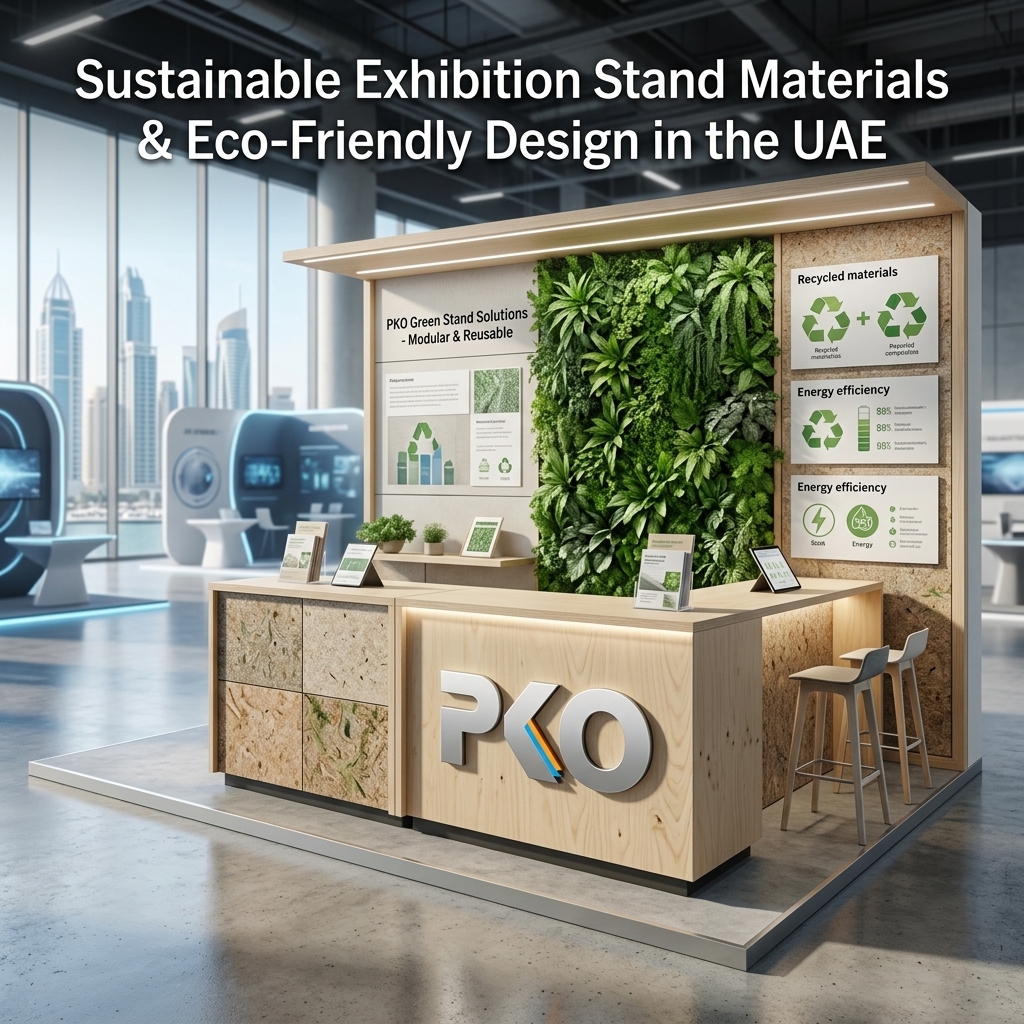
Material selection affects both the appearance and practical performance of a stand. The choice can influence weight, durability, finish quality, transportation, installation time, dismantling, and overall project cost.
Depending on the design, fabrication may involve materials such as timber-based panels, aluminium systems, acrylic, glass, metal, fabric, laminates, printed surfaces, or other specialist finishes.
The appropriate material is therefore not necessarily the most expensive option. It should provide the required appearance and functionality while fitting the project’s structural, logistical, and budget requirements.
Step 6: Fabricating the Individual Components
Once the technical specifications are confirmed, production begins. The approved design is converted into individual components that can be manufactured and assembled at the exhibition venue.
Depending on the project, workshop production may involve cutting, CNC processing, carpentry, metalwork, painting, surface finishing, acrylic work, signage production, and preparation of display units.
The components are produced according to the agreed dimensions and specifications so they can later be brought together as one complete structure.
Step 7: Integrating Graphics and Brand Elements
Fabrication does not end with the physical framework. Branding has to be incorporated into the stand so that the finished environment communicates the company’s identity consistently.
This may involve:
- Logo applications
- Large-format graphics
- Printed wall panels
- Backdrops
- Product imagery
- Directional signage
- Illuminated branding
- Promotional messaging
Graphics need to be considered alongside the physical design rather than added as an afterthought. Their size, position, visibility, and relationship with lighting and architecture can affect how visitors perceive the stand from different distances.
Step 8: Pre-Assembly and Quality Checking
For more complex projects, components can be checked before they are transported to the exhibition venue. This allows the team to identify potential issues with dimensions, finishes, connections, graphics, lighting, or component alignment.
Pre-assembly or workshop checks can also help confirm that the various parts work together as intended. If an adjustment is required, addressing it before delivery can reduce disruption during the limited installation window at the venue.
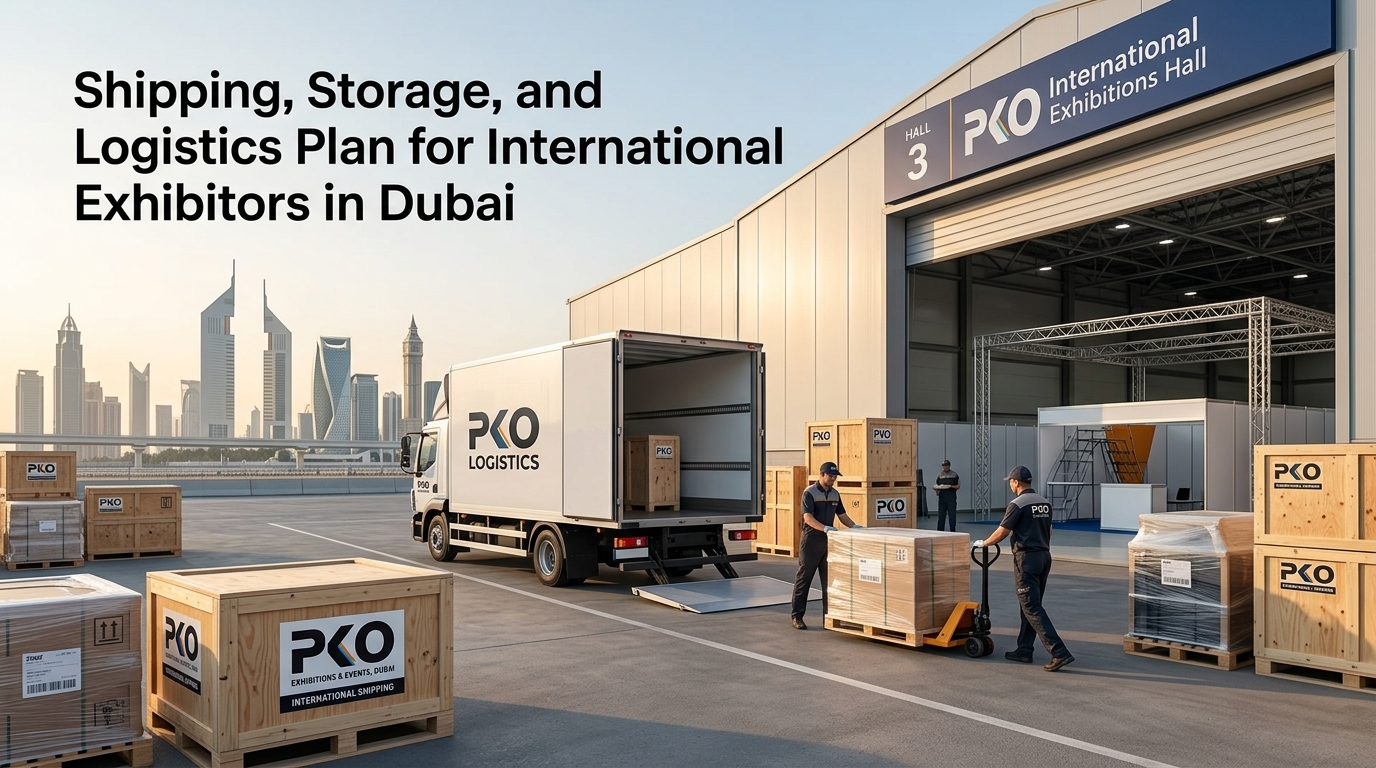
Step 9: Transportation and On-Site Installation
After fabrication and quality checks, the completed components are prepared for transportation to the exhibition venue. The installation team then assembles the structure according to the approved plans.
This stage may include:
- Unloading and positioning components
- Constructing walls and architectural elements
- Installing flooring
- Fitting counters and display units
- Mounting graphics
- Connecting lighting
- Installing screens and other equipment
- Arranging furniture
- Completing final finishes
Coordination is particularly important because exhibition venues operate according to defined access and installation schedules. The stand therefore needs to be ready within the permitted timeframe.
Step 10: Final Inspection Before Opening
The final stage is a detailed check of the completed stand. The team can review the physical finish, branding, lighting, displays, technology, meeting spaces, storage, accessibility, and general presentation.
The finished structure should reflect the approved concept while functioning as intended for staff and visitors.
This complete journey brief, concept, design, engineering, material selection, fabrication, graphics, quality checking, installation, and final inspection is what turns an exhibition idea into a usable physical environment. The next consideration is how the individual design elements within that environment work together to create a coherent and functional exhibition experience.
Design Elements That Fabricators Bring Together
A custom exhibition stand is made up of many individual elements, but visitors should experience them as one connected environment. Fabricators therefore have to coordinate the structural framework with branding, product displays, lighting, technology, furniture, and practical areas such as storage. Each component has a specific purpose, and its position can influence how visitors perceive and use the stand.
Brand Architecture
The physical structure provides the foundation for the brand experience. Walls, towers, counters, suspended features, signage, and other architectural elements can create visual hierarchy and help establish where the brand should be noticed first.
Logo placement, typography, brand colours, messaging, and imagery should work with the architecture rather than compete with it. A fabricator must consider how these elements will appear from different viewing angles and distances within the exhibition hall.
Product Display Areas
Product presentation needs to balance visibility with accessibility. Depending on the business, a stand may use display shelves, counters, cabinets, demonstration stations, product walls, or freestanding structures.
The fabrication approach can be adapted to the products being presented. Large equipment may require reinforced display platforms or open demonstration areas, while smaller products may benefit from shelving, illuminated cases, or interactive displays.
The objective is to make products easy to notice and understand without overcrowding the available floor area.
Meeting and Hospitality Spaces
Many exhibitors need dedicated areas for conversations with potential customers, partners, or other business visitors. These can range from open seating areas to enclosed meeting rooms.
The stand layout needs to separate these spaces from high-traffic areas without making the entire booth feel closed. Sound, privacy, accessibility, furniture placement, and staff movement can all influence how effectively the meeting area functions.
Hospitality counters or refreshment areas may also be integrated where required, with appropriate provision for equipment and concealed storage.
Lighting
Lighting has both a visual and functional role. General illumination helps visitors navigate the stand, while accent lighting can draw attention to particular products, graphics, architectural features, or brand signage.
Fabricators and technical teams need to consider the positioning of fixtures, power requirements, cable management, heat considerations, and integration with the overall structure. Lighting should support the design rather than simply be added to brighten the space.
Digital and Interactive Elements
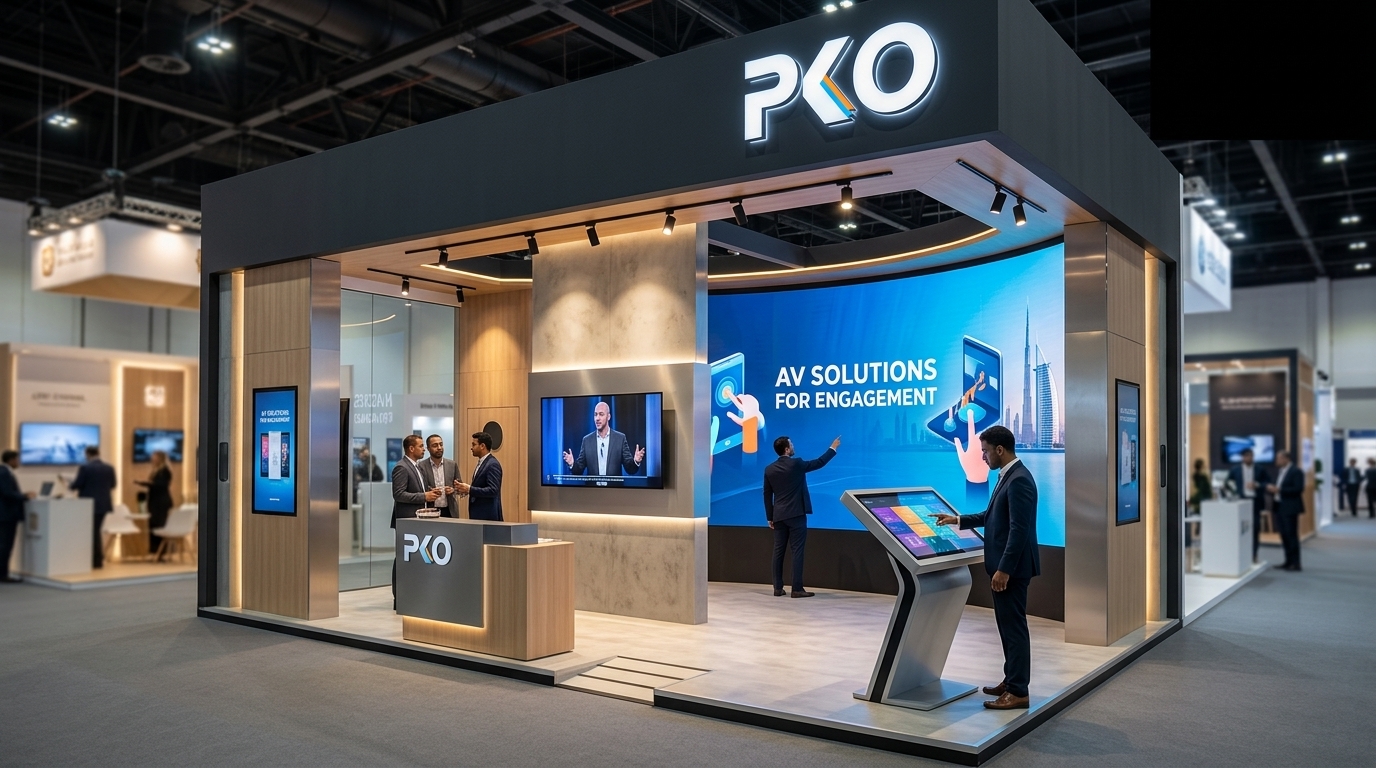
Modern exhibition stands can incorporate digital technology to support product demonstrations and visitor engagement. Depending on the project, this may include LED screens, digital signage, touchscreens, interactive displays, presentation systems, or other technology.
These elements need to be planned during the design and fabrication stages. Screen dimensions, mounting structures, power connections, viewing angles, cable routing, and equipment access can all affect the physical construction of the stand.
Storage and Operational Areas
Storage is one of the less visible but important parts of stand planning. Staff may need space for brochures, promotional materials, personal belongings, equipment, packaging, or supplies throughout the event.
A custom stand can incorporate concealed cabinets, cupboards, back-of-house areas, or dedicated storage rooms without allowing them to dominate the visitor-facing environment.
Bringing the Elements Into One System
The effectiveness of these components depends on how well they work together. A reception counter should not obstruct product displays, lighting should support graphics, meeting rooms should fit naturally into the visitor flow, and technology should be accessible without creating unnecessary cables or structural complications.
This coordination is where fabrication adds practical value to the creative concept. The goal is to ensure that design, structure, branding, products, technology, and operations function as parts of one exhibition environment.
Once these elements are integrated, the stand moves beyond being a physical structure and begins to influence how visitors discover, interact with, and remember the brand.
How Fabrication Turns a Stand Into a Visitor Experience
A well-fabricated exhibition stand is not only a physical space for displaying products. It can shape how visitors notice the brand, enter the stand, explore its offerings, interact with staff, and move toward a conversation. This makes the connection between fabrication and visitor experience important when planning a custom exhibition environment.
Creating a Strong First Impression
Visitors often view a stand from the exhibition aisle before deciding whether to approach it. The overall height, openness, architectural features, lighting, graphics, and visible products can therefore influence initial attention.
Fabrication helps translate these visual decisions into physical elements that are correctly positioned and proportioned. A prominent branded feature, illuminated logo, product display, or open entrance can establish a clear visual focal point without making the stand unnecessarily complicated.
Guiding Visitor Movement
Once someone approaches the stand, the layout should make it reasonably clear where to go and what to explore. Reception areas, product displays, demonstration zones, seating, and meeting spaces can be positioned according to the intended visitor journey.
For example, a stand might use an open front to encourage entry, place key products along the visitor’s natural path, and position private meeting areas farther inside. This creates a transition from attention to exploration and then conversation.
Supporting Product Interaction
Some exhibitors need visitors to do more than look at a product. They may need to demonstrate equipment, explain a service, compare products, or allow visitors to interact with technology.
The fabrication process can accommodate these requirements through purpose-built counters, demonstration tables, display structures, shelving, screens, and interactive zones. Their dimensions and positioning need to account for both the product and the people using it.
Creating Spaces for Business Conversations
Exhibitions are also business environments. A visually strong stand still needs practical areas where staff can discuss requirements with potential customers or partners.
Open seating can support informal conversations, while enclosed meeting rooms can provide greater privacy for detailed discussions. The fabrication and layout should make these areas accessible without allowing them to dominate the visitor-facing portion of the stand.
Making the Brand Memorable
Consistency across architecture, graphics, lighting, product presentation, and messaging helps create a unified environment. When these elements are designed and fabricated together, visitors experience the brand through multiple physical and visual touchpoints rather than through a single logo or banner.
The objective is not to guarantee a particular business result, but to create an environment that makes it easier for visitors to understand what the exhibitor offers and engage with the people behind the brand.
In this way, fabrication becomes an important link between physical design and visitor behaviour. The next question is whether every exhibitor needs a completely custom structure or whether a modular approach can provide a better fit for certain exhibition requirements.
Custom Exhibition Stand vs Modular or Standard Stand
Choosing between a custom exhibition stand and a modular or standard solution depends on the exhibitor’s objectives, available space, budget, event schedule, and how much flexibility the brand requires. A custom structure provides greater control over the physical environment, while modular systems can offer simplicity and reusability. Neither approach is automatically suitable for every business.
| Factor | Custom Exhibition Stand | Modular or Standard Stand |
| Layout | Designed around specific requirements | Based on predefined systems |
| Brand integration | Highly adaptable | More standardised |
| Product displays | Purpose-built options | Available within system limitations |
| Meeting areas | Can be designed specifically for the project | Usually simpler |
| Architectural features | Greater design flexibility | More limited |
| Graphics | Can be integrated throughout the structure | Often uses interchangeable panels or graphics |
| Reusability | Possible when planned during design | Generally well suited to repeated use |
| Production complexity | Higher | Usually lower |
| Suitable for | Bespoke brand experiences and complex requirements | Straightforward or repeat exhibition requirements |
When a Custom Stand May Be Appropriate
A custom approach can be useful when the exhibitor has specific requirements that cannot be easily accommodated by a standard system. This could include unusual floor dimensions, complex product demonstrations, multiple meeting areas, distinctive architectural features, integrated technology, or a strong requirement for a particular brand environment.
Custom fabrication also allows different components to be developed around the way the space will actually be used. Product displays, storage, reception areas, lighting, meeting rooms, and digital elements can be planned as one coordinated environment.
When a Modular Stand May Make More Sense
Modular systems can be practical for businesses participating in multiple exhibitions with similar requirements. Components can often be reconfigured or reused, potentially reducing the need to manufacture an entirely new structure for every event.
They may also be suitable when the primary requirement is a straightforward branded space rather than a complex visitor experience.
The Decision Should Start With the Exhibition Objective
The right choice should not be based solely on appearance or the assumption that a custom stand is always superior. Exhibitors should consider how often the stand will be used, the available floor area, the complexity of the required displays, the expected visitor interactions, the installation schedule, and the overall project budget.
For businesses requiring a highly specific environment, working with experienced exhibition stand fabricators in Dubai can help determine which construction approach is practical. For simpler requirements, a modular solution may provide sufficient functionality without unnecessary complexity.
Ultimately, the best exhibition solution is the one that balances brand presentation, visitor experience, functionality, logistics, and investment. Once that decision is made, the next consideration is how stand requirements can differ across industries and types of exhibitors.
Exhibition Stand Fabrication for Different Business Requirements
Not every exhibitor uses its stand in the same way. A technology company may need interactive demonstrations, while a healthcare business may require consultation areas and clearly organised product information. A B2B service provider may place greater emphasis on meetings and presentations. Because of these differences, exhibition stand fabrication needs to begin with the business’s actual requirements rather than a fixed design template.
Technology and Electronics Brands
Technology exhibitors often need the stand to demonstrate products rather than simply display them. The layout may include demonstration counters, interactive screens, product stations, charging points, and areas where staff can explain technical features.
Fabrication has to account for the physical equipment as well as the supporting infrastructure. Screen mounts, cable management, power connections, ventilation, and equipment access should be considered during the technical planning stage.
Healthcare Exhibitors
Healthcare exhibitions can involve medical equipment, laboratory products, pharmaceuticals, healthcare technology, or professional services. These stands often benefit from an organised layout where products and information can be presented clearly.
Depending on the exhibitor’s requirements, the structure may include product demonstration areas, consultation spaces, display cabinets, reception counters, informational graphics, and private discussion areas. A healthcare exhibition stand builder needs to consider how these elements can be presented professionally while maintaining a practical visitor flow.
Food and Hospitality Brands
Food and hospitality exhibitors may need spaces for sampling, product presentation, demonstrations, or direct interaction with visitors. Counters and display areas therefore become important parts of the stand.
Fabrication may include branded counters, shelving, product displays, storage areas, demonstration stations, and hospitality furniture. Operational requirements should be considered alongside appearance so that staff can serve visitors without creating congestion.
Retail and Consumer Brands
Consumer-focused exhibitors often need visitors to see products quickly and understand how they are positioned. Shelving, product walls, display units, counters, illuminated graphics, and interactive elements can be incorporated according to the product category.
Where the same brand also operates physical retail locations, exhibition structures can be designed to reflect elements of the company’s wider retail identity. This can create consistency between the exhibition environment and other customer-facing spaces.
B2B Service Companies
Professional service providers may have fewer physical products to display but often require more space for conversations, presentations, and relationship building.
Their stands may therefore prioritise:
- Reception areas
- Open seating
- Private meeting rooms
- Presentation screens
- Brand messaging
- Digital information displays
- Storage
In these projects, the fabrication challenge is often creating a comfortable business environment within a limited exhibition footprint.
Designing Around the Business, Not the Industry Label
Industry classification provides useful direction, but it should not determine the stand layout by itself. Two companies operating in the same sector can have completely different objectives. One may prioritise product demonstrations, while another may focus on meetings or brand awareness.
For this reason, Exhibition Stand Companies in Dubai need to understand the exhibitor’s specific objectives before deciding how the stand should be designed and fabricated. The same principle applies when the required structure is smaller or more specialised, such as an exhibition kiosk or branded retail display.
Exhibition Stands, Kiosks and Other Custom Display Formats
Exhibition environments are not limited to large, fully built stands. Depending on the event, floor area, business objective, and visitor interaction required, exhibitors may use smaller branded structures such as kiosks, product displays, promotional counters, or backdrop systems. These formats share some fabrication principles with larger stands but serve different purposes.
Exhibition Booths
An exhibition booth is typically designed as a dedicated branded space where a company can present products, services, information, or demonstrations. Its size and complexity can vary considerably.
A custom exhibition booth may include branded walls, reception counters, product displays, meeting areas, storage, lighting, graphics, and digital technology. The fabrication process remains focused on converting the approved design into components that can be safely installed and used at the venue.
Exhibition Kiosks
An exhibition kiosk is generally a more compact structure designed around a specific interaction or display. It may be used for:
- Product information
- Demonstrations
- Visitor registration
- Promotional activity
- Customer interaction
- Sampling
- Digital information
Because kiosks occupy less space, their design has to use the available footprint efficiently. A custom exhibition kiosk can incorporate a branded counter, display shelving, screens, storage, lighting, or other features according to the intended use.
Retail Kiosks
Retail kiosks have a different purpose from temporary exhibition displays. They may be designed for longer-term use in shopping malls, retail centres, airports, or other commercial environments.
Their fabrication can involve merchandising displays, customer-facing counters, storage, signage, lighting, and equipment integration. Although some techniques overlap with exhibition fabrication, permanent or semi-permanent retail installations usually require different considerations concerning durability, operation, and site requirements.
Product Displays and Promotional Structures
Smaller display formats can also include product stands, branded counters, backdrops, promotional tables, and freestanding display units. These can be useful when the exhibitor does not require a complete enclosed environment but still needs a clearly branded physical presence.
The same principle applies across these formats: the structure should support the intended interaction rather than add unnecessary visual elements.
Choosing the Appropriate Format
The right format depends on the available space, exhibition objectives, number of products, expected visitor interaction, staffing requirements, and budget. A large custom stand may be appropriate for a company requiring several meeting areas and product demonstrations, while a compact kiosk may be sufficient for a focused promotional activity.
For this reason, businesses should first define what visitors need to see, do, and understand before deciding whether they need a full exhibition stand, booth, kiosk, or another display solution. Once the format is established, selecting the right fabrication partner becomes the next important step.
What to Consider Before Hiring Exhibition Stand Fabricators in Dubai
Choosing a fabrication partner is an important part of exhibition planning because the quality of the finished stand depends on more than the initial design. A provider needs to understand the creative concept, technical requirements, production process, venue schedule, and installation requirements. Before selecting Custom exhibition stand fabricators in Dubai, exhibitors should evaluate the complete project process rather than focusing only on the appearance of previous stands or the quoted price.
1. Review Relevant Portfolio Experience
Start by examining previous projects that are comparable to your requirements. Consider the stand size, industry, design complexity, product type, and level of customisation rather than simply looking for visually impressive photographs.
A relevant portfolio can provide an indication of whether the fabricator has experience producing the type of environment your exhibition requires.
2. Check Design-to-Fabrication Capability
Ask whether the provider can coordinate the complete process from concept and design through technical planning, fabrication, and installation.
When design and fabrication are closely connected, practical production considerations can be identified earlier. This can reduce the possibility of approving a design that later requires substantial changes because of construction limitations.
3. Understand Materials and Finishes
Ask what materials are proposed for the major structural and decorative elements and why they are suitable for the project.
Important considerations can include:
- Durability
- Weight
- Surface finish
- Structural requirements
- Transportation
- Installation time
- Reusability
- Maintenance
- Overall cost
The cheapest material is not necessarily the most suitable, while a premium material may not provide meaningful value for every project.
4. Evaluate Project Management
Exhibition projects involve multiple stages and deadlines. Ask how the fabricator manages communication, approvals, production, transportation, venue coordination, installation, and last-minute changes.
A clear project-management process helps keep design decisions, technical drawings, fabrication schedules, and installation requirements aligned.
5. Confirm Venue and Installation Knowledge
Dubai exhibition venues operate according to specific access, construction, safety, and installation procedures. The fabrication partner should understand how to coordinate the stand with the relevant venue requirements and permitted working schedules.
This is particularly important when the installation window is limited and several contractors may be working within the same exhibition hall.
6. Ask About Graphics and Technology Integration
If the stand includes large-format graphics, illuminated signage, LED screens, interactive displays, or presentation equipment, clarify who is responsible for integrating these elements.
Graphics should be planned alongside the structure, while technology requires consideration of mounting, power, cable management, equipment access, and viewing angles.
7. Clarify What the Quotation Includes
An exhibition stand quotation can cover different scopes depending on the provider. Before comparing prices, establish whether the proposal includes:
- Stand design
- Technical drawings
- Fabrication
- Graphics
- Lighting
- Furniture
- Transportation
- Installation
- Dismantling
- Storage or reuse
- Electrical or technology requirements
A lower initial quotation may not represent better value if important services are excluded.
8. Discuss Reusability Where Relevant
If the company plans to participate in several exhibitions, ask whether elements of the stand can be reused, modified, or reconfigured.
Reusability should be considered during the initial design and fabrication stage. Certain structures may be designed as adaptable components, while highly specialised elements may only be suitable for one exhibition footprint.
9. Assess Communication and Approval Processes
Exhibitors should know who will approve:
- Concept designs
- Materials
- Technical drawings
- Graphics
- Final dimensions
- Production
- Installation
A defined approval process can make it easier to identify changes before fabrication begins.
10. Look Beyond the Finished Appearance
A strong exhibition stand should look good, but appearance alone does not demonstrate fabrication quality. Pay attention to construction details, finishes, component alignment, graphics application, functionality, and how well the stand supports its intended use.
Ultimately, choosing the Best Exhibition Stand Contractor in Dubai should be based on the provider’s ability to connect creative design with practical execution. Once the initial selection has been narrowed down, asking the right questions can reveal whether the proposed partner is genuinely equipped to manage the project from concept to completion.
Questions to Ask a Dubai Exhibition Stand Fabricator
Before approving an exhibition stand project, it is useful to ask detailed questions about the design, fabrication process, responsibilities, timeline, and final delivery. Clear answers at the beginning can prevent misunderstandings later and help an exhibitor compare potential suppliers on the basis of capability rather than price alone.
Can You Fabricate From an Existing Design?
If your company already has an approved stand concept or design, ask whether the fabricator can manufacture it according to the provided drawings and specifications. They should also be able to identify any practical production issues before manufacturing begins.
Can You Handle Both Design and Fabrication?
If you need a complete solution, determine whether the provider offers both creative design and physical fabrication. Having these functions coordinated can make it easier to resolve technical questions while the design is still being developed.
Which Materials Do You Recommend?
Ask why particular materials are being proposed for the walls, counters, flooring, displays, signage, and architectural features. The decision should take into account appearance, durability, weight, transportation, installation, reuse, and budget.
How Do You Manage Venue Requirements?
Ask how the team coordinates dimensions, access schedules, installation rules, electrical requirements, and other venue-related conditions. This is particularly important for projects with complex structures or limited installation time.
Do You Handle Graphics and Signage?
Clarify whether exhibition graphics, printed panels, illuminated signs, logos, and other branding elements are included in the fabrication scope. It is also useful to establish who checks artwork dimensions and print specifications before production.
Do You Provide Transportation and Installation?
A finished stand still needs to reach the exhibition venue and be assembled correctly. Confirm whether transportation, unloading, installation, finishing, and dismantling are handled by the same project team or by separate contractors.
Can the Stand Be Reused or Reconfigured?
If the company attends multiple exhibitions, ask whether components can be reused or adapted for different stand sizes. This needs to be considered during the original design because some custom elements may be specific to one venue or floor plan.
How Are Last-Minute Changes Managed?
Exhibition schedules can involve tight production deadlines. Ask what happens if artwork, dimensions, product requirements, or other specifications change after production has started. Understanding the change-management process can help establish realistic expectations.
What Is Included in the Quotation?
Request a clearly defined scope covering design, fabrication, graphics, furniture, lighting, transportation, installation, dismantling, and any technology or electrical requirements. This makes comparisons between different exhibition stand suppliers in Dubai more meaningful.
When Should Fabrication Begin?
The required lead time depends on the size and complexity of the stand, the approval process, material requirements, graphics, and venue schedule. Instead of relying on a standard number of days, ask the fabricator to provide a project-specific production and installation timeline.
These questions help shift the selection process from simply asking who can build a stand to determining who can manage the complete journey from approved concept to exhibition-ready environment. That distinction becomes particularly important in Dubai’s busy exhibition market, where multiple exhibitors and projects may be working toward the same event deadline.
Why Dubai Requires Strong Coordination Between Design and Fabrication
Dubai’s exhibition environment operates at a significant scale, with events bringing together exhibitors, visitors, contractors, suppliers, and international businesses within tightly scheduled venues. In 2025, Dubai World Trade Centre recorded 401 events and 2.97 million participants, while its MICE events involved more than 63,000 exhibiting companies. The Dubai Exhibition Centre also reached 140,000 square metres of purpose-built event space following its Phase 1 expansion.
Tight Exhibition Schedules Leave Little Room for Errors
Exhibition stands are not normally built in the same way as permanent commercial spaces where there may be weeks of unrestricted on-site work. Installation takes place according to venue schedules and access conditions, often alongside other exhibitors and contractors.
This makes coordination between design, technical planning, fabrication, transportation, and installation particularly important. A delay or incorrect component can affect subsequent stages of the project.
Design Decisions Affect Fabrication
A design feature may influence material selection, structural requirements, production methods, transportation, or installation time. For example, a large architectural element may require additional structural support, while an illuminated feature may need dedicated electrical planning.
When Exhibition Stand Designers in Dubai and fabricators work from the same technical information, these relationships can be considered before manufacturing begins. This reduces the risk of discovering production challenges only after the design has been approved.
International Exhibitors Add Another Layer of Coordination
Dubai attracts businesses from different markets and industries, meaning exhibition projects may involve international brand guidelines, overseas approvals, imported products, multilingual graphics, or teams working across different locations.
A coordinated workflow helps keep these requirements connected. The approved artwork needs to match the physical dimensions, product displays need to fit their allocated areas, and technical components need to be ready when installation begins.
Fabrication Connects the Entire Project
The role of a fabricator therefore extends beyond manufacturing individual components. Fabrication sits within a wider chain:
Business objective → Exhibition brief → Concept → Design → Technical planning → Fabrication → Graphics and technology → Transportation → Installation → Final inspection
If one stage is disconnected from the next, the finished stand may not perform as intended.
For exhibitors, this is why choosing among Exhibition Stand Companies in Dubai should involve more than comparing designs or quotations. The ability to coordinate creative decisions with production and on-site execution can have a direct impact on whether the approved concept is delivered accurately and on schedule.
This brings the process back to the central role of the fabricator: turning a visual exhibition idea into a practical, finished environment that is ready for visitors when the event opens.
How PKO Exhibitions & Events Fits Into the Process
Turning an exhibition concept into a finished stand requires coordination across design, planning, fabrication, branding, and installation. PKO Exhibitions & Events can be positioned within this process as an exhibition solutions partner, helping businesses move from an initial requirement toward a completed exhibition environment.
The process begins by understanding the exhibitor’s objectives, available space, brand requirements, products, target audience, and functional needs. These details provide the foundation for developing a stand concept that balances visual presentation with practical requirements.
From there, the project can progress through design development, technical planning, fabrication, graphics, and installation. Keeping these stages connected helps ensure that architectural features, product displays, branding, lighting, technology, furniture, and storage are considered as parts of the same environment rather than separate additions.
For businesses comparing Exhibition Stand Builders in UAE, the important consideration is therefore the complete project workflow. A provider should be able to understand how a creative idea translates into physical components, how those components are produced, and how the finished stand is prepared for the exhibition venue.
The same principle applies whether the requirement is a large custom exhibition stand, a focused exhibition booth, a product display, or a smaller kiosk. The solution should reflect the available space and the intended visitor interaction rather than relying on a one-size-fits-all structure.
With the right planning and coordination, the journey from concept to finished stand becomes a structured process: brief, design, technical development, fabrication, quality checking, transportation, installation, and final inspection. This is what allows an exhibition idea to become a functional physical experience for visitors.
Final Takeaway: Turning an Exhibition Idea Into Reality
A successful exhibition stand begins long before visitors enter the exhibition hall. It starts with a clear understanding of the exhibitor’s objectives and develops through concept creation, spatial planning, 3D design, engineering, material selection, fabrication, graphics, technology integration, quality checks, transportation, and installation.
The role of Custom exhibition stand fabricators in Dubai is to connect these stages and turn the approved concept into a physical environment that can function effectively during the event. The structure needs to do more than look distinctive; it should provide appropriate spaces for products, demonstrations, meetings, branding, staff activity, storage, and visitor interaction.
Dubai’s large and international exhibition ecosystem makes this coordination particularly important. With millions of participants and tens of thousands of exhibiting companies participating in DWTC events, exhibitors operate in an environment where clear brand presentation and effective use of limited exhibition space matter.
Ultimately, the best exhibition solution is not necessarily the largest or most elaborate stand. It is one where design, fabrication, functionality, branding, and visitor experience work together around a defined business objective. By approaching fabrication as a complete process rather than simply a construction task, businesses can turn an initial exhibition idea into a professional, practical, and event-ready environment.
Looking to turn your exhibition concept into a professionally fabricated stand in Dubai? Contact PKO Exhibitions & Events to discuss your exhibition stand design, fabrication, installation, and project requirements.
Frequently Asked Questions About Exhibition Stand Fabrication in Dubai
What does an exhibition stand fabricator do?
An exhibition stand fabricator turns an approved stand concept or design into a physical structure. The process can include technical planning, material selection, component manufacturing, graphics, lighting integration, quality checking, transportation, and on-site installation.
How long does it take to fabricate a custom exhibition stand in Dubai?
The timeframe depends on the stand’s size, design complexity, materials, graphics, technology requirements, approval process, and exhibition deadline. Larger or highly customised projects generally require more planning and production time, so fabrication should be scheduled well before the event.
What is the difference between an exhibition stand designer and a fabricator?
An exhibition stand designer primarily develops the visual concept, layout, visitor journey, and appearance of the stand. A fabricator converts that concept into manufactured components and considers practical factors such as materials, construction, assembly, transportation, and installation.
What materials are commonly used for custom exhibition stands?
Materials can vary according to the design and requirements. Common options may include timber-based panels, aluminium systems, acrylic, glass, metal, fabric, laminates, printed panels, and specialist finishes. The appropriate choice depends on factors such as appearance, durability, weight, installation, reuse, and budget.
Can a custom exhibition stand be reused?
Yes, some custom stands can be designed with reusable or reconfigurable components. However, not every element will be suitable for reuse because certain structures may be manufactured specifically for one stand size, venue, or layout. Reusability should therefore be considered during the initial design stage.
What should I look for when choosing exhibition stand fabricators in Dubai?
Consider relevant portfolio experience, design-to-fabrication capability, material and finishing quality, project management, venue knowledge, installation capability, graphics and technology integration, timeline management, and a clearly defined quotation.
Can fabricators also handle exhibition stand installation?
Many full-service exhibition providers coordinate fabrication with transportation and on-site installation. Exhibitors should confirm exactly which services are included in the project scope before signing an agreement.
What is the difference between a custom exhibition stand and a modular stand?
A custom stand is designed and fabricated around specific brand, spatial, product, and visitor requirements. A modular stand generally uses predefined components that can be assembled or reconfigured. The appropriate option depends on factors such as design complexity, budget, exhibition frequency, and reusability requirements.
Are exhibition kiosks the same as exhibition stands?
Not necessarily. An exhibition stand generally provides a larger branded environment, potentially incorporating meeting rooms, product displays, storage, hospitality, and technology. A kiosk is usually a more compact structure focused on a specific interaction, display, promotion, or information point.
When should I start planning an exhibition stand?
Planning should begin early enough to allow time for briefing, concept development, design approvals, technical planning, fabrication, graphics, transportation, and installation. The required lead time depends on the project’s complexity and the specific exhibition schedule.