
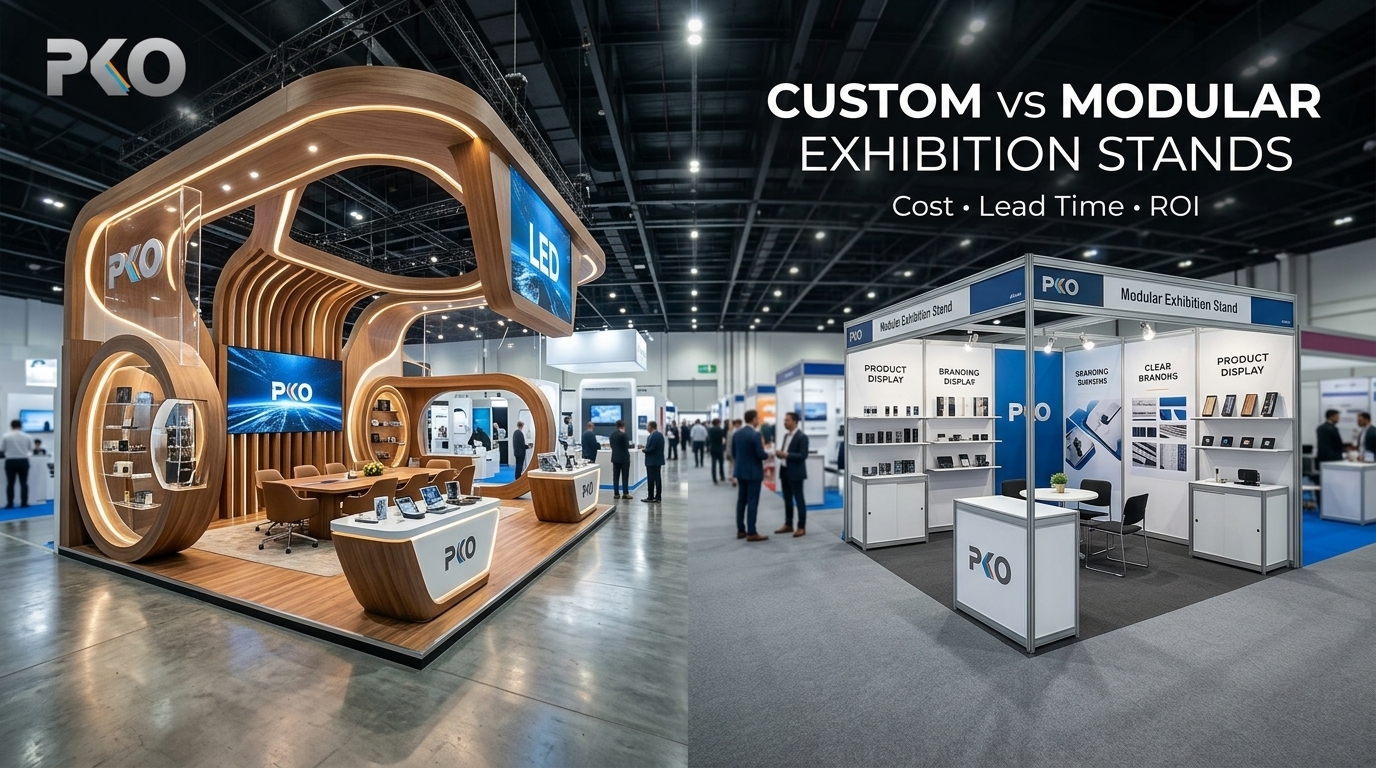
Exhibitors planning a show in Dubai usually reach the same decision early: build a one-off stand or invest in a reusable system. The custom vs modular exhibition stand Dubai question has no single answer, because the right choice depends on budget, timeline, branding needs and how often the stand will be used again.
This guide compares the two options on cost, lead time, reusability and return on investment, so you can match the stand to your exhibition strategy rather than to a trend. It is written for exhibitors at venues such as Dubai World Trade Centre, where build schedules, approvals and logistics all shape the decision.
Custom vs Modular Exhibition Stands: Quick Comparison
Initial cost
- Custom: Generally higher, as design, engineering and fabrication are specific to your brand.
- Modular: Generally lower for the first show, as components already exist.
Lead time
- Custom: Often longer, because it moves through design, approval, engineering and fabrication.
- Modular: Often shorter, as configuration and preparation replace full fabrication.
Design flexibility
- Custom: Very high. Shape, height, materials and features can follow the brief.
- Modular: Moderate. Layouts are flexible within the limits of the system.
Reusability
- Custom: Limited, unless designed in sections for reuse.
- Modular: High. Components can be reconfigured for different stand sizes.
Branding
- Custom: Brand identity can be built into the structure itself.
- Modular: Branding relies mainly on graphics, lighting and accessories.
Installation
- Custom: More on-site work and more trades involved.
- Modular: Typically faster assembly with a smaller team.
Storage
- Custom: Usually dismantled and disposed of, unless planned otherwise.
- Modular: Stored and reused, so storage space and cost need planning.
Best suited for
- Custom: Flagship shows, large footprints and complex brand experiences.
- Modular: Frequent exhibitors, changing layouts and tighter timelines.
What Is a Custom Exhibition Stand?
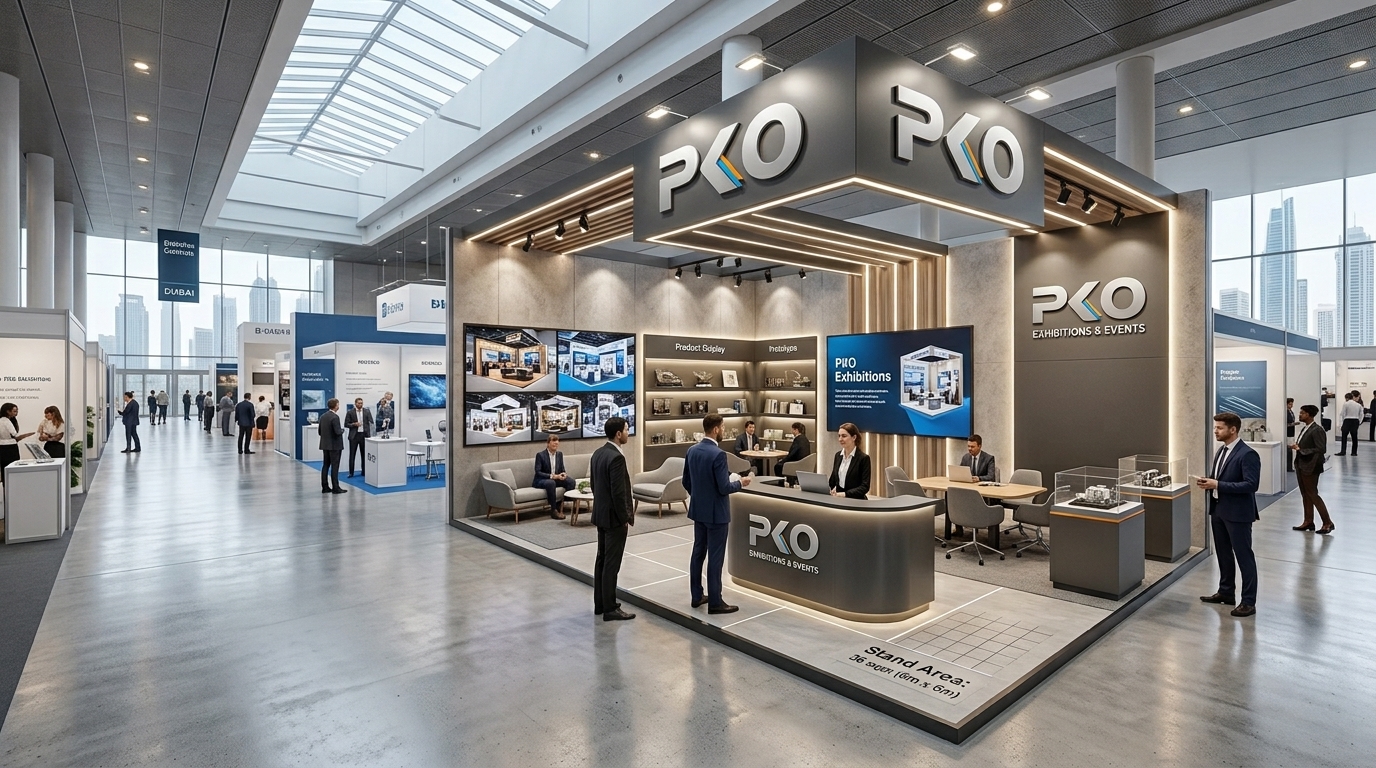
A custom exhibition stand is designed from scratch for a specific brand and event. Nothing is limited to a catalogue, so the structure, materials, lighting and layout can reflect the brand and the way you want visitors to move through the space.
Custom builds often include integrated features such as meeting rooms, display counters, product plinths, multi-level structures or built-in screens. That freedom comes with more production complexity: more design stages, more fabrication and more coordination before and during installation.
The planning stage matters here. Working with a team that offers exhibition stand design services helps turn a brief into drawings that can be approved and built within the show schedule.
What Is a Modular Exhibition Stand?
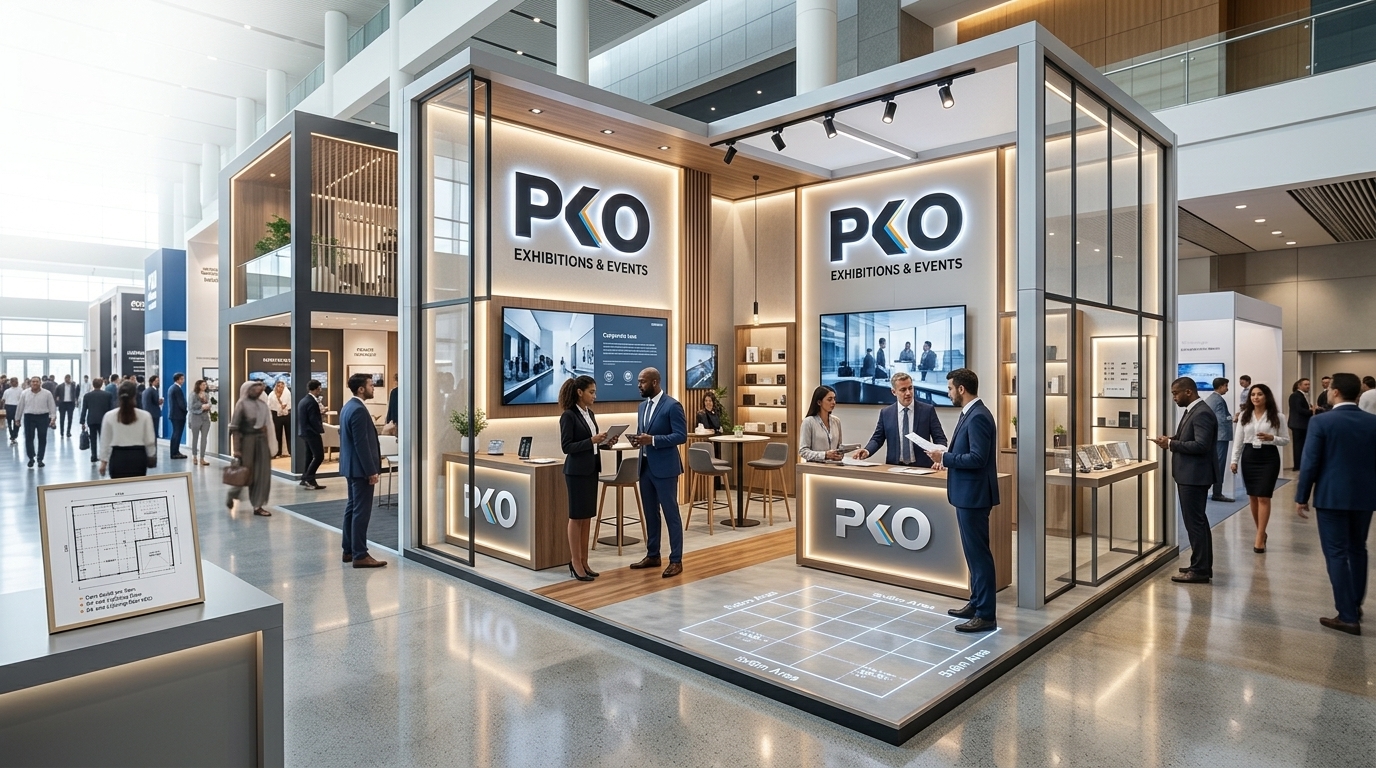
A modular exhibition stand is assembled from pre-engineered components such as frames, panels, counters and display units. The same parts can be rearranged into different layouts as stand sizes and floor plans change between events.
The main advantages are:
- Faster assembly, because parts are designed to fit together
- Easier transportation, as components are standardised and often packed compactly
- Flexible configurations across different stand sizes
- Potentially lower cost per show when the system is reused several times
Modular does not mean basic. With good graphics, lighting and furniture, a modular system can present a polished, professional stand.
Custom vs Modular Exhibition Stand Dubai: Cost Comparison
A custom stand usually has the higher initial investment, while a modular stand can become more economical when it is reused. Exact figures depend on the project, so it is more useful to compare cost drivers than to rely on a generic price range.
The main cost elements are:
- Initial investment: Custom projects carry design and engineering costs. Modular systems carry the cost of buying or hiring the components.
- Production: Custom fabrication is specific to the project. Modular production is mostly preparation and configuration. Where fabrication is involved, working with a stand manufacturing and fabrication team helps clarify what is built, what is reused and what is replaced.
- Graphics: Both options need printed branding. On modular stands, graphics often carry more of the visual impact, so quality printing matters. Printing and large-format graphics can be updated for each show without changing the structure.
- Installation: Custom builds generally need more on-site labour and time. Modular stands are typically quicker to assemble.
- Transport and storage: Modular systems need storage between shows. Custom stands are often dismantled after one use.
- Reconfiguration: A modular stand can be adapted for a new size or layout. A custom stand usually needs rework.
- Reuse across events: The more shows you attend, the more a reusable system can spread its cost.
Final pricing varies with stand size, materials, design complexity, venue requirements, graphics, AV, furniture, installation and the event schedule. Ask for a clear breakdown of these items so quotes can be compared fairly.
Lead Time: Which Stand Is Faster?
Modular stands are often faster to deliver, because they skip most of the fabrication stage. The actual timeline still depends on scope, approvals and how quickly decisions are made.
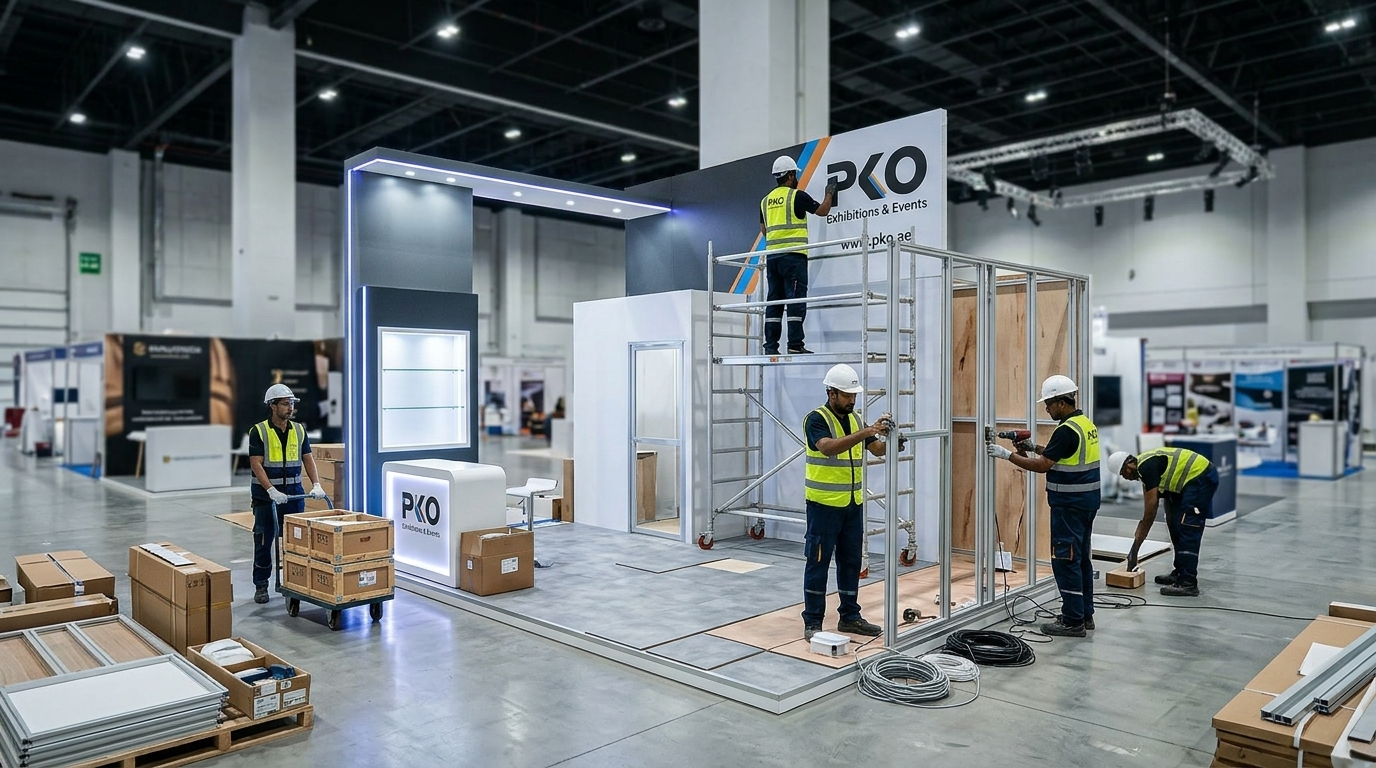
Custom workflow: concept, design approval, engineering, fabrication, finishing, installation.
Modular workflow: system selection, graphics and configuration, preparation, delivery, assembly.
Custom projects can move quickly when the brief is clear and approvals are timely. Modular projects can slow down when graphics change late or the chosen system needs adapting. Whichever route you choose, allow time for venue approvals and for the build and dismantling windows set by the organiser.
ROI: Custom vs Modular
ROI should not be judged on stand price alone. A cheaper stand that attracts few visitors may deliver less value than a more expensive one that generates strong leads.
ROI considerations = qualified leads + meetings + brand visibility + conversions + repeat-use value
A simple way to measure it:
ROI (%) = (revenue attributed to the show minus total exhibition cost) divided by total exhibition cost, multiplied by 100
Total exhibition cost should include the stand, graphics, AV, travel, staffing, logistics and storage. Revenue should only include sales you can reasonably trace to the show, often after a follow-up period. For a practical starting point, see this exhibition booth ROI calculator guide.
To compare the two stand types fairly, look at:
- Visitor engagement: Does the design draw people in and give them a reason to stay?
- Lead quality: Does the layout support proper conversations and meetings?
- Brand presentation: Does the stand reflect the standard of your products?
- Cost per exhibition: A reusable stand may cost less per show over several events.
- Number of events: Frequent exhibitors usually gain more from reuse.
- Post-event conversions: Track enquiries through to sales, not just badge scans.
No stand type guarantees leads or returns. The outcome depends on pre-show marketing, staffing, product relevance and follow-up as much as on the stand itself.
Which Option Fits Your Exhibition Strategy?
Choose custom when:
- Strong brand differentiation is important
- The stand needs complex architecture or multiple levels
- The exhibition is strategically important to your year
- You need integrated AV or specialist features
- The design must closely reflect the brand
Consider modular when:
- You attend several exhibitions a year
- Reusability matters to your budget
- You need faster deployment
- The layout may change between events
- Budget efficiency is a priority
- You want a flexible stand system that can grow or shrink
Some exhibitors combine both: a modular base for regular shows and a custom build for one or two key events. The choice can also change as your exhibition calendar changes.
To see how different stand formats are delivered in practice, browse the event and exhibition projects completed by PKO Exhibitions & Events.
Dubai-Specific Planning Considerations
Whichever format you choose, a few local factors affect the outcome:
- Venue rules and approvals: Organisers and venues set height limits, structural requirements and submission deadlines. Review the DWTC exhibition stand rules before finalising a design.
- Build and dismantling schedules: Time windows can be tight, which may favour faster assembly.
- Logistics: Shipping, customs, delivery slots and storage all need planning. Exhibition logistics in Dubai is easier to manage when it is scheduled early.
- AV requirements: Screens, lighting and interactive displays affect structure, power and cabling. See the guide to exhibition stand AV integration when planning these features.
- Branding and reuse plans: Decide early whether graphics will be reused or replaced for each show.
PKO Exhibitions & Events can support planning across these areas, from layout and approvals to installation and dismantling. Learn more about PKO Exhibitions & Events.
How to Decide Before Ordering Your Stand
Work through these questions with your team:
- How many exhibitions will you attend?
- What is your available budget?
- Do you need a highly bespoke design?
- Will the stand be reused?
- How quickly must it be installed?
- What branding and AV elements are required?
- What are the venue’s technical requirements?
- What business outcome defines success?
If most answers point to repeat use, speed and flexibility, a modular system is worth a closer look. If they point to brand impact, complex features and a single high-priority event, custom is likely to fit better.
FAQs
Is a custom exhibition stand more expensive than a modular stand?
Usually, yes, for a single show. Custom stands involve design, engineering and fabrication specific to your brand. Modular stands use existing components, which can lower the first-event cost. Over several exhibitions, the gap may narrow because a modular system can be reused. Final cost depends on size, materials, graphics, AV and installation.
Which exhibition stand has a shorter lead time?
Modular stands often have a shorter lead time because they skip most of the fabrication stage. Custom stands generally need more time for design approval, engineering and finishing. Actual timelines depend on stand size, complexity, venue approvals and how quickly decisions and artwork are confirmed.
Are modular exhibition stands reusable?
Yes, reusability is one of their main strengths. Components can usually be reconfigured for different stand sizes and layouts, and graphics can be replaced between shows. You will need to plan for storage, transport and occasional replacement of worn parts. Reuse works best for exhibitors with several events in their calendar.
Can a modular stand still look premium and branded?
Yes. A modular stand can look polished when it uses quality graphics, good lighting, suitable furniture and a clear layout. The structure is more limited than a custom build, so branding relies more on graphics and finishing details. Strong design decisions matter more than the stand type alone.
Which stand type offers better ROI in Dubai?
Neither is better in every case. Return depends on leads, meetings, conversions and how many times the stand is used. A modular stand can suit frequent exhibitors, while a custom stand can suit a high-priority show where brand impact matters. Measure ROI against your own goals, not stand price alone.
Can custom and modular exhibition stands include AV and graphics?
Yes, both can include screens, lighting, interactive displays and printed graphics. Custom stands can build these features into the structure. Modular stands usually add them within the system’s limits, so check power, cabling and mounting points early, along with venue technical requirements.
What should I consider before choosing an exhibition stand system?
Start with how often you will exhibit, your budget, the level of customisation you need and your installation deadline. Then check venue rules, AV needs, logistics and storage. Clarifying the business outcome you expect from the show makes it easier to choose between custom and modular.
Final CTA
If you are planning an exhibition in Dubai and are unsure whether a custom or modular stand suits your goals, PKO Exhibitions & Events can help you review your requirements. You can discuss your exhibition plans with the team to talk through size, timeline and budget.