

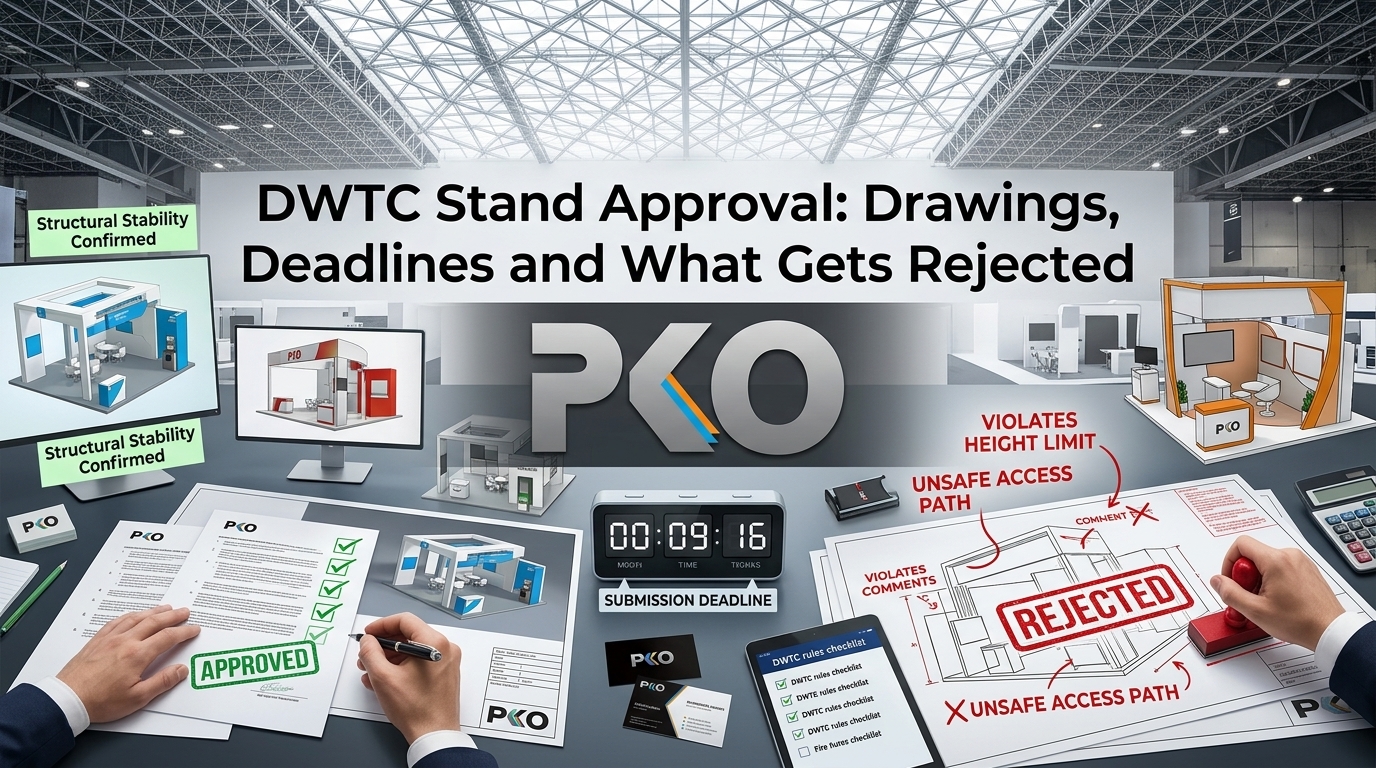
Most exhibition projects at Dubai World Trade Centre reach the same moment. The design is signed off, the budget is approved, and then someone asks whether the stand has been cleared by the venue yet. DWTC stand approval is the step that decides whether your build actually goes ahead on the show floor, and it is also the step most often left until it is too late to fix comfortably.
This guide covers what the approval process involves, which drawings are usually requested, how deadlines work in practice, and the real reasons stand designs get sent back for revision.
What Is DWTC Stand Approval?
DWTC stand approval is the formal technical review of your exhibition stand design by the venue and the event organiser before construction is allowed on site. For space only stands, designs are generally reviewed and signed off by DWTC’s structural engineer and health and safety team, and the build cannot begin without that clearance.
The review is about buildability and safety, not aesthetics. Nobody is assessing your colour palette. Reviewers are checking that the structure is sound, that fire and escape requirements are respected, that the stand sits inside its allocated footprint and height limits, and that the construction methods are safe for the crews working in a busy hall.
Shell scheme and space only are treated differently
Shell scheme stands come pre-built by the organiser, so structural approval is usually not required. Even then, anything you add inside the booth, such as heavy fixtures, raised flooring or a bespoke fascia, may still need to be declared.
Space only stands start with a bare floor. Everything above it is yours to design, build and prove, which is why the full submission process applies.
Why Exhibition Stand Approval Matters
A DWTC hall during build-up is a live construction site with hundreds of contractors working at once. The approval process keeps that environment safe and makes sure every structure in the hall can be trusted.
There is a commercial reason to take it seriously too:
- A rejected design close to build-up means redesign costs, rushed fabrication, or a stripped back stand that no longer reflects the brand.
- Non-compliant elements can be refused on site, even after materials have been shipped.
- Approval delays push back production, which is where most budget overruns start.
Approval is not a formality to complete at the end. It shapes what you can realistically build.
What Drawings and Documents Are Typically Required?
Requirements vary by event and by stand type, but a space only submission at DWTC usually includes some combination of the following:
- Scaled floor plan showing the stand within its allocated space, including open sides and neighbouring boundaries
- Dimensioned elevations for every side, with overall heights clearly marked
- 3D visuals showing the finished appearance of the stand
- Structural drawings and engineering calculations for double decker stands, raised platforms, suspended features and any heavy or unusual construction
- Material specifications with fire retardancy certification, commonly referenced against recognised standards such as NFPA 701
- Electrical layout with connection points and total load requirements
- Rigging plans where anything is suspended from the roof structure
- Risk assessment and method statement covering how the stand will be built and dismantled
- Contractor details, insurance documentation and any deposit or performance bond required by the organiser
Detailed technical layouts are where most submissions succeed or fail, so this stage benefits from experienced Exhibition Stand Designers in Dubai who prepare drawings with venue review in mind rather than presentation alone.
Always confirm the exact document list against the technical manual for your specific event. Requirements differ between organisers and are updated regularly.
DWTC Stand Approval Deadlines: When Should You Submit?
There is no single universal deadline. Each organiser publishes its own submission dates in the exhibitor or technical manual, and these are typically set several weeks before build-up begins.
The practical point is that the published deadline is not the finish line. It is the date by which your first submission needs to be reviewed, and most projects go through at least one round of comments.
A realistic sequence looks like this:
- Confirm your space and download the exhibitor manual as soon as you book.
- Lock the design concept early, well ahead of the stated deadline.
- Submit complete drawings by the published date.
- Allow time to respond to technical comments and resubmit.
- Complete contractor registration, badges and any bond payments in parallel.
Submitting a few weeks ahead of the deadline gives you room to absorb revisions without touching your production schedule. Submitting on the final day leaves none.
Common Reasons Exhibition Stand Designs Get Rejected
Rejection criteria vary by event, but the same issues appear repeatedly:
Incomplete technical drawings. Attractive 3D renders submitted without dimensioned elevations or plan views. Reviewers cannot approve what they cannot measure.
Missing structural information. Double deckers, raised platforms and suspended elements need calculations from a qualified engineer. Without them, the submission stalls.
Height or boundary breaches. Stands exceeding the permitted height for the hall or the event, or overhanging into aisles and neighbouring spaces.
Fire safety gaps. Materials without valid fire retardancy certificates, enclosed areas without proper escape provision, or unclear signage for exits.
Vague construction details. Drawings that show the finished look but not how the structure is framed, fixed and supported.
Incomplete documentation. Missing insurance, risk assessments, method statements or contractor credentials.
Late submission. Drawings arriving after the deadline may not be reviewed in time, regardless of quality.
Changes made after approval. Adding a hanging banner, a second level or a raised floor after sign off without resubmitting invalidates the original approval.
Because criteria differ between events, treat this as a guide to where problems usually occur rather than a fixed list of rules.
How to Avoid Delays in Your DWTC Stand Approval
- Read the technical manual before design work begins, not after. Height limits, platform rules and rigging restrictions should inform the concept from day one.
- Brief your designer on compliance requirements alongside brand objectives.
- Prepare a complete submission package the first time. Partial submissions restart the review clock.
- Keep drawings, materials and fabrication aligned so that what is built matches what was approved. In-house Exhibition Stand Manufacturers Dubai make this consistency far easier to maintain.
- Confirm graphics and branding elements early, since illuminated and structural signage can carry its own requirements. Planning Exhibition Signage Solutions Dubai at design stage avoids late additions that need fresh review.
- Assign one point of contact who owns the submission and tracks organiser responses.
- Resubmit formally for any change after approval, however small it seems.
Why Working With an Experienced Exhibition Stand Partner Helps
Approval submissions are routine work for contractors who build at DWTC regularly. They know what reviewers ask for, which details commonly trigger queries, and how to present a package that clears the first time.
An established Exhibition Stand Builder in Dubai will usually handle drawing preparation, structural documentation, contractor registration and organiser correspondence as part of the project rather than leaving it to the exhibitor. That matters most when timelines are tight or the design includes double deckers, rigging or complex structures.
Where booth construction and finishing are handled under one roof, working with experienced Exhibition Booth Contractors in Dubai also closes the gap between what was approved on paper and what arrives in the hall.
DWTC Stand Approval Checklist
Before submitting, confirm that you have:
- Downloaded and read the event technical manual
- Confirmed stand type, dimensions, open sides and permitted height
- Scaled plan and dimensioned elevations for all sides
- 3D visuals of the completed stand
- Structural calculations for platforms, upper decks and suspended items
- Fire retardancy certificates for construction materials
- Electrical layout and total power requirement
- Rigging plan where applicable
- Risk assessment and method statement
- Contractor insurance and registration documents
- Deposit or performance bond arrangements confirmed
- Submission date diarised with buffer time for revisions
Frequently Asked Questions
What is DWTC stand approval?
It is the technical review and sign off of an exhibition stand design by the venue and event organiser before construction is permitted, covering structural safety, fire compliance and adherence to event regulations.
When should I submit my exhibition stand drawings?
By the deadline published in your event technical manual, and ideally two to three weeks earlier so there is time to handle review comments without delaying production.
What happens if my stand design is rejected?
You receive comments explaining the issues, revise the drawings and resubmit. The risk is time, since each round of revisions compresses your fabrication schedule.
Can I make changes after stand approval?
Changes need to be resubmitted for review. Building something different from the approved drawings can result in the stand being refused or altered on site.
Who is responsible for submitting stand drawings?
Responsibility sits with the exhibitor, but in practice the appointed stand contractor prepares and submits the technical package on the exhibitor’s behalf.
Do shell scheme stands require approval?
Shell scheme stands generally do not need structural approval, though additions such as heavy fixtures, raised flooring or custom fascia may still need to be declared to the organiser.
Why work with a professional exhibition stand contractor?
Experienced contractors know the documentation reviewers expect, prepare compliant drawings from the outset, and manage the approval process alongside design and production.
Final Thoughts
DWTC stand approval is straightforward when it is planned for and stressful when it is not. Read the technical manual early, design within the rules rather than around them, prepare complete drawings, and leave room in the schedule for one round of revisions. That approach removes almost every common cause of delay.
Requirements and deadlines differ between events, so always verify the current technical regulations with your organiser or the official event documentation before submitting.
If you are exhibiting at Dubai World Trade Centre and want a stand designed, documented and built to clear approval without last minute surprises, contact PKO Exhibitions & Events to discuss your project.