
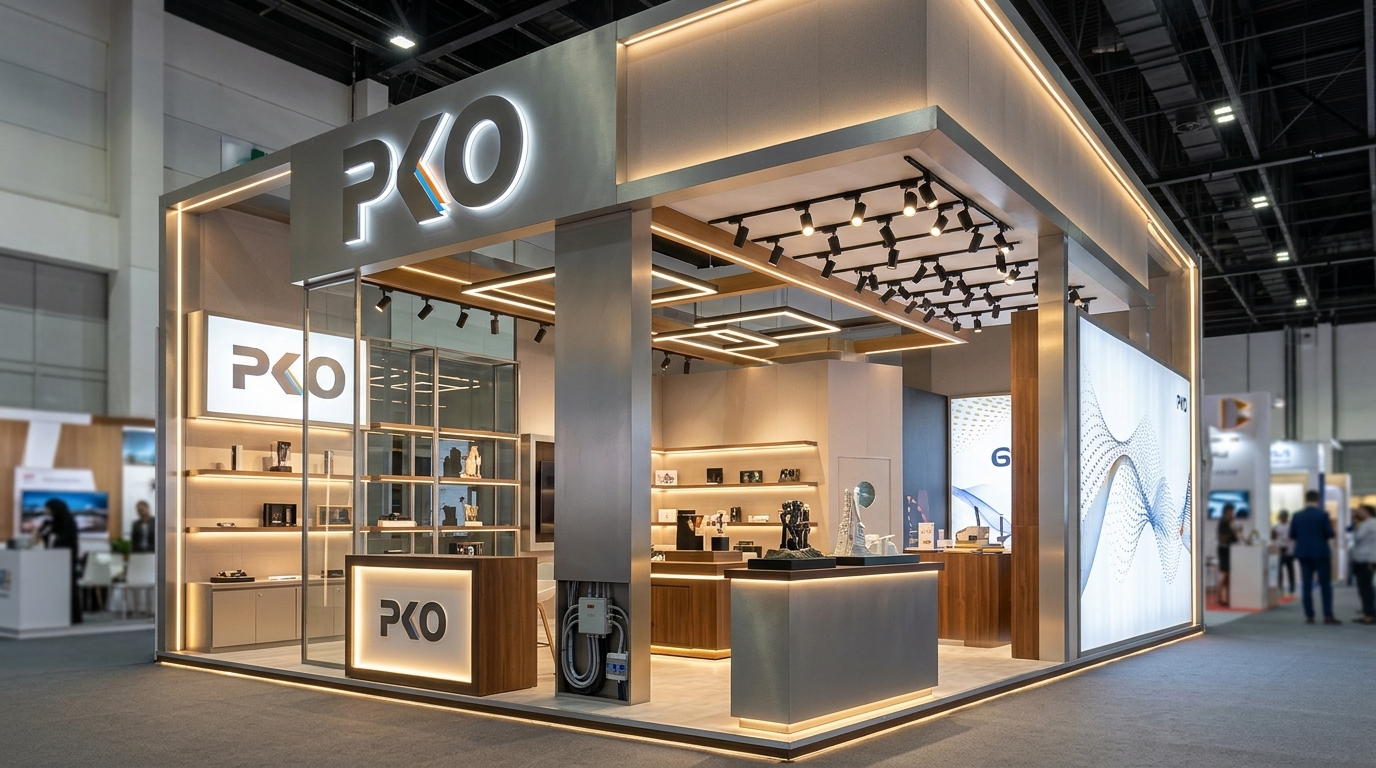
Exhibition Stand Lighting Ideas: Layouts, Fixtures and Hall Power Checks
The best exhibition stand lighting ideas follow one rule: light in layers. Use soft general lighting for the whole stand, focused accent lighting on products and graphics, and clear task lighting where staff meet visitors. Then confirm your power supply with the organiser before build-up begins.
At Dubai and UAE shows, visitors walk past hundreds of stands in a few hours. Good lighting helps yours get noticed, guides people to the right zones and makes your products look the way you intend. This guide from PKO Exhibitions & Events covers fixtures, layouts, colour choices and the hall power checks that are easy to miss.
Why Does Exhibition Stand Lighting Matter?
Exhibition halls are bright, busy and visually noisy. Hall lighting is generally even and flat, so a stand with no lighting plan can look dull next to its neighbours.
Lighting does three jobs on a stand:
- It draws attention to your brand wall, hero product or main entrance.
- It separates zones, such as display, reception and meeting space.
- It makes products, finishes and graphics look accurate and appealing.
Which Lighting Fixtures Work Best on an Exhibition Stand?
Most stands use a mix of fixtures rather than a single type. Each one has a clear role.
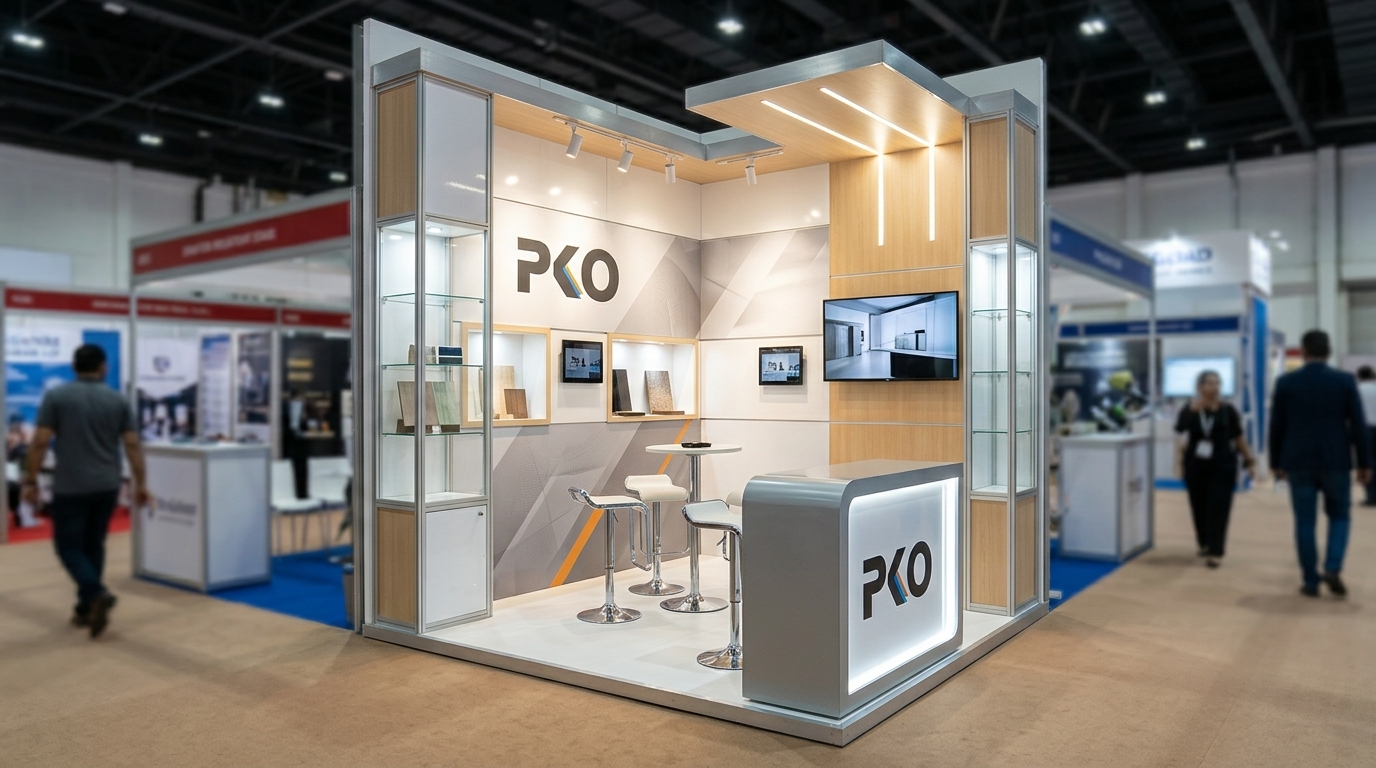
- Spotlights: Highlight a product, a sample or a feature wall. Choose adjustable heads so you can aim them on site.
- Track lights: Flexible and easy to reposition, which suits stands with changing displays or larger open areas.
- LED strips: Useful for shelf edges, counters, ceiling coves and structural outlines. They add glow without hot spots.
- Downlights: Give even, general light over meeting rooms, storage and open walkways inside the stand.
- Backlit displays: Light behind fabric or acrylic graphics so your message stays readable from a distance. Planning backlit signage and light boxes early helps with depth, ventilation and access for maintenance.
LED is the standard choice for most stands. It runs cooler than older halogen options, uses less power and is easier to control.
How Do You Plan an Exhibition Stand Lighting Layout?
Start with the visitor journey, then light each zone for its purpose.
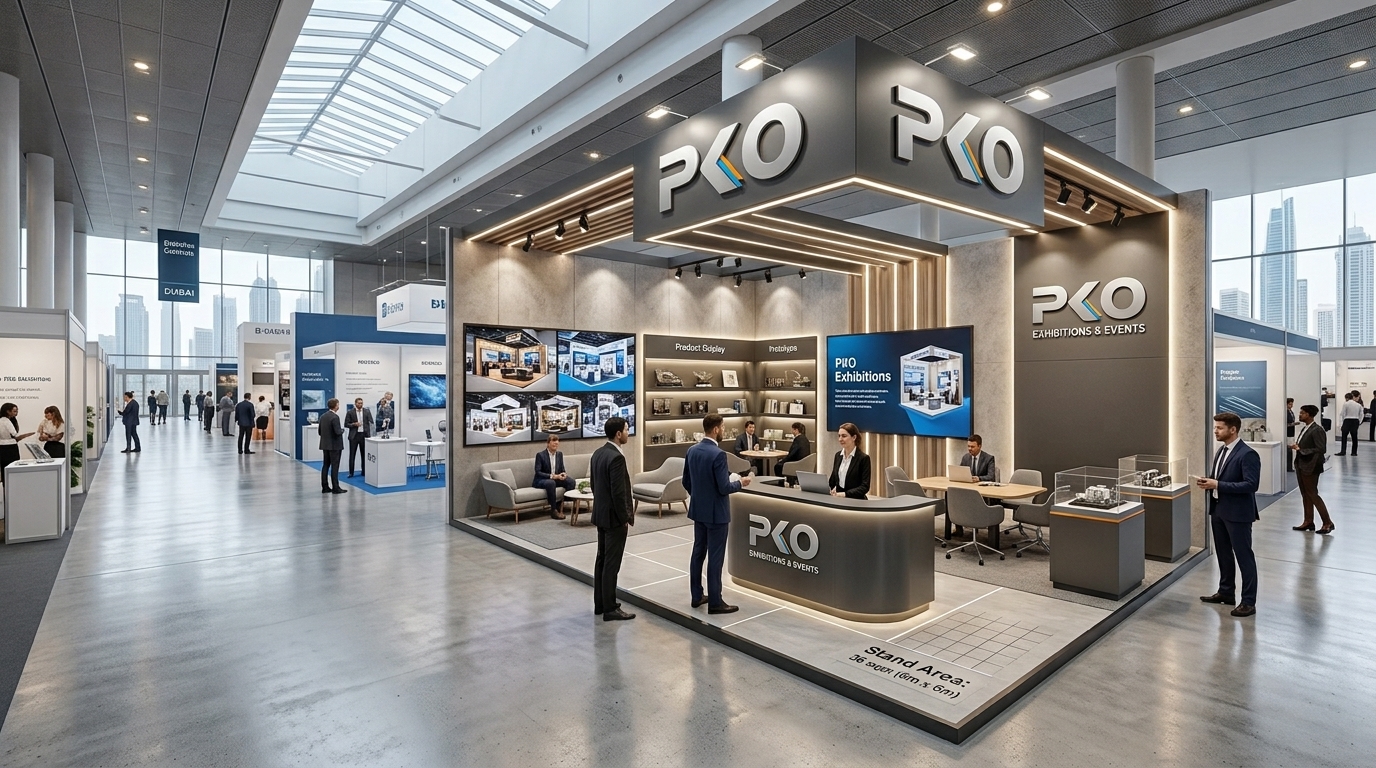
- Entrance and brand wall: Make these the brightest areas of the stand so they read clearly from the aisle.
- Product display: Use accent lighting from above and slightly in front, so products are lit without harsh reflections.
- Reception counter: Combine soft ambient light with a lit logo or counter edge, and keep faces of staff well lit.
- Meeting area: Choose a calmer, warmer level of light that supports conversation. Dimmable fixtures help here.
- Graphics and screens: Light them evenly and keep fixtures out of the line of sight to avoid washed-out images.
For a small stand, keep the plan simple. One strong feature wall, a few adjustable spotlights and a lit counter often work better than many fixtures competing for attention. Larger island stands can use zoned circuits, so each area is controlled separately.
What Colour Temperature, Glare and Shadow Settings Should You Use?
Many exhibitors choose warm white to neutral white LED, roughly 3000K to 4000K, because it feels welcoming and keeps materials looking natural. Cooler light can suit technical or medical brands, but it can feel clinical if overused. Keep the colour temperature consistent across the stand so surfaces do not look mismatched.
If your products depend on accurate colour, such as fabrics, jewellery or finishes, ask for fixtures with a high colour rendering index (CRI).
To control glare and shadows:
- Aim spotlights at an angle, not directly at glossy surfaces or screens.
- Use diffusers or louvres on fixtures that sit in the visitor’s eyeline.
- Light from more than one direction to soften shadows on products and faces.
Why Should Lighting Be Planned With Stand Design and Fabrication?
Lighting added at the last minute usually means visible cables, awkward fixture positions and missing power points. It works better when it is part of the design from the first concept.
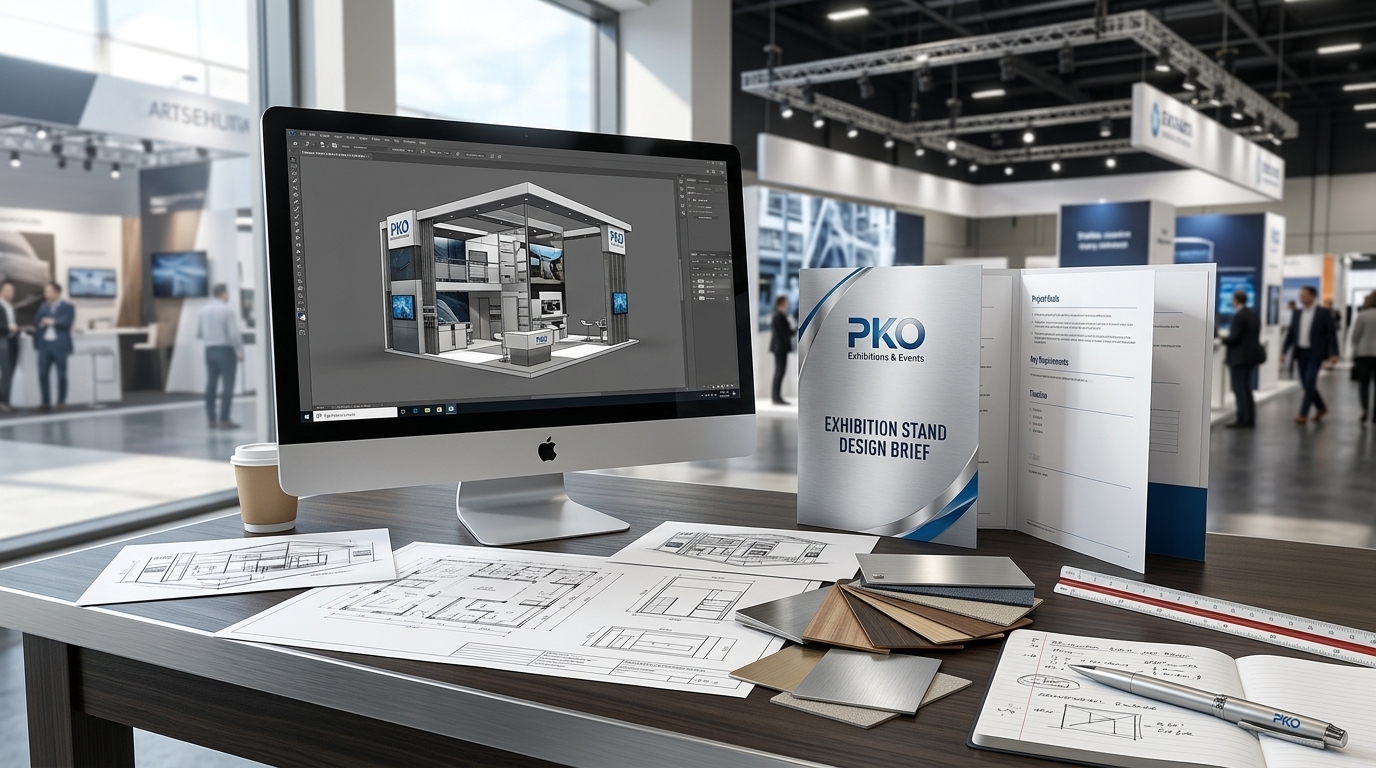
When you work with exhibition stand designers in Dubai, ask for lighting planned alongside 3D renders. The render shows how light falls on graphics, products and walls, so changes happen on screen rather than in the hall.
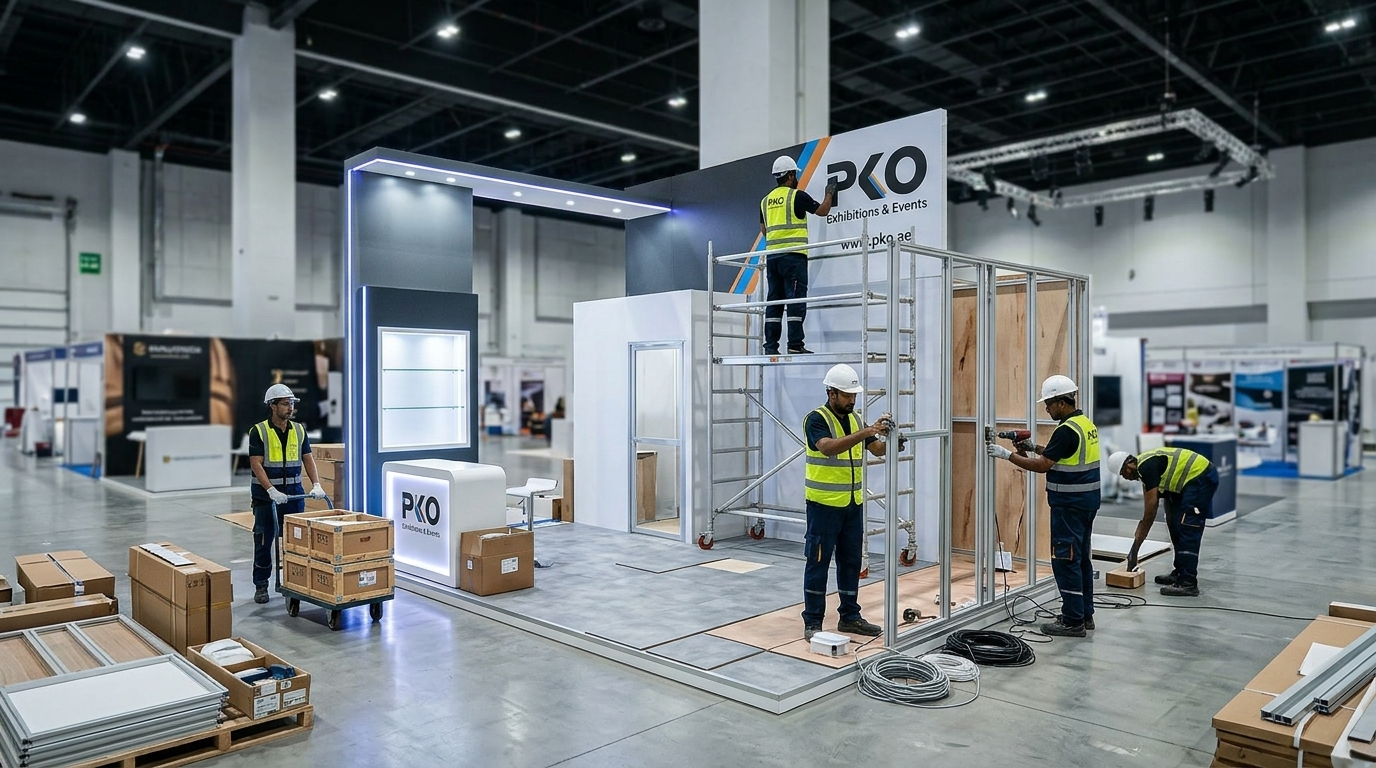
Fabrication matters just as much. Structures that are fabricated in-house with integrated LED have hidden wiring channels, correct fixture mounting and cleaner finishes. It is also worth reviewing current booth design trends to see how other brands use light, then adapting the ideas to your own identity. For a wider view of how lighting fits with screens and interactive features, see this guide to exhibition design and technology.
What Hall Power Checks Should You Complete?
A lighting plan only works if the stand has enough safe power. Venue rules differ, so do not assume requirements from a previous show.
- Check the latest exhibitor manual: It sets out the power options, deadlines and rules for your specific show.
- Confirm with the organiser or the authorised electrical contractor: Request written confirmation of your supply capacity and connection point.
- Estimate your load: Add up the rated wattage of all lighting, screens and equipment, then compare it with the supply you have booked. Ask a qualified electrician to verify the figures.
- Plan distribution: Decide where the distribution board, sockets and switches sit, and keep them accessible but out of the way.
- Manage cables: Route them through concealed channels or protected paths so they do not create trip hazards.
- Use approved connections: Final connection to the hall supply should be handled by the approved contractor, not by stand staff.
These checks are easier when your stand team coordinates with the electrical contractor early. Our exhibition planning timeline helps you place them in the right order: exhibition planning timeline.
What Lighting Mistakes Should You Avoid?
- Relying on hall lighting and adding no stand lighting at all.
- Using too many bright points, so nothing stands out.
- Mixing different colour temperatures across the stand.
- Placing lights where they shine into visitors’ eyes.
- Ordering extra equipment without checking the power booking.
- Leaving lighting tests until the final hours of build-up.
Pre-Event Lighting Checklist
- Confirm the power supply and connection point in writing.
- Check total load against the booked supply.
- Test every fixture, switch and dimmer before graphics go on.
- Aim and lock spotlights, then check glare from the aisle.
- Inspect cables, plugs and sockets for damage and safe routing.
- Carry spare bulbs, LED modules and extension items approved for use.
- Run a full test with the hall lighting on, as visitors will see it.
For more on creating a stand that works as a whole, see our exhibition stand design guide.
Final Thoughts
Strong exhibition stand lighting ideas are simple: layer the light, match it to each zone, keep colour consistent and check the power early. If you would like help planning lighting as part of a full stand build in Dubai or elsewhere in the UAE, you can contact our team with your show details and stand size.
Frequently Asked Questions
What are the best exhibition stand lighting ideas for a trade show?
Use layered lighting: general light for the whole stand, accent spotlights on key products, a lit brand wall and a softer meeting zone. Backlit graphics and LED strips add visibility from a distance.
Which lighting is best for exhibition booths?
LED lighting suits most booths. It is energy efficient, runs cooler than older options and offers spotlights, strips, panels and track systems in many colour temperatures.
How do you plan lighting for a small exhibition stand?
Focus on one or two features, such as the brand wall and the counter. Add a few adjustable spotlights and keep one colour temperature throughout, so the space feels clean and uncluttered.
How much electrical power does an exhibition stand need?
It depends on your fixtures, screens and equipment. Add up their rated wattage, then compare the total with the supply offered at your show. Confirm the final figure with the organiser or authorised electrical contractor.
What colour temperature is suitable for exhibition stand lighting?
Warm white to neutral white, around 3000K to 4000K, works for most brands. Choose consistently across the stand and test with real products and graphics.
What electrical checks should be completed before an exhibition opens?
Verify the connection and supply capacity, test all lighting and equipment, inspect cables and sockets, and make sure the final connection is approved by the hall’s authorised contractor.