
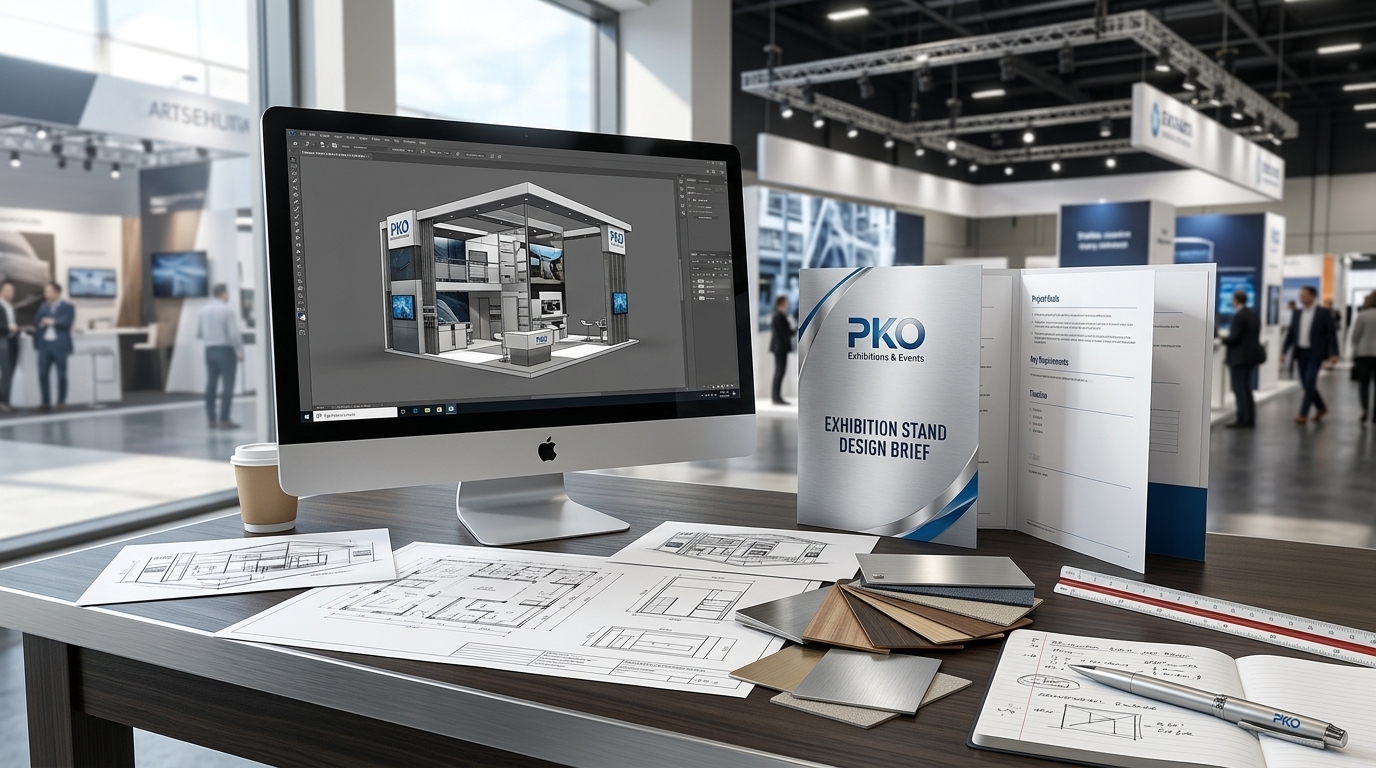
Exhibition Stand Design Brief: What to Include and a Template to Copy
An exhibition stand design brief is the document that tells your designers what the stand must achieve, how much space you have and what you can spend. Most revision rounds, budget surprises and late approvals trace back to a brief that was vague or incomplete. A clear one saves time before a single 3D render is drawn.
This guide explains what to include and gives you a template you can copy, fill in and send.
What Is an Exhibition Stand Design Brief?
An exhibition stand design brief is a short document that sets out your business goals, brand identity, floor space, budget and functional needs for a trade show stand. Designers use it to build concepts that fit your objectives and the venue, rather than guessing what you want.
It does not need to be long. Two clear pages are usually enough.
What Should You Include in an Exhibition Stand Design Brief?
- Company and brand information. Who you are, what you sell and how your brand should feel.
- Exhibition name, venue and dates. These decide the build window and the rules your stand must follow.
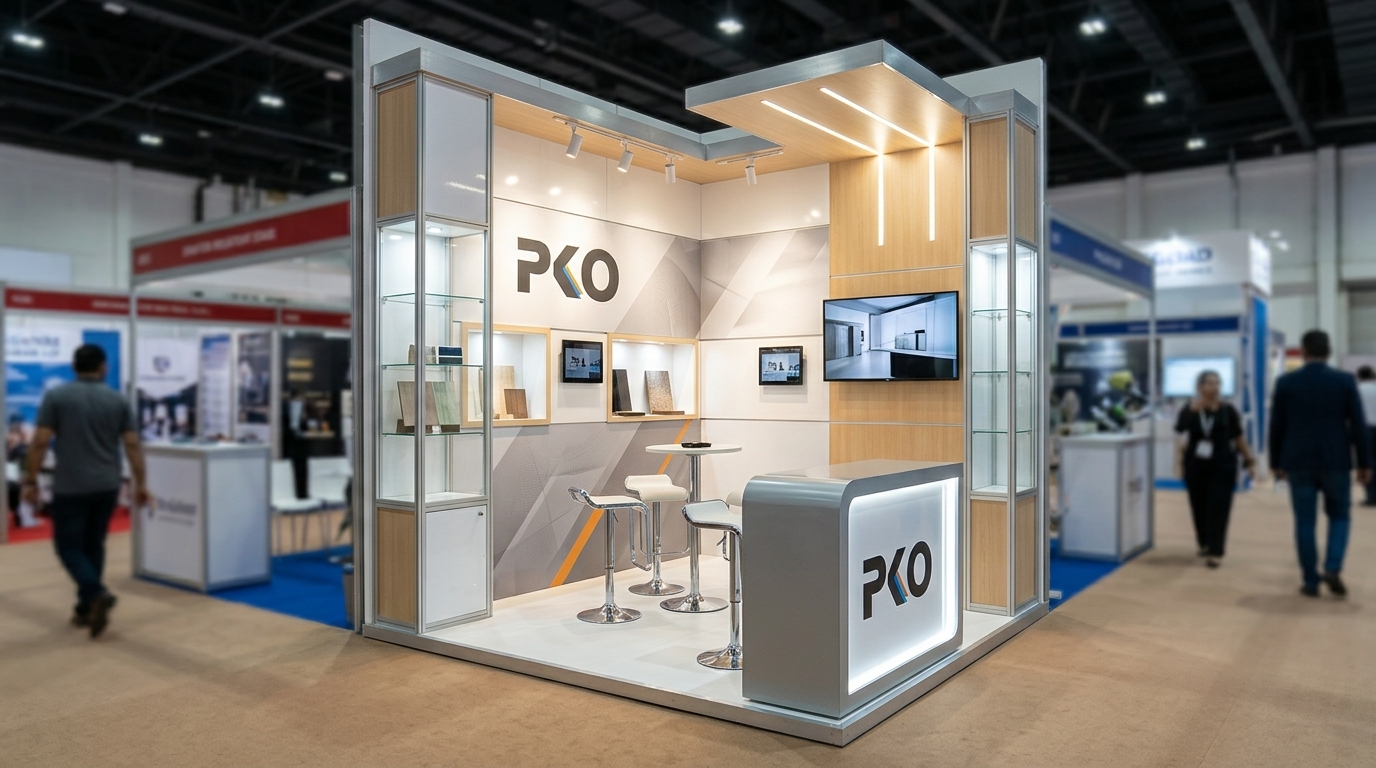
- Stand size and floor space. Share the dimensions, hall, stand number and number of open sides. A compact 3×3 exhibition stand design needs very different thinking from a corner island.
- Marketing goals and target audience. Lead generation, product launch and brand awareness each call for a different layout.
- Products or services to showcase. List what must be displayed, demonstrated or stored.
- Brand guidelines. Logo files, colours, fonts and any existing graphics.
- Layout and functional needs. Reception counter, meeting area, demo zone or hospitality space.
- Lighting, AV and storage. Screens, power points, product lighting and a closed storeroom if needed.
- Budget. Even a range helps designers choose materials and finishes realistically.
- Design preferences and references. Images of stands you like and ones you dislike are both useful.
- Custom or modular requirements. Say whether you want a one-off build or reusable components.
- Venue rules and approvals. Check the organiser manual and venue guidelines for height limits, structural rules and submission requirements. These vary by show, so confirm them rather than assuming.
- Deadlines. Design sign-off, final artwork and installation dates.
Copy This Exhibition Stand Design Brief Template
Company Information
- Company Name:
- Website:
- Contact Person:
- Email:
- Phone Number:
Exhibition Details
- Exhibition Name:
- Venue:
- Exhibition Dates:
- Hall and Stand Number:
- Stand Dimensions:
- Open Sides:
Project Objectives
- Main Exhibition Goals:
- Target Audience:
- Products or Services to Display:
- Key Marketing Message:
Design Requirements
- Preferred Stand Style:
- Custom or Modular:
- Brand Colours:
- Required Graphics:
- Meeting Area:
- Storage Requirements:
- Lighting and AV:
- Special Features:
Budget and Timeline
- Estimated Budget:
- Design Approval Deadline:
- Final Artwork Deadline:
- Installation Date:
Additional Requirements
- Venue Technical Guidelines:
- Reference Images:
- Special Instructions:
What Happens After You Submit Your Brief?
The usual sequence looks like this:
- Requirement review. The team checks the brief against the space and venue rules and flags gaps.
- Design discussion. You talk through priorities, budget and any constraints.
- 3D concept development. Designers produce visuals of the stand layout and finishes.
- Revisions and approval. You refine the concept until it is signed off.
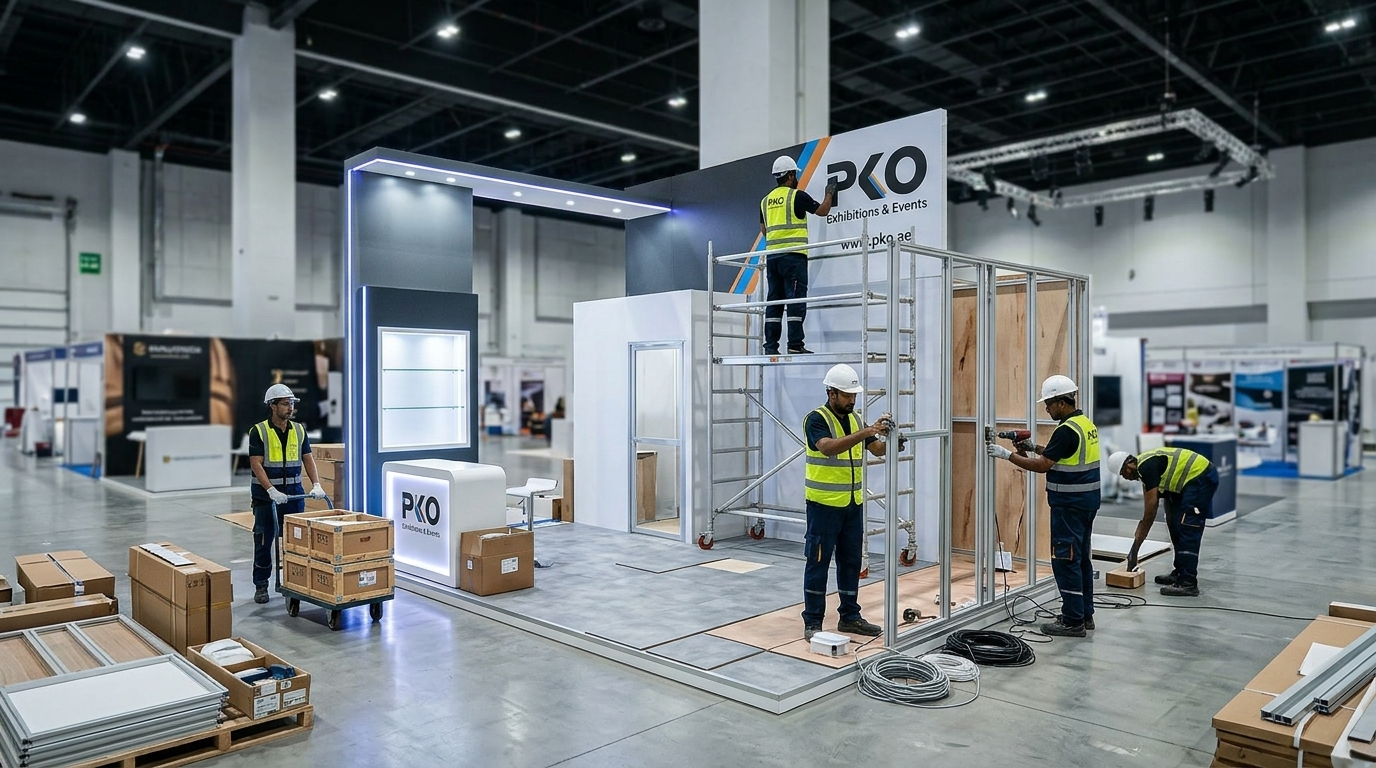
- Fabrication and installation planning. The approved design moves into production and site scheduling.
When design and construction sit with the same team, fewer details are lost between the render and the workshop. If you want to see how this works in practice, look at stand designers who turn a brief into 3D concepts and how they hand over to production.
For a broader view of layout, visuals and visitor flow, the exhibition stand design guide is a useful companion. If your stand will include screens, interactive displays or lighting effects, the exhibition design and technology guide covers what to specify early.
Custom or Modular: What Should You Mention in Your Brief?
A custom stand is designed from scratch for one show. It suits brands that need a distinctive structure, unusual dimensions or a strong visual statement. A modular stand uses reusable components that can be reconfigured for different spaces, which often suits companies exhibiting several times a year.
Tell your designers which direction you prefer, how often you plan to reuse the stand and where it will be stored. If you are unsure, the article on choosing a custom or modular format explains when each option pays off. If you are upgrading a basic booth instead, the shell scheme upgrade guide is worth reading first.
Prepare Your Exhibition Stand Design Brief with PKO
PKO Exhibitions & Events has worked in exhibition stand design and construction since 2003, with design, fabrication and installation handled in-house at its Al Quoz facility. Having one team from concept to build keeps the brief, the design and the finished stand aligned.
Before you start, check your planning timeline so your design sign-off and artwork dates leave enough time for production. Once your brief is ready, send your brief to our design team and we will schedule a design discussion around your requirements.
Frequently Asked Questions
What is an exhibition stand design brief?
It is a written summary of your goals, brand, stand size, budget, layout needs and deadlines that a design team uses to create your stand concept.
How detailed should an exhibition stand design brief be?
Detailed enough to remove guesswork, but short enough to finish in one sitting. Cover the essentials in the template above. Missing details can be agreed during the first design discussion.
What information do exhibition stand designers need?
Stand dimensions and open sides, show details, brand assets, products to display, functional needs, budget range and key dates. Venue and organiser rules are also important.
When should I send my exhibition stand design brief?
As early as your space is confirmed. Earlier briefs leave room for design revisions, approvals and fabrication without rushing.
Can I request a 3D exhibition stand design before fabrication?
Yes. A 3D concept is normally developed and approved before production begins, so you can review the layout and finishes before anything is built.