
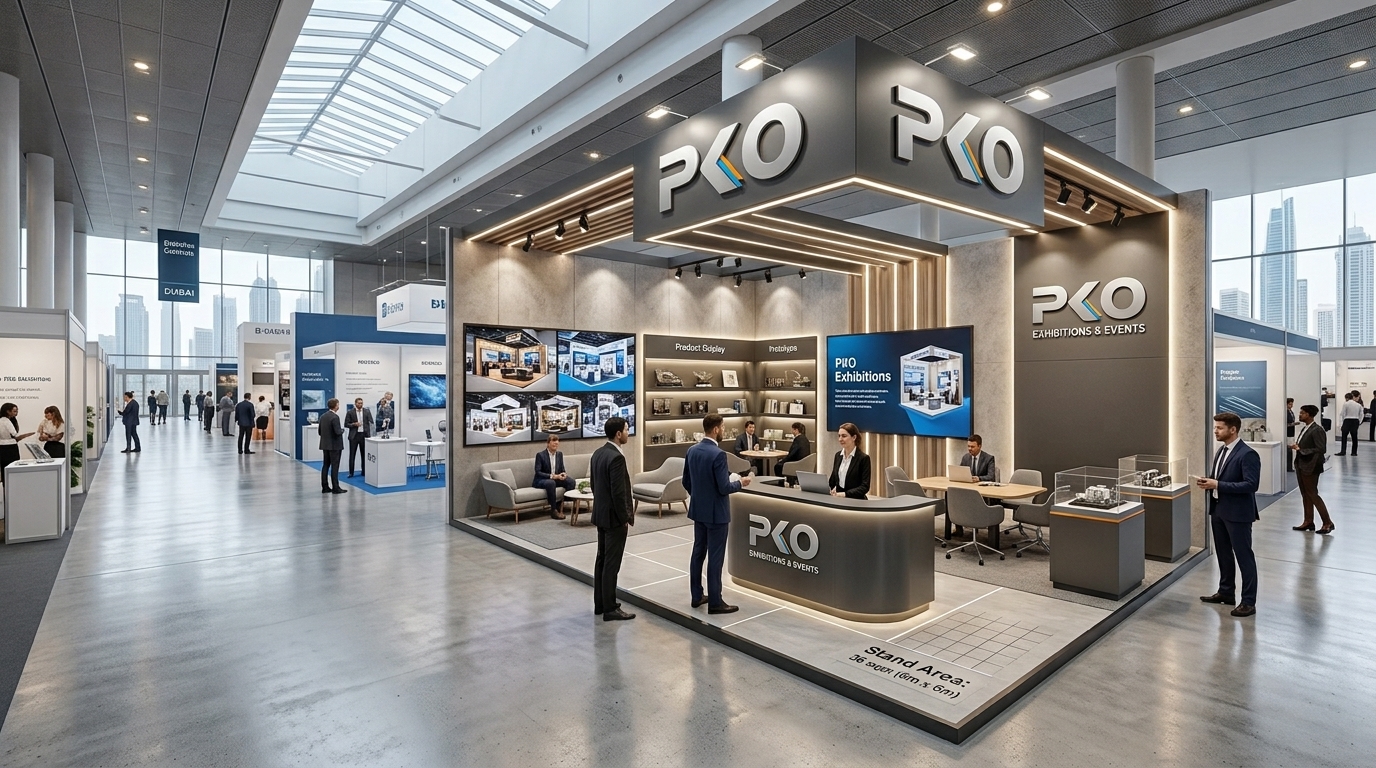
The exhibition stand fabrication process turns an approved design into a finished stand through CAD drawings, material selection, workshop production, finishing, quality checks, delivery and installation. At PKO Exhibitions & Events, these stages are planned together because each one affects the next.
For exhibitors in Dubai and across the UAE, the process shapes visual quality, structural reliability and whether the stand is ready within the venue’s build-up window.
What Is the Exhibition Stand Fabrication Process?
Design decides how a stand looks and works. Fabrication produces its structure and components in a workshop. Assembly checks that those parts fit together before they leave the facility, and installation rebuilds the stand on the show floor.
Seeing these as separate stages helps exhibitors understand where decisions must be made and where late changes become expensive.
Step-by-Step Exhibition Stand Fabrication Process
1. Brief and site constraints
The process starts with the exhibitor’s goals, floor area, open sides, height limits, product weights and power needs. Venue rules and the exhibitor manual set the boundaries, so review them before drawings begin. The DWTC stand approval process shows how submissions are checked before fabrication starts.
2. CAD drawings and 3D approval
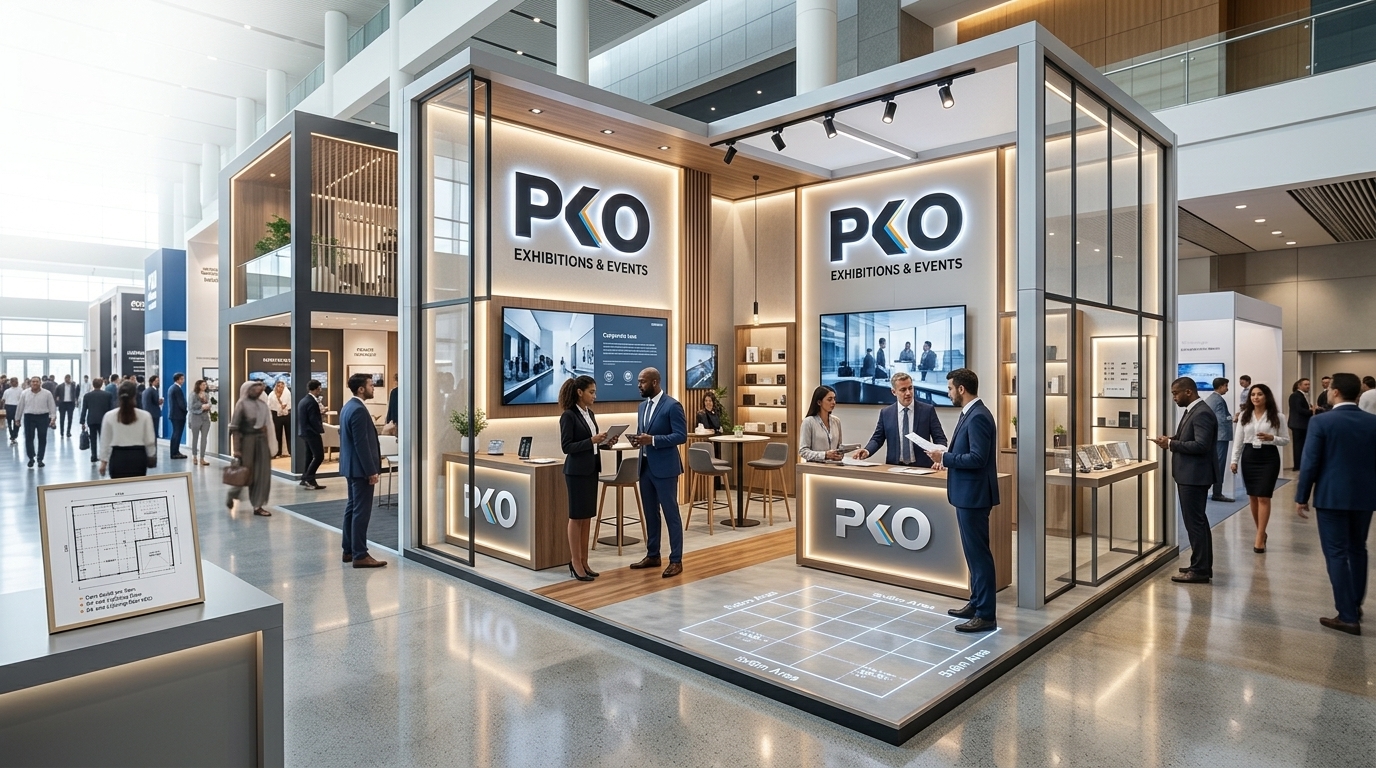
Technical CAD drawings turn the concept into measured plans for structure, joints, services and graphics. PKO’s exhibition stand designers share 3D renders before fabrication begins, so the layout is agreed visually first.
Approval should be complete before production. A change after materials are cut wastes both time and budget.
3. Materials and component production
Once drawings are signed off, the workshop prepares cutting lists and sources materials. Carpentry, metalwork and machining then produce the walls, frames, counters, plinths and fittings.
4. Graphics, signage, lighting and finishing
Painting, laminates, printed graphics, signage and lighting are coordinated with the structure so that cable routes, mounting points and panel sizes line up. Screens and interactive features need the same planning, as the guide to exhibition stand AV integration explains.
5. Workshop assembly and quality control
Building the stand in the workshop reveals fit, alignment and finish problems while they are still easy to correct. Teams check dimensions against the drawings, panel joints, paintwork, graphics, lighting and stability. The stand is then dismantled and its components labelled.
6. Packing, delivery and venue coordination
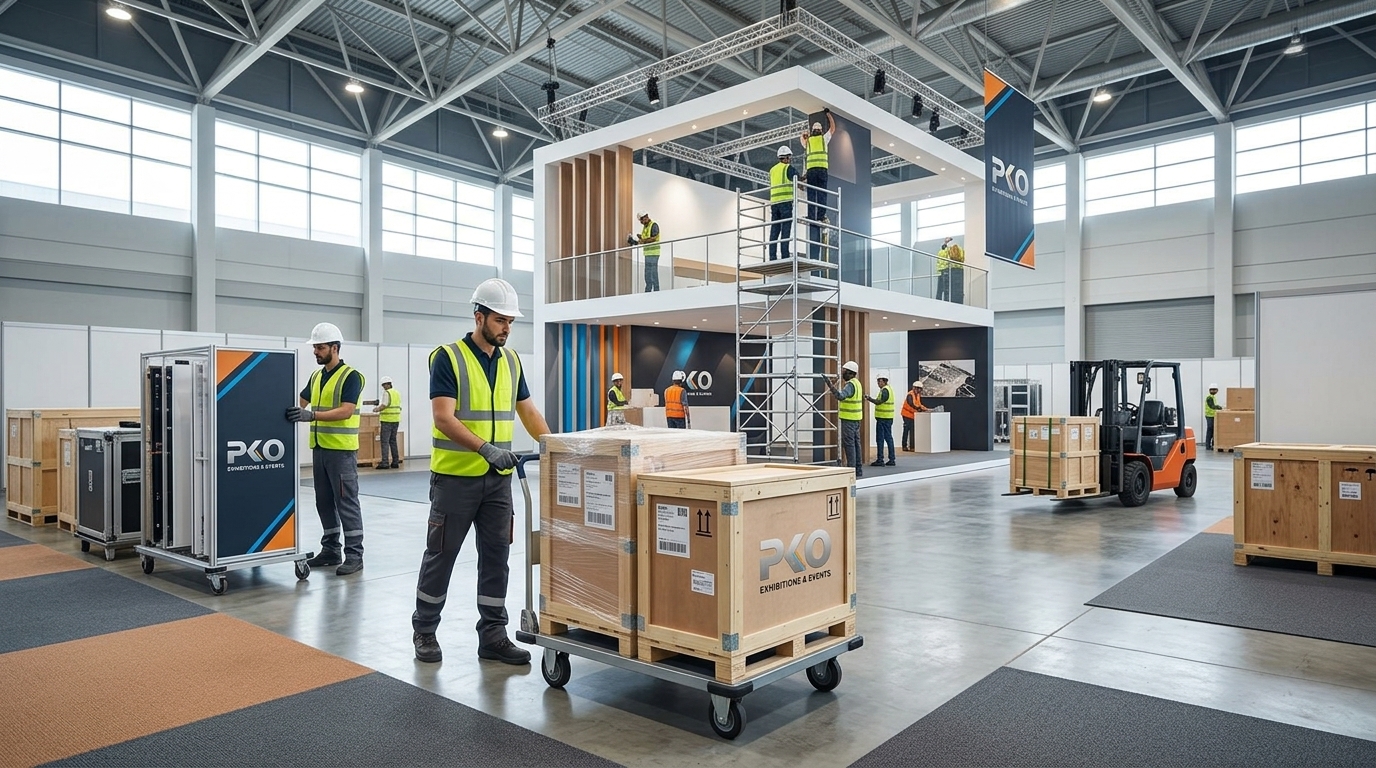
Components are protected, labelled by zone and loaded in installation order. Delivery slots, access routes and load-in windows are set by the venue and organiser, so agree the schedule early. Wider freight planning is covered in this overview of exhibition freight and on-site logistics in Dubai.
7. Installation and handover
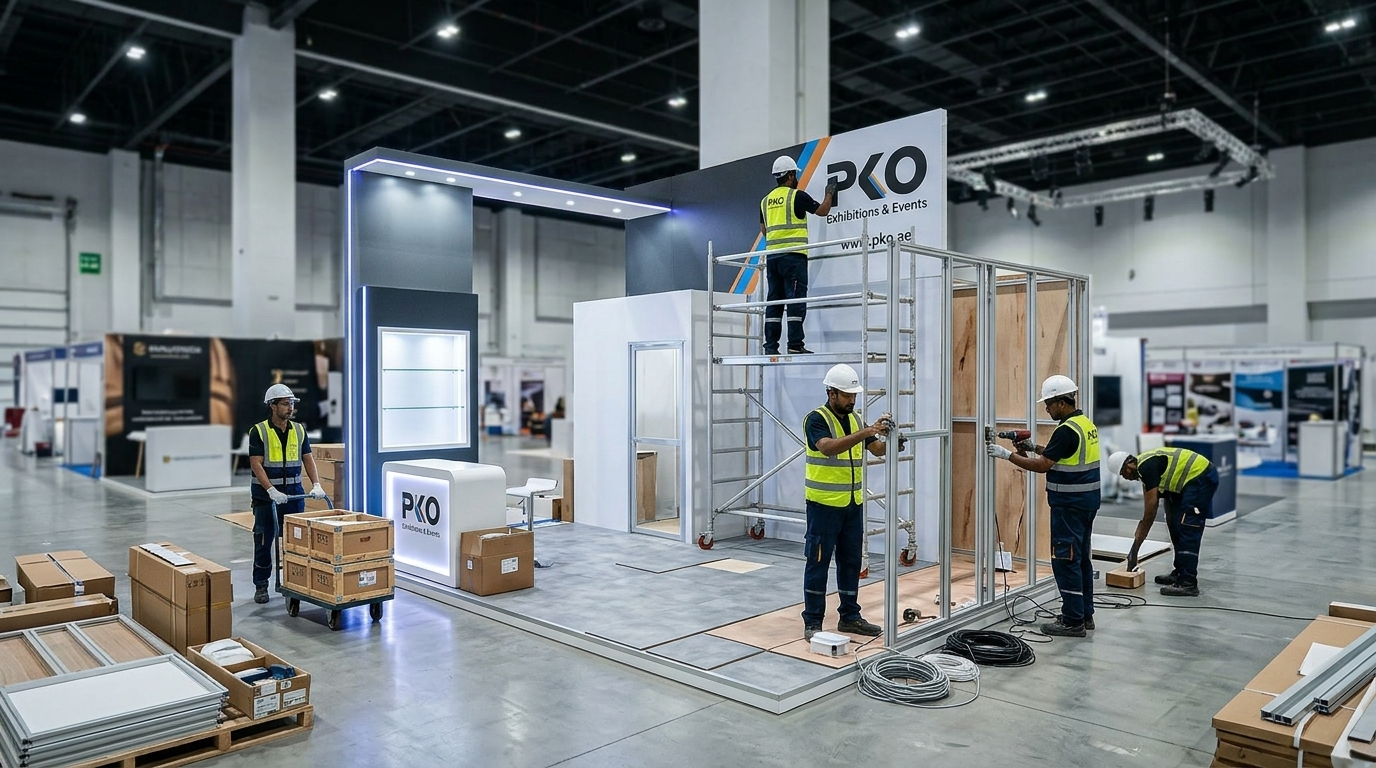
The crew rebuilds the stand from the labelled components, connects services, fits graphics and tests lighting and equipment. A final walkthrough against the approved drawings, including finish touch-ups, confirms the stand is ready before the doors open.
Which Materials Are Used in Exhibition Stand Fabrication?
Material choice depends on the design, structural needs, budget, finish, venue rules and reuse plans. No single material suits every stand.
- Timber-based panels: common for custom walls, counters and shaped features that are painted or laminated.
- Aluminium framing: lightweight, and well suited to reusable modular systems.
- Acrylic: used for logos, shelving and display elements where a smooth, clear finish matters.
- Metal components: used for supports, brackets and feature elements that need strength.
- Printed graphics: fabric, vinyl or panel finishes that carry the brand message.
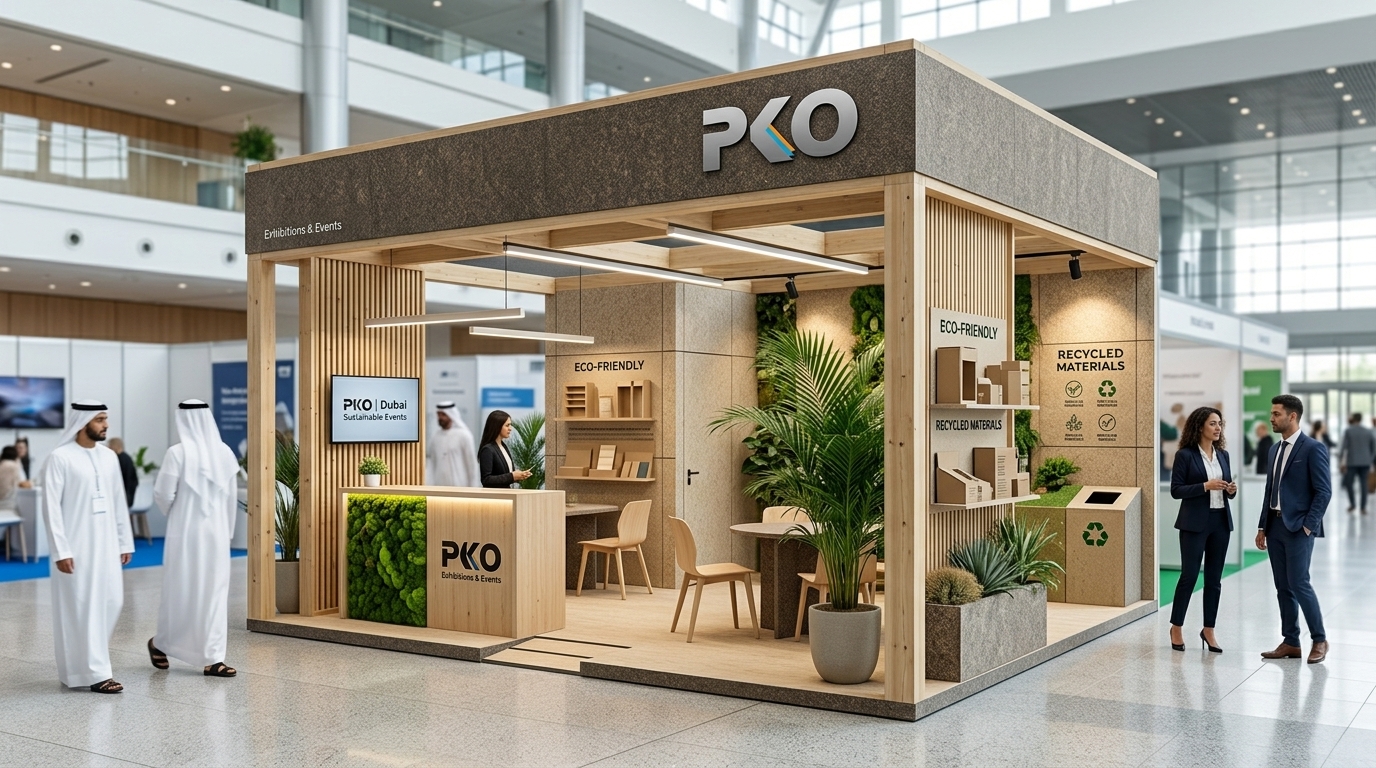
Reuse plans influence these choices, so it helps to read about modular and custom stands and sustainable exhibition stand materials before specifying anything.
How to Ensure Quality Before the Exhibition Opens
Quality control works best as a series of checks rather than a single final inspection. Before the stand leaves the workshop, confirm that:
- Built dimensions match the approved drawings.
- Finishes are consistent and graphics are aligned.
- Lighting and electrical points work as planned.
- Joints are secure and the structure is stable.
- Components fit together and are clearly labelled.
- Venue requirements and approvals are confirmed before installation.
Why Choose an Experienced Exhibition Stand Fabrication Partner in Dubai?
A partner that manages design, workshop production and installation leaves fewer gaps where details can be lost. PKO produces stands in-house at its Al Quoz facility, so the team building the stand works from the same approved design. You can read more about its in-house exhibition stand manufacturing.
Local logistics knowledge and early contact with venue teams also help installation stay on schedule.
Frequently Asked Questions
What is the exhibition stand fabrication process?
The exhibition stand fabrication process moves from the brief and CAD approval to material planning, workshop production, finishing, assembly checks, delivery and on-site installation. Each stage depends on the one before it, so approved drawings and clear schedules reduce errors during build-up.
How long does exhibition stand fabrication take?
Timelines depend on stand size, design complexity, materials, graphics and the venue’s build-up window. A simple modular stand needs less production time than a large custom build. Confirm the schedule with your contractor early, and allow time for design revisions and venue approvals.
What happens after the CAD drawings are approved?
The workshop prepares cutting lists, orders materials and begins producing structural parts, panels and fittings. Graphics, signage and lighting are produced alongside. Design changes become harder after this point because they can affect materials already cut or printed.
Is the exhibition stand assembled before delivery to the venue?
Many stands are assembled in the workshop first, either fully or in key sections, to check fit, finish and lighting. They are then dismantled, labelled and packed for transport. The extent of pre-assembly depends on stand size, schedule and workshop space.
How can exhibitors prepare for installation in Dubai?
Confirm venue approvals, access times and delivery slots early. Share final graphics, product weights and power requirements before production begins. Agree who will attend on site, and review the latest drawings with your contractor so the installation crew works from the correct version.
Conclusion
The exhibition stand fabrication process works best when each stage is planned before the next begins: approved CAD drawings, suitable materials, careful workshop assembly, staged quality checks and coordinated installation. Exhibitors who plan these steps early avoid most of the problems that surface during build-up.
To discuss a stand for your next show, contact the PKO team with your floor plan and event dates.